
Most South African pet parents reach for a spot-on the moment they spot a flea. It is the habit that the whole industry was built on. But the science behind that habit is shifting and a growing number of vets are now asking a sharper question: why is this pet so attractive to parasites in the first place?
This guide answers that question. It explains how diet and gut health change how appealing your dog or cat is to fleas and ticks, what the latest evidence says about over-treating and how to build real resilience from the bowl up. None of this replaces proper tick control, which matters more in South Africa than in most countries. But it gives you a smarter, lower-chemical foundation that works alongside it.
The conversation around flea treatments is changing
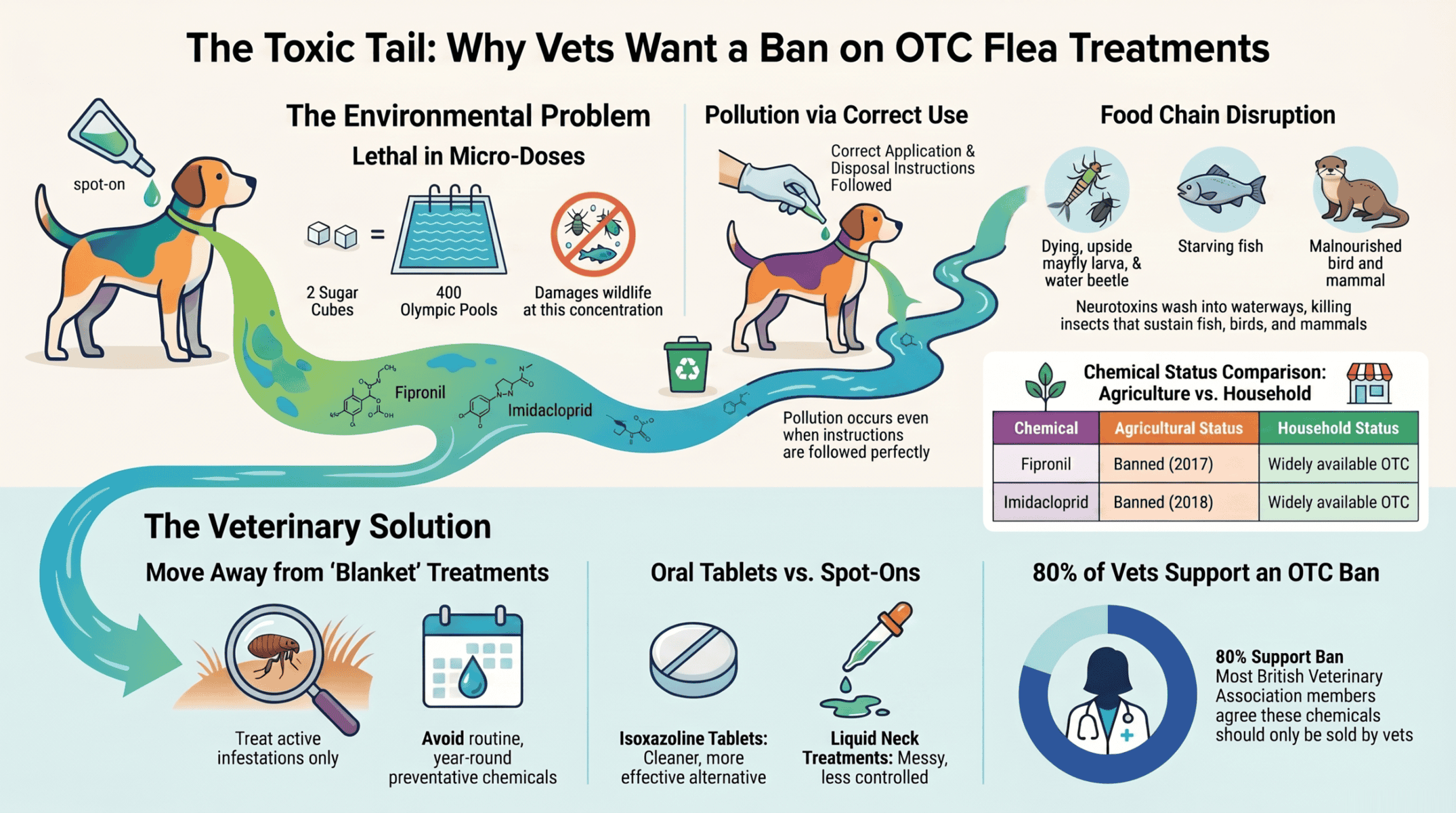
According to the BBC, in June 2026, a panel of vets told a UK parliamentary inquiry that over-the-counter flea treatments should be banned from general sale. Giving evidence to a House of Lords committee, they argued that the two chemicals found in most spot-on treatments, fipronil and imidacloprid, are toxic to wildlife and are washing into rivers in damaging amounts.
The numbers behind that position are striking. A British Veterinary Association survey of its members found that 80% supported a ban on general sale, and more than 70% agreed that blanket, year-round preventative treatment should stop. One senior vet, Dr Martin Whitehead, put it bluntly: “Almost all the parasiticides that are preventatively applied to pets are unnecessary.”
The environmental case is hard to ignore. Both chemicals were banned for agricultural use in the UK in 2017 and 2018 because they were killing bees and butterflies. Imidacloprid is so toxic to aquatic life that researchers described damage equivalent to two sugar cubes dissolved in 400 Olympic-sized swimming pools. The vets giving evidence said pollution was happening even when owners applied the products correctly.
It is worth being fair to the other side. The trade body representing animal health companies defended preventative treatment as an important part of protecting animal health and warned against drawing firm conclusions before regulators finish their reviews. Parasites do carry real disease and nobody is seriously arguing that pets should go unprotected.
So what is the takeaway for a pet parent in Cape Town, Joburg or Durban? Not that you should abandon tick control. South African ticks carry babesiosis (commonly called biliary or tick-bite fever), which can quickly kill a dog. The takeaway is more useful than that. The era of automatic, year-round chemical dosing for every pet is being questioned by vets themselves. The smarter approach is to treat deliberately when there is a real risk and to spend the rest of your effort making your pet a harder target naturally.
That is where diet comes in.
Why some pets are flea and tick magnets and others are not
You have probably noticed it. Two dogs walk the same greenbelt, sleep in the same house and one comes home covered in ticks while the other stays clear. Genetics play a part. So does coat type. But diet is one of the biggest levers you actually control and it works through three mechanisms.
1. Blood chemistry: a high-carbohydrate diet makes the meal sweeter
Fleas and ticks feed on blood and they do better on blood that is rich and easy to digest. Diets built on cheap grains, starches and hidden sugars, which describes most kibble, push blood glucose higher and keep it elevated. A pet running on a constant carbohydrate load is, in simple terms, serving a more rewarding meal. The parasite that lands is more likely to feed well, stay and breed.
2. Skin and odour: carbohydrates feed the yeast that parasites can smell
This is the part most pet parents miss. A carbohydrate-heavy diet feeds yeast on the skin and shifts the balance of the skin’s natural microbes. That changes oil production, skin pH and the cocktail of scent compounds your pet gives off.
It matters because parasites hunt by smell, body heat and carbon dioxide. A pet with yeast overgrowth and an oily, slightly fermented odour is easier to find and lands higher on the menu. The same yeast problem also drives itching and inflamed skin and damaged skin is simpler for a flea to settle into. If your dog smells “doggy” days after a bath, that odour is often a diet and skin signal, not a hygiene one.
There is a second, slower cost. A lifetime of high blood sugar drives the kind of metabolic stress, weight gain and low-grade inflammation that wears down a pet’s whole defence system, including the immune response and skin barrier. So the carbohydrate problem is not just that it makes today’s meal more tempting to parasites. It is that, over time, it leaves your pet less able to fight the parasites it attracts. Lower the carbohydrate load and you start to reverse both problems at once.
3. Immune strength: a weak defence lets parasites settle
Roughly 70% to 80% of the immune system lives in the gut. When the gut is healthy and the microbiome is diverse, the body responds faster and more efficiently to bites and invaders. When the diet is poor, the gut struggles, low-grade inflammation sets in and the skin barrier weakens. A pet in that state cannot defend itself well, so parasites that would normally be repelled get a foothold.
Put the three together and “attractiveness” is not one thing. It is tastier blood, a stronger scent signal and a weaker defence, all nudged in the parasite’s favour by the wrong diet. Fix the diet and you move every one of those levers back in your pet’s direction.
Building natural flea and tick resistance from the bowl up
Here is the practical part. None of these steps is a parasite treatment, and none should be sold to you as one. They are how you raise a pet that is harder to bite, faster to heal and less appealing in the first place. Used consistently, they also reduce how often you need to reach for chemicals.
Start with the foundation: lower the carbohydrate load
The single highest-impact change is feeding less starch. Move away from kibble that lists grains, maize or other cheap fillers near the top of the ingredient list and towards a higher-protein, lower-carbohydrate diet with real meat, healthy fats and moisture. This steadies blood sugar, starves skin yeast and supports a leaner, more resilient animal.
If you are not sure where to begin, our guide on what to feed instead of cheap kibble walks through practical, affordable options for South African pet parents, and why your dog needs more than just kibble explains the gaps a dry-food-only diet tends to leave.
Support the gut, because the gut runs the defence
A diverse, well-fed microbiome is the engine behind immune strength and balanced skin. Whole foods feed it. So does targeted supplementation. A daily probiotic and prebiotic helps maintain that microbial balance, and for pets with more sensitive digestion or those recovering from antibiotics, an extra-strength probiotic with digestive enzymes supports better breakdown and absorption of the food they eat. Better absorption means the nutrients that build skin and immunity actually reach where they are needed.
Feed the skin barrier with omega-3
Omega-3 fatty acids are the most evidence-backed nutrient for skin and coat. They calm the inflammation behind itching and flare-ups, strengthen the skin barrier that keeps parasites and allergens out and improve coat condition. A pet with strong, well-conditioned skin reacts far less to the odd bite, which stops a single flea from spiralling into a full skin problem.
A quality omega-3 fish oil sourced from small fish like sardine and anchovy delivers the EPA and DHA that matter, without the heavy-metal load of larger species. Our guide to itch-free pups covers dosing and what to expect.
Repair skin and gut lining with collagen
Collagen is the most abundant protein in your pet’s body, and around 70% of the protein in skin is collagen. A daily scoop supports the skin’s structure and, through the amino acid glycine, helps “seal and heal” the gut lining. That is a quiet two-for-one: stronger skin on the outside, a tighter gut barrier on the inside, both of which underpin resistance. Bioactive collagen powder sprinkled on food once a day is one of the simplest additions you can make.
Add moisture and glycine with bone broth
Hydration and gut support are easy wins. A bone broth meal topper adds moisture, encourages fussy eaters to finish their food and delivers more glycine that supports the gut lining. It also makes a fresh, lower-carb meal far more appealing to a pet used to dry food.
Reinforce immunity directly
For pets under extra strain, very young, senior, or recovering, the immune support range gives the body more of what it needs to mount a proper defence. A stronger immune response is ultimately what makes a parasite’s job hard.
A word on the popular “natural” remedies
A lot of online advice pushes garlic and apple cider vinegar as flea repellents and the picture is more nuanced than the scare stories suggest. Garlic is not inherently toxic to dogs. In small, correctly measured amounts, it is used safely by many holistic vets and pet parents and the concern only becomes real with large or repeated doses. Dose is everything for dogs. Cats are a different matter entirely: garlic is highly toxic to cats and should never be given to them in any amount. Apple cider vinegar in water, for its part, does little for an established flea problem and can put some pets off drinking. The honest takeaway is that these are optional extras at best. They are not the foundation of natural resistance. Diet, gut health and skin support are. Spend your effort there.
What this looks like week to week
Real resilience is built daily, not in a single grooming session. A simple routine looks like this. Feed a higher-protein, lower-carbohydrate diet as the base. Add a daily scoop of collagen and a probiotic to the bowl. Include omega-3 several times a week, more during itch season. Use a bone broth topper to keep meals fresh and hydrating. Then layer targeted, vet-guided tick control on top during high-risk periods and in high-risk areas, rather than dosing blindly all year.
If your pet is already battling itchy skin as you make these changes, a gentle homemade oatmeal and aloe wash can soothe the surface while the diet does the deeper work.
Monthly by default, or only when it makes sense?
Here is the question worth sitting with. If your pet has no fleas and faces no real tick exposure, what is a monthly chemical dose actually treating? That is the gap vets are now pointing to. The shift is from calendar-based dosing, the same product every month regardless of risk, to risk-based protection that matches what your pet is genuinely exposed to.
Fleas and ticks are not the same problem, though and the right approach differs.
With fleas, a reactive approach is sensible. Fleas make themselves known. If your pet is clear and not mixing with infested animals or environments, there is little reason to dose every month. Treat when there is an actual infestation and treat the home environment at the same time, because most of a flea problem lives in carpets and bedding, not on the pet.
Ticks are the harder call in South Africa, and this is where caution earns its place. The real danger is not the bite, but biliary (babesiosis), which can be transmitted quickly and can be fatal. By the time you notice ticks, a carrier may already have fed. So ticks justify protection, but smart protection, timed to real exposure: tick season, and before high-risk outings such as bushveld walks, long grass, hikes and kennel stays. A single longer-acting tablet, such as a 12-week isoxazoline chewable, can cover a genuine high-risk window without unnecessary year-long dosing. Speak to your vet about what suits your area and your pet.
The principle is simple. Protect deliberately when there is something to protect against. Then spend the rest of your effort making your pet a harder target in the first place.
The honest bottom line
Diet will not dissolve a tick or kill a flea on contact. Anyone who tells you a supplement does that is overselling. Good nutrition changes the maths. It makes your pet’s blood less rewarding, its scent less inviting and its defences far stronger, so fewer parasites settle and the ones that do cause less trouble. That is exactly why vets are starting to question blanket chemical dosing: a healthy, well-fed animal simply does not need as much of it.
In South Africa, tick-borne disease is serious, so the answer is not to do nothing. But it also does not mean going nuclear every month with chemical spot-ons as your only line of defence.
Let’s stop pretending these are harmless grooming products. Chemical flea and tick treatments are parasiticides, many of them pesticide-based, designed to poison parasites by attacking their nervous system. Yes, they can be useful when the risk is real. But pretending a monthly neurotoxic pesticide is “just prevention” is the problem. These products affect the animal, the home, the soil, the water and the wider environment long after the flea is dead.
There are gentler, more natural ways to make your pet less attractive to fleas and ticks. Build natural resistance from the inside, use deterrents consistently, check your pet regularly and only reach for stronger treatments when the risk is real.
That way, you protect your pet without turning every month into a chemical assault on their body, your home and the environment.
Better health means a harder target. Explore the NutriFlex range and start building it into the bowl.
Frequently asked questions
Can diet alone stop fleas and ticks?
No, and you should be wary of anyone who says it can. Diet makes your pet a harder target by improving blood chemistry, skin health and immune strength, which means fewer parasites settle and bites cause less trouble. In South Africa, where ticks can carry biliary, you still need proper, vet-guided tick control during high-risk periods. Think of nutrition as the foundation that reduces how much chemical intervention you need, not a replacement for it.
How long before a better diet shows results?
Skin and coat changes are usually the first thing owners notice, often within four to eight weeks of feeding a lower-carbohydrate diet and adding omega-3, collagen and a probiotic. Reduced itching, less “doggy” odour and a glossier coat are the early signs that the skin barrier and gut are recovering. Resistance builds steadily from there. This is a daily habit, not a quick fix, and consistency is what makes it work.
Is grain-free always better for flea resistance?
Not automatically. The goal is a lower overall carbohydrate load and good-quality ingredients, not simply removing grain and replacing it with another starch such as potato or pea. Read the label, check where the carbohydrates sit in the ingredient list, and prioritise real protein, healthy fats and moisture. A genuinely lower-starch, higher-protein diet helps stabilise blood sugar and starves the skin yeast that attracts parasites.
NutriFlex® supplements support skin, coat, gut and immune health. They are not flea or tick treatments and are not intended to diagnose, treat, cure or prevent any disease. Ticks in South Africa can transmit serious illness. Always use appropriate, vet-recommended parasite control and consult your veterinarian before changing your pet’s routine.