
Yes, dogs can eat pumpkin. Plain cooked pumpkin is safe, gentle on the tummy and full of fibre that supports healthy digestion. Cats can have a little too. The trick is in the preparation: no salt, no butter, no spice and no onion. That rules out most of the pumpkin dishes on a South African dinner table.
This guide covers how much to give, why butternut works just as well and which pumpkin foods to keep off the menu. It also explains how to get the same pumpkin fibre into the bowl every day without cooking a thing.
Quick answers
- Can dogs eat pumpkin? Yes. Plain cooked or steamed pumpkin is a healthy extra for most dogs.
- Can dogs eat butternut? Yes. Cooked, peeled and plain, it’s just as good as pumpkin.
- Can cats eat pumpkin? Yes, in teaspoon amounts stirred into their food.
- How much? Start with about 1 teaspoon per 5kg of body weight a day.
- What to avoid: pumpkin soup, pampoenkoekies, pie, spiced dishes, raw rind, stems and salted seeds.
Can dogs eat pumpkin? Why this orange veg earns its spot in the bowl
Pumpkin is one of the few human foods that vets and pet nutritionists are happy to see in a dog’s bowl. Here’s what it brings.
Two kinds of fibre. Pumpkin contains soluble fibre, which absorbs water and turns soft and gel-like, plus insoluble fibre, which adds bulk. Together they help keep stools well formed and moving at a steady pace.
Food for the good bacteria. When fibre reaches the large intestine, gut bacteria ferment it into short-chain fatty acids. These feed the cells lining the gut and help keep the gut environment slightly acidic, which suits beneficial bacteria. The American Kennel Club describes pumpkin fibre as working like a prebiotic.
Vitamins and minerals. Pumpkin is a natural source of beta-carotene (which the body converts to vitamin A), vitamins C and E, potassium and iron (PetMD).
Lots of water, few calories. Cooked pumpkin is mostly water. That’s useful for dogs who don’t drink much. It’s also kind to dogs who are watching their waistline.
The best part is that it’s cheap, it’s in every South African supermarket and most dogs think it tastes like a treat.
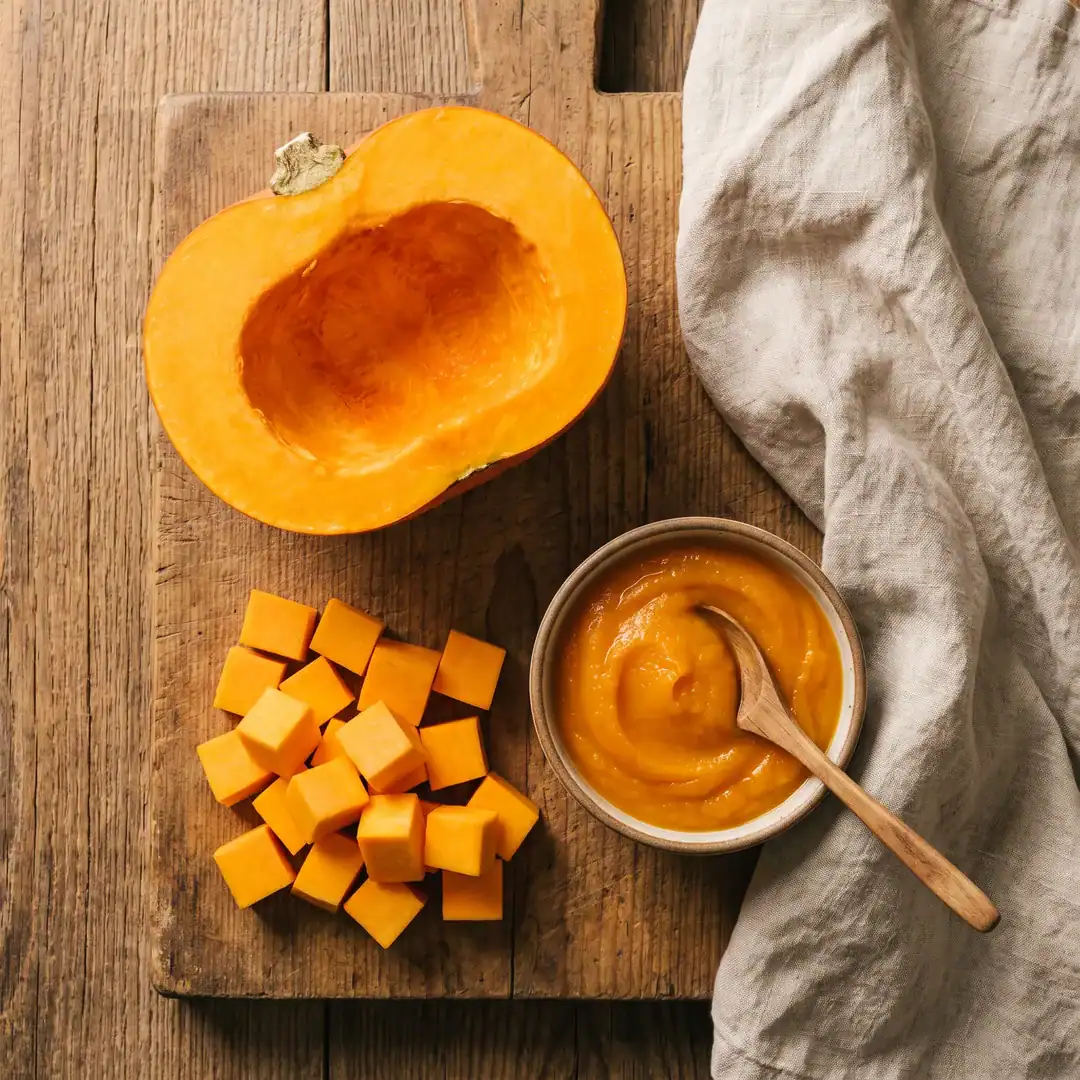
Pumpkin for dogs with an upset stomach, diarrhoea or constipation
Pumpkin is famous for working in both directions.
- Loose stools: soluble fibre soaks up excess water in the gut, which helps firm things up.
- Constipation: the fibre and water together add bulk and soften the stool, so it passes more easily.
That’s why so many pet parents keep pumpkin in the freezer for tummy-upset days. Whenever you add fibre, make sure fresh water is always available. Fibre without enough water can make constipation worse.
How much pumpkin can a dog have?
A widely used guide is about 1 teaspoon of plain pumpkin per 4 to 5kg of body weight a day (PetMD). Start at the low end for a few days and split it across meals.
|
Dog’s weight |
Plain cooked pumpkin per day |
|
Up to 5kg |
½ to 1 teaspoon |
|
5 to 10kg |
1 to 2 teaspoons |
|
10 to 20kg |
2 to 4 teaspoons |
|
20 to 35kg |
1½ to 2 tablespoons |
|
Over 35kg |
2 to 3 tablespoons |
More isn’t better. Too much fibre at once can cause the very loose stools you’re trying to settle.
Fresh pumpkin or a measured scoop?
A spoon of fresh pumpkin is a lovely, gentle extra. How much fibre it delivers depends on the pumpkin, how it’s cooked and how generous the spoon is. It also means peeling and steaming on a regular basis. If you want pumpkin fibre in the same measured amount every day, a scoop does that more reliably than a spoon. More on that below.
If diarrhoea lasts more than a day or two, or comes with blood, vomiting or a pet who seems flat, get them checked rather than relying on pumpkin.
Can dogs eat butternut? The South African kitchen version
Most international articles talk about canned pumpkin puree. In South Africa, plain canned pumpkin is hard to find. Butternut, boerpampoen and gem squash are on every shelf.
The good news: yes, dogs can eat butternut. Butternut squash is a close relative of pumpkin with a similar mix of fibre, beta-carotene and vitamins. The AKC is happy with squash for dogs as long as the seeds, skin and rind are removed.
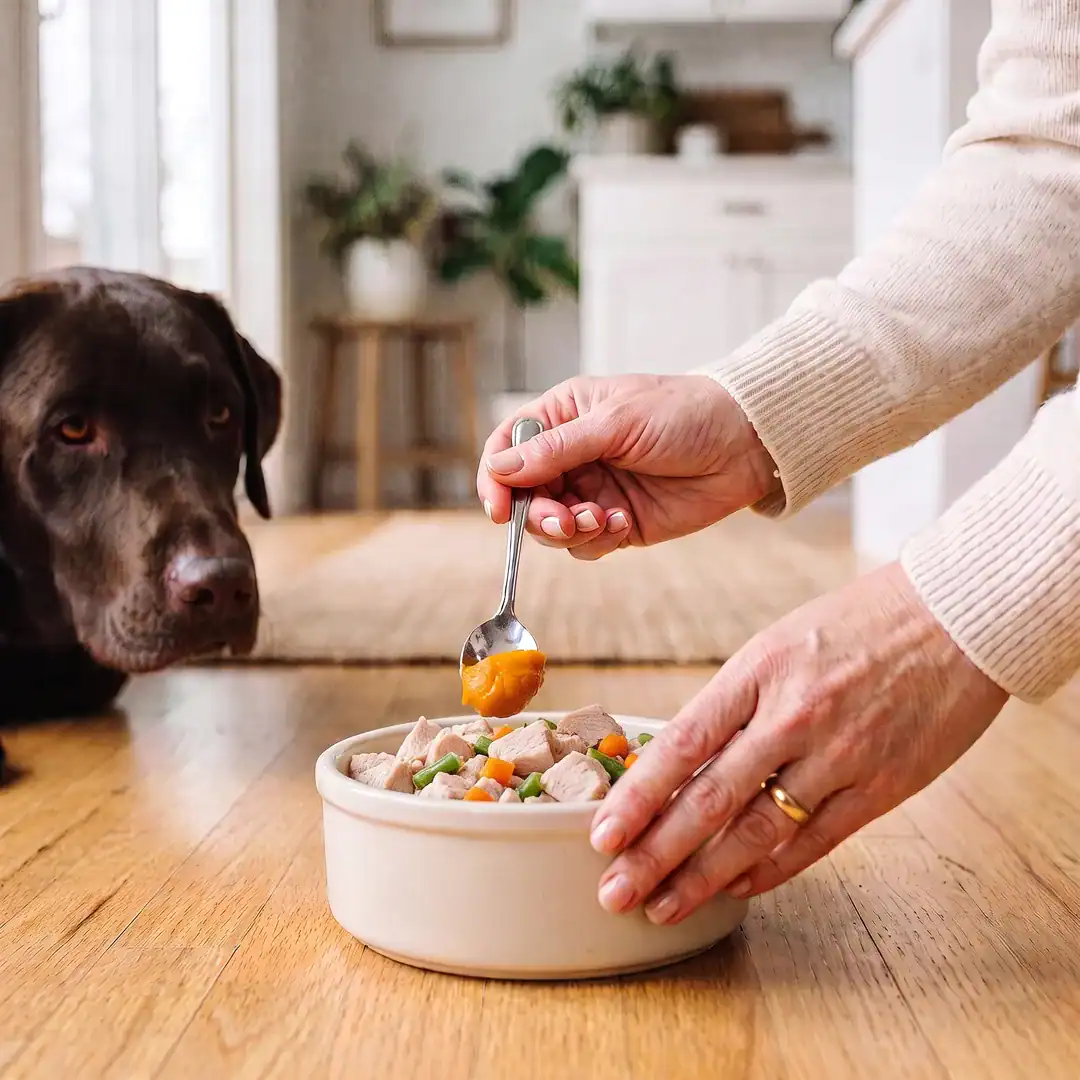
How to make your own plain pumpkin or butternut puree:
- Peel the pumpkin or butternut and scoop out the seeds.
- Cut it into cubes and steam, boil or roast it plain until soft. No oil, salt or seasoning.
- Mash it smooth and let it cool completely.
- Spoon it into an ice-cube tray and freeze. Pop out one portion at a time.
The cubes keep for a few months in the freezer, so you always have ready-made portions.
Can dogs eat butternut skin? It’s best not to. The skin is tough and hard to digest, especially for small dogs who tend to swallow without chewing. Peel it first.
Can dogs eat braaied butternut? Plain roasted butternut, yes. The classic braai version with butter, cinnamon sugar or feta is one to keep for the humans.
Can cats eat pumpkin?
Yes, cats can eat pumpkin, in small amounts. Cats are obligate carnivores, so their bodies are built for meat. Pumpkin is a supporting act, never a main meal.
Where pumpkin really helps cats is with constipation. The water and fibre together help soften stools. PetMD’s veterinary writer notes that many cats with mild constipation do well on 2 to 4 teaspoons of plain pumpkin stirred into their food.
Can cats eat pumpkin for diarrhoea? It can help firm up loose stools too. Too much pumpkin, though, usually causes diarrhoea in cats. With a cat, it’s worth finding out what’s behind the loose stools first, since diarrhoea in cats often has a medical cause.
Tips for cats:
- Mix it into their meal rather than serving it on its own
- Start with ½ to 1 teaspoon and build up slowly
- Use only plain pumpkin, never pie filling or spiced purée
- Crush any pumpkin seeds before offering them, since whole seeds can be a choking risk
Pumpkin dishes to keep off the menu
The pumpkin itself is safe. It’s what we cook it with that causes trouble. Keep these for the humans:
- Pampoenkoekies (pumpkin fritters). They’re fried in oil and rolled in cinnamon sugar. That’s a lot of fat and sugar for a small tummy.
- Pumpkin soup. It’s almost always made with onion, which can damage a dog’s or cat’s red blood cells (ASPCA). Stock cubes add salt too. Soups often contain garlic as well. Garlic is fine for dogs in moderate amounts but should never be given to cats.
- Pumpkin pie and spiced bakes. Nutmeg contains myristicin, which isn’t safe for pets in larger amounts (ASPCA). Sweetened products may also contain xylitol, which is toxic to dogs.
- Raw rind and stems. They’re hard and fibrous and can be a choking or blockage risk.
- Salted snack seeds and hard shells. Raw, unsalted, shelled seeds, ground up, are fine. Roasted and salted snack seeds are not. Neither are the hard white outer shells.
- Carved Halloween pumpkins. Once they’ve stood outside for a few days, they go soft and mouldy. Mouldy food isn’t safe for pets.
Can dogs eat pumpkin seeds? Yes, in moderation. Choose raw, unsalted, shelled green seeds, grind them and sprinkle a little over food. Pumpkin seeds also have a long history as a natural dewormer. Our guide to pumpkin seeds for deworming dogs explains how to prepare them and how much to give.

Pumpkin fibre in a scoop: FloraMax and DigestiMax
Fresh pumpkin is a great once-in-a-while extra. For everyday gut support, most pet parents want something simpler: no peeling, no steaming, no guessing the amount.
That’s why pumpkin fibre is the first ingredient in both of our gut health powders. Each one starts with pumpkin, then adds what pumpkin on its own can’t.
FloraMax: the probiotic
FloraMax combines five ingredients, all of them active:
- Pumpkin fibre for stool consistency and regularity
- FOS and inulin, two plant-based prebiotics that feed the good bacteria
- L-glutamine, an amino acid that supports the gut lining
- Lactospore® (Bacillus coagulans), a spore-forming probiotic that survives stomach acid, at 2 billion CFU per 3g scoop
Pumpkin feeds the good bacteria. FloraMax adds the good bacteria too. It’s suitable for the nutritional management of dogs and cats of all ages with diarrhoea, constipation or poor or irregular bowel function. It also suits pets taking antibiotics, given at least two hours apart from the medicine.
DigestiMax: the probiotic plus enzymes
DigestiMax contains everything in FloraMax plus DigeZyme®, a blend of five digestive enzymes. Amylase works on starch, protease on protein, lipase on fat, cellulase on plant fibre and lactase on milk sugar.
It’s suitable for the nutritional management of senior pets and pets of all ages with enzyme deficiencies or chronic digestive issues such as gas, bloating and loose stools.
Which one is right for your pet?
- Choose FloraMax if you want daily gut balance and stool support. It’s also the one to use during and after a course of antibiotics.
- Choose DigestiMax if your pet is older or seems to struggle to digest their food.
How to use them
Both powders use the same simple serving guide, once or twice daily:
|
Per 10kg of body weight |
|
|
Dogs |
1 level scoop (3g) |
|
Cats |
½ level scoop (1g) |
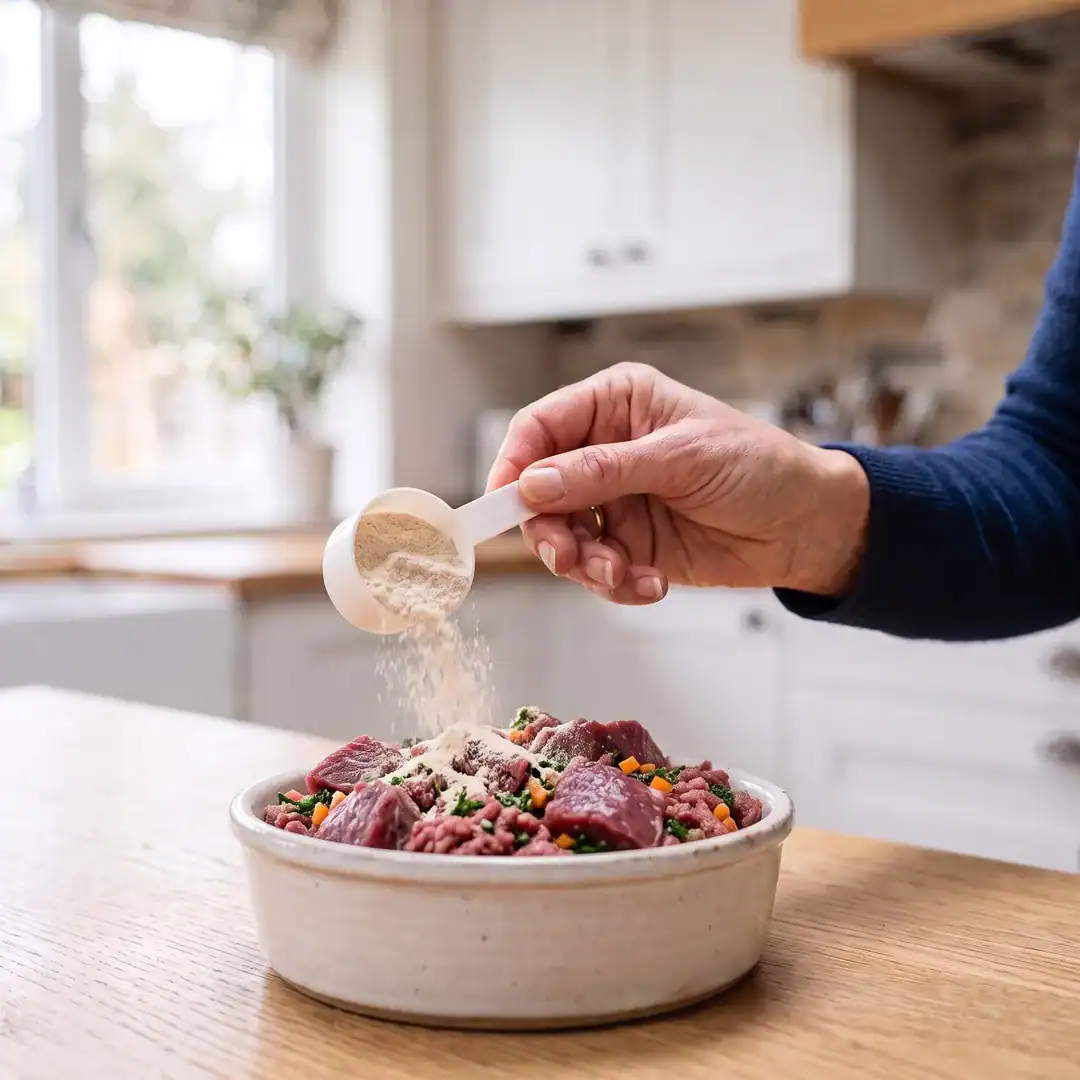
Sprinkle it straight over your pet’s meal. For a fussy eater, mix one level scoop with an equal amount of water to make a smooth puree and stir it into the meal. It’s pumpkin puree, measured for you.
Both are certified human-grade, made in Cape Town and NIHT Halaal certified. There’s nothing else in the tub: no fillers, no binders, no flavourings and no preservatives. You’ll find the full range in our gut and digestive health collection.
Frequently asked questions
Can dogs eat pumpkin every day?
Yes, in small amounts. Plain cooked pumpkin can be a daily extra if it stays within about 1 teaspoon per 5kg of body weight and the rest of the diet is balanced. Watch the stools. If they turn loose, cut back. For measured daily pumpkin fibre, a scoop of FloraMax is the simpler option.
Can dogs eat pumpkin seeds?
Yes, in moderation. Use raw, unsalted, shelled green seeds and grind them before sprinkling a pinch over food. Whole seeds and the hard white shells can be a choking risk. Salted, sweetened or spiced snack seeds should be avoided. Seeds are high in fat, so start with a small amount.
Can dogs eat butternut skin?
It’s best to peel butternut before feeding it. The skin is tough and fibrous and hard for dogs to digest. Small dogs who gulp their food are most at risk of an upset tummy or a blockage. Cooked, peeled butternut flesh is the safe and tasty part.
Can cats eat pumpkin for diarrhoea?
Plain pumpkin can help firm up a cat’s loose stools, but too much often makes diarrhoea worse. Use ½ to 1 teaspoon stirred into their food to start. Diarrhoea in cats often has a medical cause, so find out what’s behind it if it doesn’t settle within a day or two.
Can I give FloraMax and pumpkin together?
Yes. FloraMax already contains pumpkin fibre, so you won’t need extra pumpkin every day. If your pet loves the taste, a small spoon of plain pumpkin alongside their scoop is fine. Just reduce the fresh pumpkin if stools become soft.
Can dogs eat pumpkin? The short version
Yes, dogs can eat pumpkin. Cats can enjoy a little too. Keep it plain, cooked and peeled, start small and always have fresh water out. Butternut works just as well, which is handy in a South African kitchen. Leave the soup, fritters and pie for the humans.
For pumpkin fibre in a measured daily scoop, with prebiotics and a probiotic added, try FloraMax. For older pets or pets who need extra help digesting their food, try DigestiMax.