
What is yeast?
Yeast is a normal part of every dog. Malassezia lives on the skin and in the ears. Candida lives in the gut. In a healthy dog both sit there in small numbers and cause no trouble.
Yeast is an opportunist. When the gut or the immune system is knocked off balance, it multiplies fast, crowds out the healthy microbes around it and becomes an overgrowth.
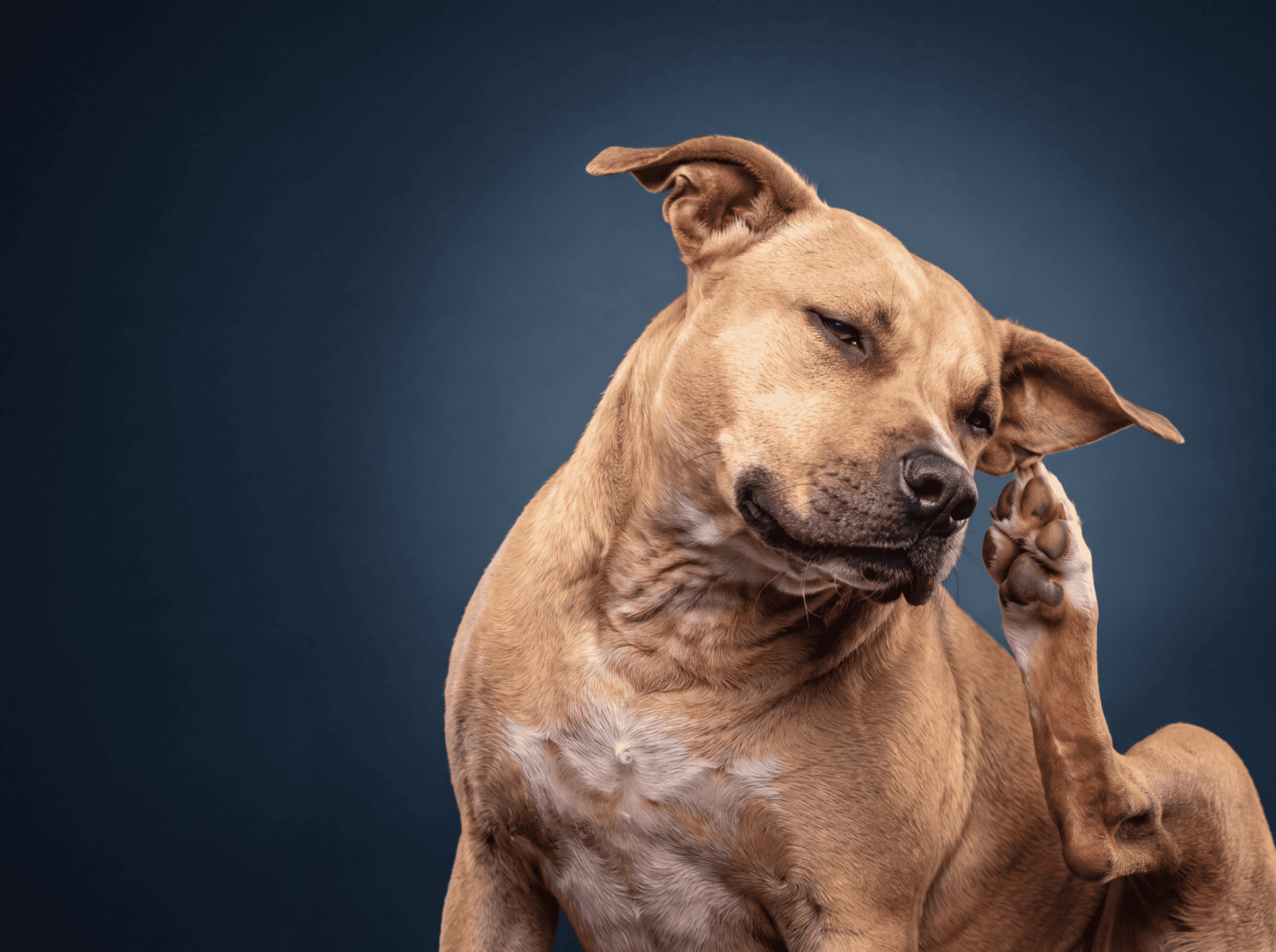
Signs of a yeast problem
- Non-stop scratching, licking or chewing, especially the paws
- A sour, musty “yeasty” smell
- Waxy, smelly ears that need cleaning again within days
- Greasy coat, flaking or dandruff
- Red, irritated skin and rust-coloured staining on licked fur
- Loose, smelly stools, bloating and wind
Left alone, it can lead to thickened skin, darkened skin and hair loss.
Why it happens
Yeast is rarely the first problem. It’s usually a sign that something underneath is out of balance:
- An environmental allergy or a food sensitivity
- A course of antibiotics, which clears the bacteria and leaves yeast the room to proliferate
- Medication that suppresses the immune system
- A diet high in processed carbohydrates
- Heat, humidity, skin folds and damp paws
What makes yeast thrive
Warmth, moisture and food.
Yeast feeds on sugars and starches. Most kibble is 40 to 60% carbohydrate, including the grain-free and premium brands and dogs have no dietary requirement for carbohydrate at all. A bowl built on starch keeps the yeast in the gut supplied every single day.
Why the usual treatment falls short
The usual approach is:
- Medicated shampoos, wipes and ear drops
- Antifungal or steroid medication
- Apoquel, which suppresses part of the immune response behind the itch
- Cytopoint injections, which block the itch signal
These work on what you can see and what your dog can feel. None of them reaches the gut, which is where a recurring yeast problem is usually being fed from.
That’s why it clears up and comes back. The itch medications work for exactly as long as you give them. Stop, and everything returns. You end up managing it for life, with the cost and the side effects that come with that, and nobody asks why your dog is itching in the first place.
A surface problem doesn’t need solving four times. Better, back, better, back means something deeper keeps re-supplying it.
What we recommend: inside and out
Expect weeks, not days. Consistency matters more than anything else here.
Inside, where it starts
- Give YeastEaze™ every day. Seven ingredients working on the gut from five directions: discouraging yeast, rebalancing gut flora, gentle detox, immune support and digestion. It includes the probiotic yeast Saccharomyces boulardii (5 billion CFU per scoop, guaranteed minimum) and olive leaf extract standardised to 20% oleuropein, the highest grade available. One level scoop (2 g) per 10 kg of body weight, twice a day, for 7 to 10 days. If you’re seeing improvement, carry on for three more weeks. Keep it two hours apart from any medication or other supplement.
- Starve the yeast. Feed one complete, balanced food built around a single protein your dog hasn’t been eating regularly. Ostrich is our first choice, venison second. Take chicken and beef out completely. Choose minimally processed food with a short ingredient list, low in starch and sugar.
- Cut the extras. Cut the junk. No biscuits, dental chews, flavoured treats or table scraps. None of it is species-appropriate food. It’s processed starch and sugar, which is exactly what you’re trying to take away. Plain yoghurt and bone broth are real food, so the spoonful you give YeastEaze™ in stays.
- Hold the line. Don’t switch foods every few days because your dog is still itchy. Give the reset eight weeks. Then add foods back one at a time, so you can see exactly what your dog tolerates.
Outside, where it shows
Surface yeast still needs dealing with. A medicated shampoo or ear cleaner from your vet works on the skin and ears. Dry paws and skin folds properly after walks and baths. Yeast loves damp.
What to expect
- Days 2 to 5. Some dogs get itchier before they get better. It’s expected. Cut the dose back, don’t stop.
- Days 7 to 10. Owners usually notice the ears first, or less licking.
- Weeks 2 to 4. Skin and coat.
- Four weeks and nothing? It probably wasn’t yeast. Stop, and look at allergies with your vet.
Keeping it away
- Keep the diet simple and low in starch
- After the course, a daily probiotic with digestive enzymes keeps the gut steady. That’s DigestiMax™.
- Omega-3 supports the skin barrier. That’s OmegaMax™.
- Support the gut after any course of antibiotics. Saccharomyces boulardii is unaffected by antibiotics, so it can be given alongside them.
- If there’s an allergy underneath, work on that with your vet. Yeast will keep taking the opening until it’s closed.
See YeastEaze on nutriflex.co.za
NutriFlex® YeastEaze™ for dogs is registered under Act 36 of 1947, Reg. No. V32169.
References
Bond R, et al. (2020). Biology, diagnosis and treatment of Malassezia dermatitis in dogs and cats: Clinical Consensus Guidelines of the World Association for Veterinary Dermatology. Veterinary Dermatology, 31(1), 28-74.
Murzyn A, et al. (2010). Capric acid secreted by S. boulardii inhibits C. albicans filamentous growth, adhesion and biofilm formation. PLOS ONE, 5(8), e12050.
Mueller RS, Olivry T, Prélaud P. (2016). Critically appraised topic on adverse food reactions of companion animals (2): common food allergen sources in dogs and cats. BMC Veterinary Research, 12, 9.
Olivry T, Mueller RS, Prélaud P. (2015). Critically appraised topic on adverse food reactions of companion animals (1): duration of elimination diets. BMC Veterinary Research, 11, 225.