
Your Dog Won’t Stop Scratching: Here’s What to Do Right Now
Making a homemade itch cream for dogs is simpler than most pet owners expect. Here is a quick-reference guide to get you started:
Basic Homemade Dog Itch Cream (Quick Recipe)
| Ingredient | Amount | Purpose |
|---|---|---|
| Organic coconut oil | 100 ml | Moisturises and antimicrobial |
| Colloidal oatmeal (finely ground) | 50 g | Soothes inflammation |
| Cooled Rooibos tea | 30 ml | Antioxidant and anti-inflammatory |
| Pure aloe vera gel | 15 ml | Cools and calms irritated skin |
How to apply:
- Mix all ingredients into a smooth paste
- Part your dog’s fur to expose the skin
- Apply a thin layer to the affected area
- Prevent licking for at least 10 minutes
- Patch test on a small area first and wait 24 hours before wider use
Only apply to intact skin. Never use on open sores or wounds.
If you have ever been woken up at 2 a.m. by the relentless sound of your dog scratching, you already know how distressing it can be to watch your dog suffer without knowing what to do. Itchy skin is one of the most common reasons South African pet owners visit the vet, and the triggers range from flea allergy dermatitis and seasonal pollen to dry winter air and yeast overgrowth.
The good news is that mild to moderate itching can often be managed at home using safe, natural ingredients. This guide walks you through exactly how to make and use a homemade itch cream for dogs, which ingredients to use, which to avoid and when to stop and call your vet.
I’m Sharon Milani, Director of SmartPack PTY Ltd and Co-founder of NutriFlex®, South Africa’s first certified human-grade pet supplement range. Through years of working alongside animal food scientists and holistic veterinarians, I’ve seen first-hand how the right topical and nutritional support can transform a dog’s skin health, which is why I’ve put together this practical guide on homemade itch cream for dogs to help you act quickly and safely.
Homemade itch cream for dogs vocab explained:
Common Causes of Itchy Skin in South African Dogs
Before we reach for the mixing bowl, we need to know what may be causing the itch. A cream can soothe skin, but it cannot remove the underlying trigger on its own.
The most common causes include:
- Environmental allergens such as grass pollen, dust and mould
- Flea allergy dermatitis, where even one or two bites can trigger intense itching
- Food sensitivities, often linked to recurring skin or ear problems
- Dry winter air, especially indoors where heating lowers humidity
- Yeast overgrowth, often affecting paws, ears, armpits and groin
- Bacterial overgrowth and secondary skin infections
- Contact irritation from shampoos, cleaning products or rough grass
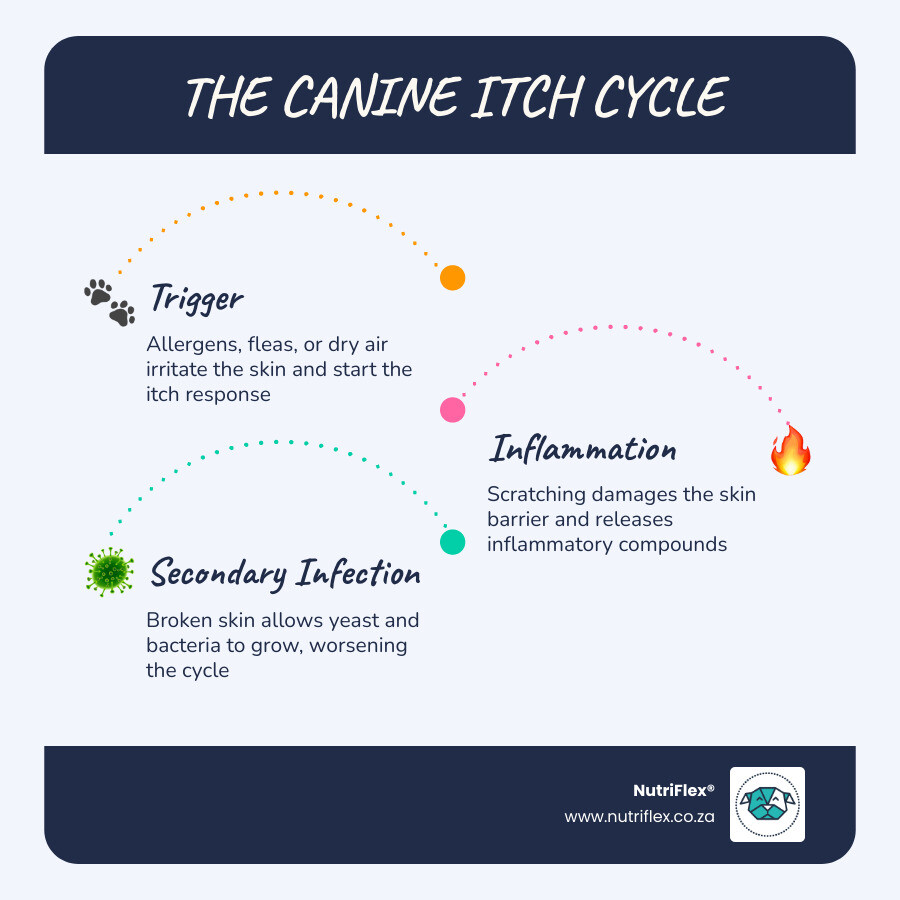
Dogs often itch around the ears, paws, belly, neck and tail base. If your dog is licking paws like it is a full-time job, rubbing its face on the rug or chewing at its flank, allergies or infection may be involved. Persistent scratching can break the skin barrier and give yeast and bacteria an opportunity to move in.
For a deeper look at patterns and triggers, see Help for Itchy Dogs: The Definitive Guide and Hot Spots on Dogs Causes Symptoms Treatment and Prevention.

Safe Ingredients for Your Homemade Itch Cream for Dogs
For a good homemade itch cream for dogs, we want ingredients that are simple, soothing and low risk when used correctly on intact skin.
Colloidal oatmeal
This is one of the best-supported natural options for itchy skin. Finely ground oatmeal helps calm irritation, soften dry skin and support the moisture barrier. It is also the reason many commercial oatmeal sprays and shampoos work as well as they do.
Organic coconut oil
Coconut oil helps moisturise flaky skin and can form a light protective layer. It also has mild antimicrobial properties. The catch is that some dogs love the taste, so use a thin layer only.
Rooibos tea
Rooibos is especially relevant in South Africa. It contains antioxidant plant compounds and is generally very gentle. A cooled rooibos infusion can be used in a cream or rinse to help calm irritated skin.
Pure aloe vera gel
Aloe vera can cool red, irritated patches. Only use pure aloe vera gel without alcohol, fragrance or added colourants. Less is more here.
Diluted apple cider vinegar
Apple cider vinegar can help reduce surface yeast and bacteria and support skin pH balance, but it is not a cream base. It works better in a spray or wipe for intact skin only. Never use it on raw skin, hot spots or open wounds because it can sting badly.
You can also explore broader skin support ideas in Natural Skincare for Dogs Silvia and external guidance such as Best Home Remedies for Itchy Dogs: Natural Relief for Skin Allergies.
Step-by-Step: How to Make a Homemade Itch Cream for Dogs
Here is a practical recipe using common ingredients that are easy to source in South Africa.

Basic cream recipe
Ingredients
- 100 ml organic coconut oil
- 50 g colloidal oatmeal or oats ground into a very fine powder
- 30 ml cooled strong rooibos tea
- 15 ml pure aloe vera gel
Method
- Brew rooibos tea and allow it to cool fully.
- If the coconut oil is solid, soften it gently at room temperature or in a bowl over lukewarm water. Do not overheat it.
- Grind plain oats into a very fine powder if you do not already have colloidal oatmeal.
- In a clean bowl, combine the coconut oil and oatmeal first.
- Add the cooled rooibos tea slowly while stirring.
- Mix in the aloe vera gel.
- Stir until you have a smooth, spreadable cream or paste.
- Transfer to a clean container with a lid.
- Store in the fridge and use within 5 to 7 days.
If the mixture separates, stir it before each use. Homemade products do not contain preservatives, so small fresh batches are best.
When a spray is better than a cream
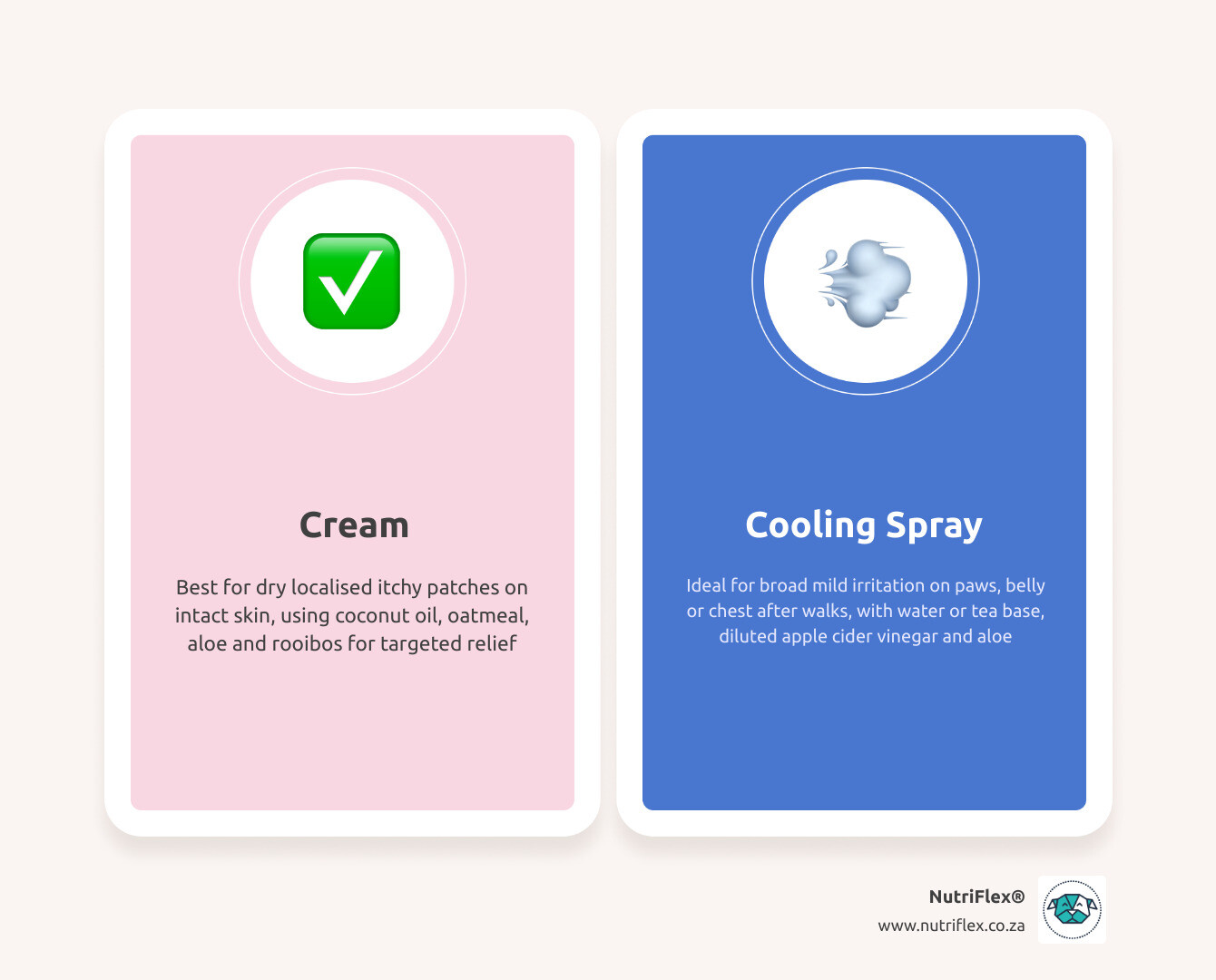
Creams are useful for localised dry or flaky patches. Sprays or rinses are often better for larger areas such as the belly, chest or paws after walks.
Here is a simple comparison:
| Option | Best for | Main ingredients | Avoid when |
|---|---|---|---|
| Cream | Dry localised itchy patches | Coconut oil, oatmeal, aloe, rooibos | Skin is raw, wet or infected |
| Cooling spray | Broad mild irritation on intact skin | Water or tea base, diluted apple cider vinegar, aloe | Open sores, stinging, heavy licking |
| Oatmeal bath | Widespread itch on paws, belly and chest | Finely ground oats in lukewarm water | Dog has open wounds or severe infection |
For more DIY topical ideas, see Homemade dog anti itch spray for soothing relief and natural skin hydration 🐶✨.
Applying Your Homemade Itch Cream for Dogs Safely
A good recipe still needs careful application. This is the part many owners rush and it matters.
Patch test first
Apply a tiny amount to a small area and wait 24 hours. If redness, swelling or extra itching appears, stop.Check the skin
Only use homemade cream on intact skin. Do not apply to bleeding, oozy or broken areas.Part the fur
Use your fingers to separate the coat so the cream reaches the skin rather than sitting on top of fur like expensive hair gel.Apply a thin layer
More is not better. A light film is enough.Massage gently
Use light circular motions for a few seconds. Do not scrub.Avoid sensitive areas
Keep away from eyes, eyelids, inside ears, nose, mouth, genitals and anus.Prevent licking
Distract your dog with a walk indoors, a chew or a food puzzle for at least 10 minutes. If your dog immediately licks everything off, the cream may not be the best format.Monitor response
If your dog improves over 3 to 7 days with consistent use, you are probably on the right track. If symptoms worsen, stop.
More home support tips are covered in Stop the Itch with These Home Dog Allergy Remedies.
Ingredients to Avoid in a Homemade Itch Cream for Dogs
This section is short because it needs to be memorable. Some ingredients should simply stay out of DIY dog skincare.
Avoid:
- Xylitol, which is toxic to dogs
- Essential oils unless specifically prescribed or approved by a veterinarian
- Tea tree oil
- Citrus, peppermint, eucalyptus and similar concentrated oils
- Human anti-itch creams unless your vet says a specific one is safe
- Fragrance additives and perfumed lotions
- Alcohol-based gels
- Hydrogen peroxide on itchy skin
- Undiluted apple cider vinegar
- Anything designed for human medicated skincare without veterinary guidance
Many natural ingredients are not automatically safe for dogs. “Natural” is lovely on a salad, but less lovely when it causes skin irritation. For related safety reading, visit Mites on Dogs Natural Home Remedies.
When to Skip the DIY and See a Veterinarian
Home remedies are for mild cases. They are not the answer to everything.
Stop the DIY approach and book a vet visit if you notice:
- Open wounds or bleeding
- A bad smell from the skin or ears
- Yellow crusting, pus or sticky discharge
- Severe hair loss
- Darkened or thickened skin
- Recurrent ear infections
- Constant paw chewing
- Obvious pain when touched
- Lethargy, fever or reduced appetite
- Rapidly spreading redness
- No improvement within 72 hours
- Repeated flare-ups even if the cream helps temporarily
That 72 hour rule matters. If your dog is still very uncomfortable after 3 days of sensible home care, we should assume there may be fleas, mange, yeast, bacteria or a food-related issue needing proper diagnosis.
Useful next reads include Red and Inflamed Skin Dog and Seasonal Skin Allergy Treatment for Your Itchy Best Friend.
Preventing Future Flare-ups with Nutrition and Hygiene
A homemade cream can calm a flare, but prevention usually comes from routine care.
Hygiene basics
- Use year-round flea prevention
- Wash bedding weekly
- Vacuum floors and soft furnishings regularly
- Wipe paws after walks during high pollen seasons
- Keep ears clean and dry using vet-approved products
- Use gentle dog shampoos and avoid over-bathing
- Dry your dog thoroughly after baths or rainy walks
Nutrition matters too
Skin is not separate from the rest of the body. Research and practitioner experience increasingly point to the gut-skin connection, and one source in the research notes that 70% of skin problems in dogs are influenced by the intestine. While that figure should be interpreted carefully, the broader point stands: digestive health, immune balance and skin health are closely linked.
That is why we often look beyond the skin itself and focus on:
- Omega 3 fatty acids to help moderate inflammation
- High-quality diets with fewer unnecessary additives
- Identifying food triggers where sensitivities are suspected
- Gut support where stools, gas or recurrent flare-ups suggest digestive imbalance
At NutriFlex®, we take a nutrition-first view of preventive pet health. Our supplements are made in a certified human-grade facility in Cape Town within an FSA accredited manufacturing environment and our formulations are Act 36 registered. For dogs with recurring itch, nutritional support can sit alongside sensible topical care rather than compete with it.
Read more in Solve Persistent Dog Allergies Naturally with Diet and Food Triggers That Affect Pets Skin Health.
Long-term Benefits of a Homemade Itch Cream for Dogs Routine
Used correctly, a homemade itch cream for dogs routine can support:
- Better skin comfort during mild flare-ups
- Less scratching and chewing
- Better skin barrier hydration
- A lower chance of scratch-damage on dry, itchy patches
- More affordable day-to-day support using simple ingredients
Still, it works best as part of a bigger plan that includes parasite control, diet review, grooming and veterinary input when needed. For more on broader natural support, see Dog Itchy Skin Remedy Natural Solutions.
Frequently Asked Questions about Dog Itch Relief
Can I use human anti-itch cream on my dog?
Usually no. Many human creams contain ingredients that are unsuitable for dogs or risky if licked. Some contain local anaesthetics, steroids, fragrances or preservatives that can irritate canine skin or cause problems if ingested. Unless your veterinarian has approved a specific product, avoid it.
How often can I give my dog an oatmeal bath?
For many itchy dogs, once or twice weekly is reasonable for short periods, especially during a flare-up. Use lukewarm water and plain finely ground oats. Let the soak sit on the coat for 10 to 15 minutes, then rinse well and pat dry. Do not over-bathe, because too much washing can dry the skin further.
Is apple cider vinegar safe for open sores?
No. Do not use apple cider vinegar on open sores, raw skin or hot spots. It may sting, worsen discomfort and make application a battle you will not win. Reserve diluted apple cider vinegar for intact skin only.
Conclusion
A well-made homemade itch cream for dogs can be a helpful fast fix for mild itching, especially when we use simple ingredients such as colloidal oatmeal, coconut oil, aloe vera and rooibos. It is affordable, practical and easy to make in a South African home.
The key is knowing its limits. If the skin is broken, infected, smelly or not improving within 72 hours, DIY care should stop and veterinary care should take over. For long-term results, we need to think bigger than the rash in front of us. Flea control, cleaner bedding, smarter bathing and nutrition that supports skin and gut health all matter.
If your dog deals with recurring itching, explore NutriFlex® Allergy and Itch Support and pair topical relief with a broader prevention plan built for real skin health.
