
Why Vet Certified Pure Natural Remedies Matter for Your Pet’s Health
Vet certified pure natural remedies are pet health products that have been formulated, reviewed or approved by licensed veterinary professionals and manufactured to verifiable quality standards. If you are looking for a quick reference, here is what to look for:
| What to Look For | Why It Matters |
|---|---|
| Formulated or reviewed by a licensed veterinarian | Ensures dosing and ingredient safety for animals |
| GMP-certified manufacturing facility | Confirms consistent production standards |
| Human-grade or FSA-accredited facility | Indicates higher ingredient purity and fewer fillers |
| Transparent ingredient labelling | Allows your vet to check for interactions |
| Registered under South African Act 36 | Confirms regulatory compliance for the local market |
| Clinical or university research backing | Supports efficacy claims beyond anecdote |
More than 60% of pet owners in the United States report using some form of complementary or alternative therapy for their animals. South Africa is seeing a similar shift, with growing numbers of pet owners seeking natural options that go beyond conventional treatment. The challenge is that the pet supplement market is largely unregulated, and terms like “natural” or “holistic” carry no legal definition. That gap between marketing language and verified quality is where pet owners are most vulnerable.
The demand for integrative veterinary care is real and growing. So is the risk of choosing a product that looks credible but lacks the formulation rigour, manufacturing standards or veterinary oversight to back it up.
I am Sharon Milani, Director of SmartPack PTY Ltd and co-founder of NutriFlex®, South Africa’s first certified human-grade pet health supplement range, with direct experience navigating the standards required to bring genuinely vet certified pure natural remedies to market. That journey, which began with my own miniature schnauzer Hector and a collagen-based joint formulation developed with veterinary input, shaped everything NutriFlex® stands for today. In the sections that follow, I will walk you through how to identify credible products, what the science actually supports and how to work with your veterinarian to build a safe, effective natural health plan for your dog or cat.
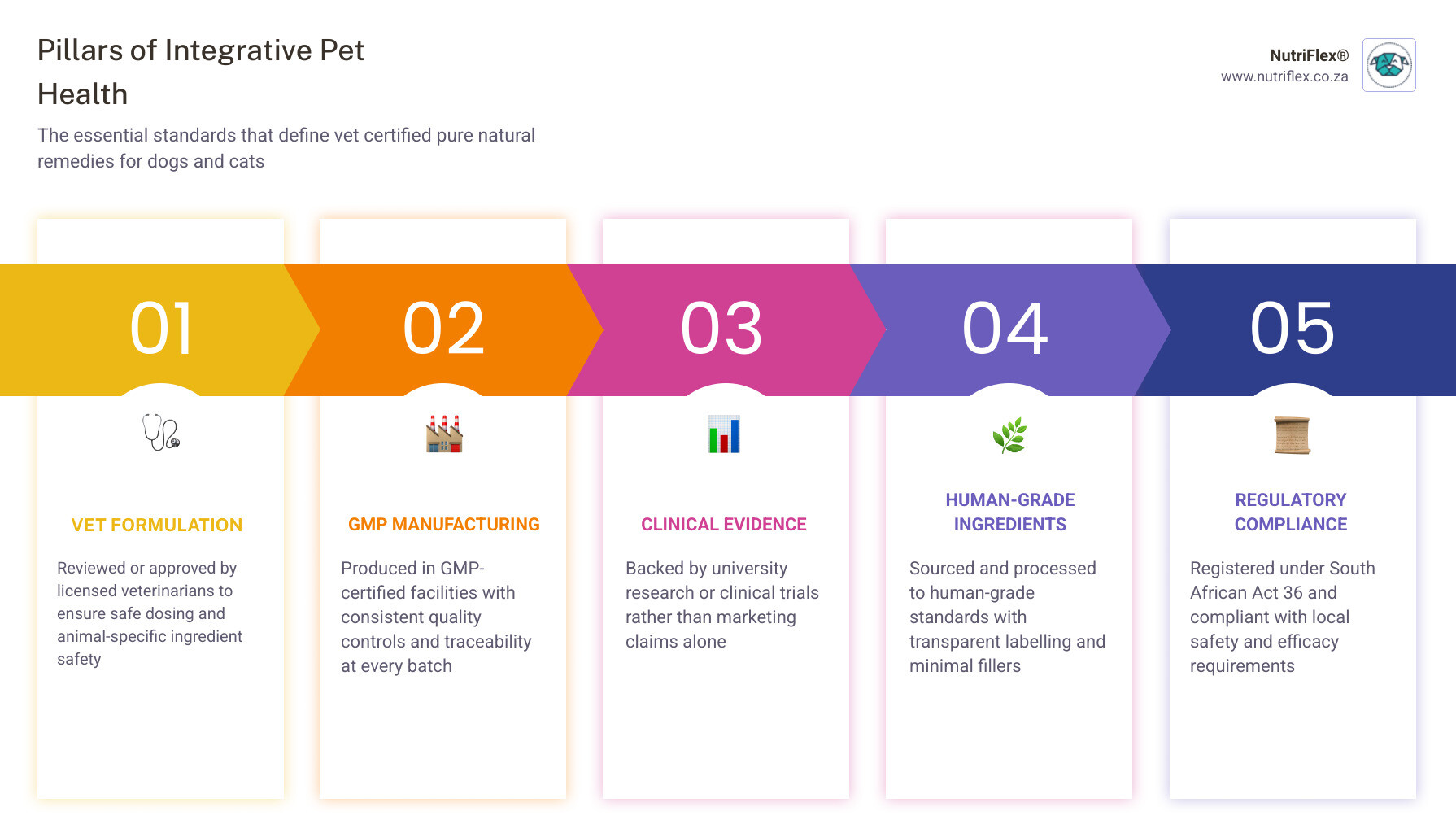
Quick look at vet certified pure natural remedies:
- cat hip dysplasia natural support
- natural frankincense hip joint support
- natural yucca root joint support
Understanding Vet Certified Pure Natural Remedies
When we look for vet certified pure natural remedies in South Africa, we must first understand what the term “vet-certified” actually means. In the global pet industry, any manufacturer can put “veterinarian approved” on a label without meeting a single objective standard. A genuine vet-certified remedy is one formulated by veterinary nutritionists, holistic veterinarians or master herbalists with specific training in animal physiology. It means the recipe is balanced for the biological needs of a dog or cat, not simply a human supplement repackaged in a smaller bottle.
The regulatory gaps in the pet supplement industry are massive. Unlike prescription medications, which undergo strict pre-market testing, over the counter natural remedies often bypass formal evaluation. In South Africa, this has led to a market flooded with products containing sub-therapeutic ingredient levels, heavy metals or hidden synthetic additives.
Using human supplements for pets is highly risky. Dogs and cats metabolise compounds differently to humans. For example, some human joint formulas contain xylitol as a sweetener, which is highly toxic to dogs and can cause rapid liver failure. Other human products contain grape seed extract, cocoa or high levels of sodium that can damage animal organs. Furthermore, human dosages are calculated for adult humans weighing 70 kg, making them dangerous for a 5 kg Jack Russell or a 4 kg cat.
To protect companion animals, professional bodies like the American Veterinary Medical Association emphasize that veterinarians must take responsibility for recommending only those complementary therapies that are backed by clinical evidence and produced under strict quality controls.
| Standard Category | Human-Grade Supplement Standards | Pet-Grade Supplement Standards |
|---|---|---|
| Facility Certification | GMP certified and food safety agency accredited | Often unaccredited industrial or agricultural facilities |
| Raw Material Sourcing | Sourced from certified human food supply chains | Often utilizes feed-grade or industrial-grade byproducts |
| Heavy Metal Testing | Mandatory batch testing for lead, mercury and arsenic | Rarely tested or verified at batch level |
| Excipients and Fillers | Strict limits on binders, artificial colours and preservatives | Often contains chemical flow agents and artificial flavorings |
| Regulatory Registration | Registered with national health products authorities | Frequently unregistered or poorly monitored |
The Importance of Vet Certified Pure Natural Remedies for Safety
The safety of any natural remedy depends entirely on the sourcing of its raw materials and the environment in which it is manufactured. Many budget pet supplements use feed-grade ingredients, which are permitted to contain higher levels of impurities, moisture and microbial contaminants. When we prioritise vet certified pure natural remedies, we ensure that every raw botanical, marine lipid or amino acid is sourced from certified human-grade suppliers.
At NutriFlex®, we manufacture all of our products in a certified human-grade facility within a Food Safety Agency accredited manufacturing environment in Cape Town. This ensures that the cleanliness, temperature controls and batch testing protocols match the standards required for human food production.
By maintaining these strict standards, we completely avoid the risk of cross-contamination with common agricultural toxins, moulds or bacteria like Salmonella and E. coli. It also ensures that our products do not contain toxic additives, cheap grain fillers or chemical preservatives that could trigger inflammatory skin conditions or digestive upset. If you want to connect with professionals who understand this level of care, you can use resources like the AHVMA VetFinder to locate licensed holistic veterinarians who prioritise clean, evidence-based natural health.
How to Identify Genuine Vet Certified Pure Natural Remedies
Navigating the pet health aisle requires a critical eye. To separate genuine remedies from clever marketing, pet owners should look for four key markers:
- Label Transparency: A reputable brand will list every single active and inactive ingredient, including its exact milligram weight per serving. Avoid products that hide behind proprietary blends or vague terms like “natural botanical extracts”.
- GMP Certification: Good Manufacturing Practice certification guarantees that the manufacturer follows strict, standardised operating procedures for every batch.
- Independent Laboratory Testing: Genuine brands readily provide Certificates of Analysis from independent third-party laboratories, proving that the product is free from heavy metals, pesticides and harmful bacteria.
- South African Regulatory Compliance: In South Africa, any supplement making a health or therapeutic claim must be registered under Act 36 of 1947 with the Department of Agriculture, Land Reform and Rural Development. An Act 36 registration number on the label is your ultimate guarantee that the product has been evaluated for safety, quality and nutritional accuracy.
Evidence-Based Natural Remedies with Clinical Support
The true value of any natural remedy lies in scientific validation. For decades, complementary and alternative veterinary medicine relied heavily on anecdotal reports. Today, university research and peer-reviewed clinical trials are proving the therapeutic value of specific natural compounds.
When evaluating these studies, we must account for the caregiver placebo effect. This is a documented phenomenon where a pet owner perceives that their dog is feeling better simply because they are administering a treatment, even if the animal’s physical condition has not changed. To bypass this bias, modern veterinary researchers use objective measurements, such as force-plate gait analysis for arthritic dogs, to prove that a remedy actually works. If you are dealing with chronic canine allergies, reading The Holistic Guide to Dog Skin Allergy Treatment: Natural Options can help you understand how clinical evidence is applied to real-world treatments.
Herbal and Botanical Remedies
Several botanical ingredients have accumulated impressive scientific backing in veterinary medicine. Curcumin, the active compound found in turmeric (Curcuma longa), is widely researched for its ability to downregulate inflammatory pathways in dogs. Clinical trials show that high-potency curcumin extracts can significantly reduce joint pain and improve mobility in dogs with osteoarthritis, performing comparably to some non-steroidal anti-inflammatory drugs without the associated gastrointestinal side effects.
Chlorella vulgaris, a nutrient-dense microalgae, is highly valued for its natural detoxification properties. It binds to heavy metals and environmental toxins in the digestive tract, assisting the liver and kidneys in filtering out impurities. It is also rich in carotenoids and essential amino acids that contribute to coat quality and cellular health.
Echinacea purpurea is another botanical with strong clinical support. It stimulates phagocytosis, increases leukocyte counts and helps support the immune system during active infections. This makes it highly useful for dogs recovering from respiratory infections or urinary tract issues. For practical tips on managing skin issues naturally, you can read Homemade Remedies for Dog Skin Allergies to Save Your Sanity.
Beyond internal herbs, topical botanicals also play a key role in natural care. For example, plant-based flea and tick repellents that utilise clean botanical oils can provide excellent ongoing defense, such as the systems developed by PawPurity. Additionally, medical-grade Mānuka honey with an MGO rating of 500+ has been shown in clinical trials to reduce animal wound healing times by up to 40% due to its potent antimicrobial properties, as seen in advanced topical products like those from Manuka Vet.
Nutraceuticals and Functional Ingredients
Nutraceuticals are food-derived compounds that provide targeted medical or health benefits. In veterinary orthopaedics, the gold standard combination for joint preservation consists of glucosamine, chondroitin sulphate and green-lipped mussel.
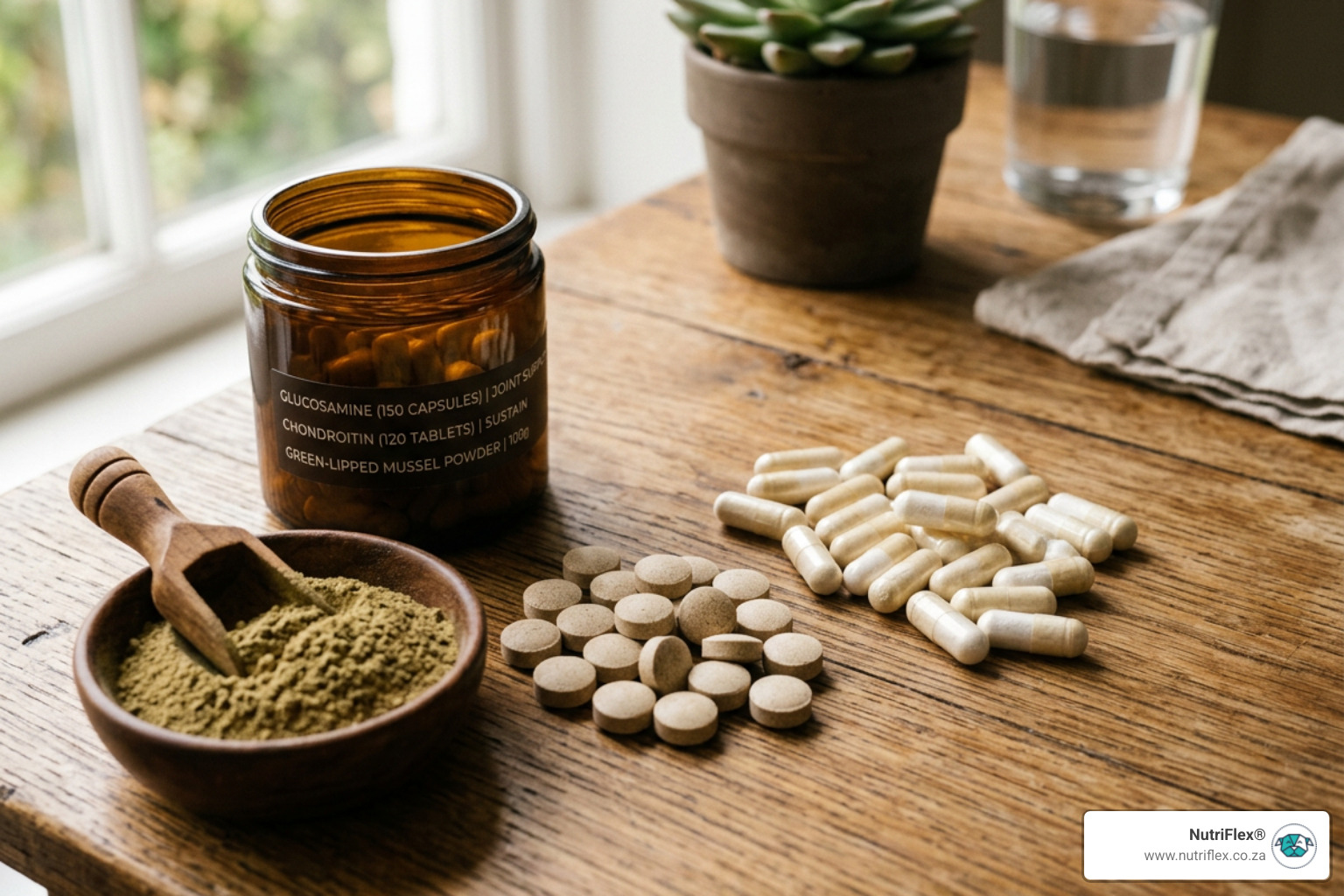
Glucosamine acts as a building block for glycosaminoglycans, which are essential for repairing damaged cartilage. Chondroitin sulphate helps maintain joint fluid viscosity, absorbing shock and preventing cartilage breakdown. Green-lipped mussel, unique to the pristine waters of New Zealand, provides a rich source of omega-3 fatty acids, particularly eicosatetraenoic acid, which actively blocks the inflammatory enzymes responsible for joint degradation.
When combined with natural anti-inflammatories like frankincense (Boswellia serrata), these ingredients offer powerful, synergistic protection for senior dogs. You can explore how these compounds work together in Natural Frankincense Hip Joint Support for Senior Pets.
Homeopathic and Flower Essences
Homeopathic remedies and flower essences are widely used to manage emotional and behavioral issues in companion animals, particularly anxiety, fear of loud noises and travel stress. The most famous of these is the Bach flower essence blend, which combines five specific flower extracts, including Rock Rose, Clematis, Impatiens, Cherry Plum and Star of Bethlehem.
These essences are prepared in highly diluted solutions, typically using vegetable glycerin and water as a carrier base. While conventional science continues to study the exact bioenergetic mechanisms behind these remedies, thousands of pet owners use them to soothe dogs during thunderstorms, fireworks or visits to the vet. You can review the official product registrations and ingredients for these calming solutions on the DailyMed Rescue Remedy Pet Cat Label and the DailyMed Rescue Remedy Pet Dog Label. To understand how to integrate these calming methods into a broader behavioral plan, refer to The Zen Dog: Natural Remedies for Canine Anxiety.
Risks, Interactions and Professional Veterinary Guidance
While natural remedies offer incredible health benefits, it is a dangerous mistake to assume that “natural” always means “safe”. Active botanicals and concentrated nutraceuticals carry real pharmacological activity, meaning they can interact with conventional medications or cause adverse reactions if misused.
For example, high doses of curcumin or omega-3 fish oils can thin the blood. If a dog is scheduled for surgery or is already taking a prescribed non-steroidal anti-inflammatory drug, combining these natural remedies without veterinary supervision could increase the risk of internal bleeding. Similarly, herbs that support liver detoxification can alter how the liver processes conventional anti-seizure medications, potentially reducing their effectiveness.
To navigate these risks safely, it is essential to work with a qualified professional who can identify underlying issues, such as differentiating between simple dry skin and parasitic infestations like mange. For more on this, read Mange No More with Natural and Homeopathic Remedies for Your Itchy Pup.
Working with an Integrative Veterinarian
The safest path to wellness is integrative veterinary care, which combines the diagnostic power of conventional medicine with the supportive benefits of natural therapies. An integrative veterinarian will evaluate your pet’s diet, lifestyle, medical history and current symptoms to build a personalised, holistic care plan.
In South Africa, veterinary practices are governed by the South African Veterinary Council. Many local vets have pursued post-graduate training in veterinary acupuncture, herbal medicine or medical nutrition to offer well-rounded support. You can read about integrated practices like All Natural Vet Care or Birmingham Pet Vet to see how this model works in practice, or explore research-driven ingredient developers like Natural Remedies and their updates on Natural Remedies Animal Health Care.
When you visit your veterinarian to discuss natural options, preparation is key. Here is a practical list of questions to ask during your consultation:
- Are there any potential interactions between this natural supplement and my pet’s current prescription medications?
- Is this specific product registered under South African Act 36, and is it manufactured in a certified human-grade facility?
- What is the precise, weight-based dosage in milligrams or millilitres that my pet should receive?
- What specific physical or clinical markers should we monitor to track the effectiveness of this remedy?
- Are there any potential side effects, such as loose stools or lethargy, that I should watch out for at home?
Frequently Asked Questions about Natural Pet Remedies
Are natural remedies safe to use alongside prescription veterinary medications?
In many cases, yes, but it depends entirely on the active ingredients and the specific medication. Natural remedies can often be used to reduce the required dose of conventional drugs, minimizing long-term side effects. However, you must always consult your veterinarian first. As a general rule of safety, always separate the administration of natural supplements and prescription medications by at least 30 to 60 minutes to prevent any absorption issues in the digestive tract.
How do I determine the correct dosage of a natural remedy for my dog?
Dosage should always be calculated based on your dog’s body weight in kilograms, rather than generic scoop sizes or human portions. Because active ingredients vary in concentration, check the product label for the exact milligram weight per serving. For example, a therapeutic dose of a joint active might require 15 mg to 20 mg per kilogram of body weight daily. Avoid products that use vague serving guides like “one scoop” without defining the exact gram weight of that scoop, as this can easily lead to under-dosing or accidental over-dosing.
What is the difference between human-grade and pet-grade natural supplements?
The difference lies in raw material purity, manufacturing regulations and facility cleanliness. Human-grade supplements are produced in facilities licensed for human food production, ensuring they are free from industrial contaminants, heavy metals and pathogens. Pet-grade or feed-grade supplements are held to much lower agricultural standards, which allows for higher levels of impurities. Additionally, human-grade products are completely free from hidden toxic excipients, such as xylitol or artificial sweeteners, which are occasionally used in human vitamins but are highly toxic to dogs.
Conclusion
Choosing the right path for your pet’s health does not mean deciding between conventional science and natural care. The future of veterinary medicine lies in an integrative approach, where evidence-based natural remedies are used alongside conventional diagnostics to support long-term vitality, comfort and mobility. By prioritizing products with clear clinical backing, human-grade manufacturing and proper South African regulatory compliance, you can support your pet’s body safely and effectively.
At NutriFlex®, we are committed to providing South African pet owners with absolute peace of mind. As a trusted local manufacturer, we develop Act 36 registered, human-grade supplements in an FSA-accredited Cape Town facility, ensuring that every batch meets the highest standards of purity, safety and nutritional accuracy. If you are ready to support your pet’s mobility and joint health with science-aligned, natural nutrition, explore our premium NutriFlex® Hip and Joint Supplements today.