
Why the Benefits of Giving Your Dog Fish Oil Are Worth Understanding
The benefits of giving your dog fish oil are well documented and span nearly every system in the body, from joints and skin to heart health and brain function.
Here is a quick summary:
| Benefit | What Fish Oil Supports |
|---|---|
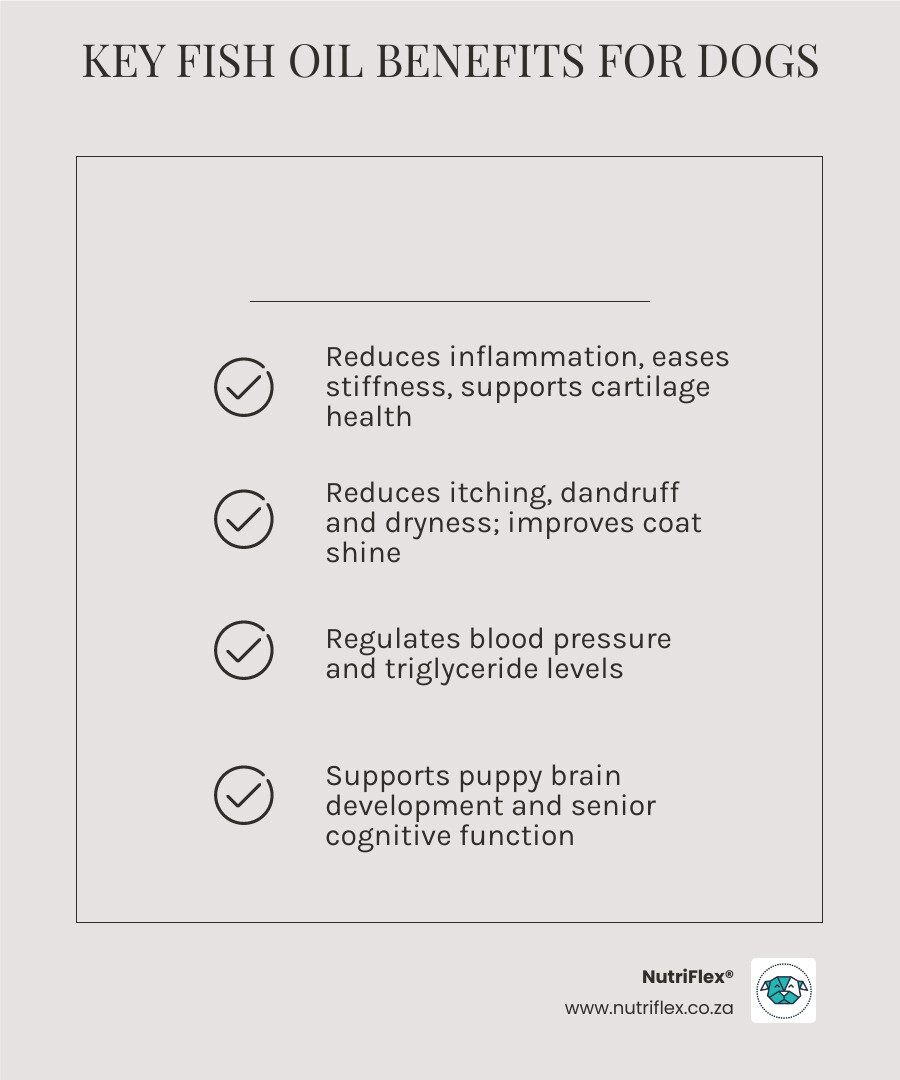
| Joints and mobility | Reduces inflammation, eases stiffness, supports cartilage |
| Skin and coat | Reduces itching, dandruff and dryness; improves shine |
| Heart health | Helps regulate blood pressure and triglyceride levels |
| Kidney function | Reduces renal inflammation and slows disease progression |
| Brain and cognition | Supports puppy development and senior cognitive function |
| Immune system | Helps regulate inflammatory response and immune activity |
| Allergies | Reduces inflammatory skin reactions |
Fish oil is derived from cold-water fish like anchovies, sardines and mackerel. It is rich in two omega-3 fatty acids, EPA (eicosapentaenoic acid) and DHA (docosahexaenoic acid). These are essential fats, meaning your dog’s body cannot produce them. They must come from diet or supplementation.
Most commercial dog foods do not provide adequate levels of EPA and DHA. High-heat processing destroys omega-3s and many grain-based recipes are heavily skewed towards omega-6 fatty acids, which can promote inflammation when not balanced correctly.
Fish oil supplementation helps correct that imbalance.
I am Sharon Milani, co-founder of NutriFlex® and Director of SmartPack PTY Ltd, and my interest in the benefits of giving your dog fish oil grew from years of working alongside animal food scientists and holistic veterinarians to develop human-grade omega-3 formulations for dogs and cats across South Africa. In the sections that follow, we cover everything you need to make an informed decision about fish oil for your dog.
What is Fish Oil and Why Does Your Dog Need It?
Fish oil is a concentrated source of omega-3 fatty acids, specifically Eicosapentaenoic Acid (EPA) and Docosahexaenoic Acid (DHA). While these terms might sound like something out of a high school chemistry textbook, they are actually the building blocks of a healthy, vibrant life for your dog. Unlike humans, dogs cannot efficiently synthesise these fats on their own. This makes them “essential” nutrients that must be consumed through their diet.
To understand why fish oil is so vital, we first need to look at the Fish Oil Transform Dog’s Health & Vitality connection. These fatty acids are polyunsaturated fats that play a massive role in regulating blood flow and inflammation throughout the body. When a dog lacks these nutrients, their cellular health can suffer, leading to dull coats, stiff joints and a weakened immune system.
The role of EPA and DHA in canine health
EPA and DHA each serve unique functions. EPA is primarily known for its powerful anti-inflammatory properties. It acts as a natural dampener for the inflammatory pathways that lead to joint pain and skin irritation. On the other hand, DHA is a major structural component of the brain and the retina in the eyes.
When we talk about the benefits of giving your dog fish oil, we are really talking about the synergy between these two molecules. They integrate into the cell membranes of every cell in your dog’s body, making those membranes more fluid and improving how cells communicate with one another. This biological “greasing of the wheels” is why fish oil is often the first supplement recommended by veterinarians for a wide range of conditions.
Why commercial dog food is often insufficient
Many pet owners assume that because their premium kibble lists “omega fatty acids” on the bag, their dog is getting enough. Unfortunately, the reality is often different. Most commercial dog foods in South Africa are grain-based and utilise meat from corn-fed animals. This creates a massive imbalance where the diet is overloaded with omega-6 fatty acids.
While omega-6 is also essential, an excess of it (often ratios as high as 30:1 in commercial foods) promotes a pro-inflammatory state. The Association of American Feed Control Officials (AAFCO) suggests a much tighter ratio. Furthermore, omega-3s are incredibly fragile. The high-heat processing (extrusion) used to make kibble often causes these delicate oils to become rancid before the bag even reaches the shelf. Rancid fats are not just useless; they can actually be harmful, causing oxidative stress. Supplementing with a fresh, high-quality fish oil is the most reliable way to ensure your dog receives the bioactive EPA and DHA they require.
The primary health benefits of giving your dog fish oil
The clinical evidence supporting fish oil is extensive. Beyond just a shiny coat, research has shown that omega-3s have a systemic found to support immune function. This is particularly beneficial for puppies with developing immune systems and older dogs whose natural defences may be waning.
Interestingly, the benefits extend to complex conditions. For example, studies indicate that omega-3s have an effect on decreasing disease activity of systemic lupus erythematosus and other autoimmune disorders. By modulating the immune response, fish oil helps the body stop attacking its own tissues. Furthermore, there is emerging evidence that DHA supplementation may be helpful in decreasing the frequency of seizures in dogs with idiopathic epilepsy.
For dogs with heart conditions, fish oil may act as an anticoagulant and prevent blood clots, which is a critical factor in managing cardiovascular disease.

Joint and mobility benefits of giving your dog fish oil
If your dog is struggling to get up in the morning or seems less enthusiastic about their walk in the park, joint inflammation is likely the culprit. According to Canine Arthritis Resources and Education, fish oil is one of the most effective natural tools for managing osteoarthritis.
Studies show that when dogs with arthritis are supplemented with fish oil, they show significant improvement in their ability to rise from a resting position and play within just six weeks. By 12 to 24 weeks, their walking ability improves noticeably. Fish oil works by decreasing the production of pro-inflammatory lipids that eat away at joint cartilage. This protection of the cartilage, combined with reduced stiffness, allows for a much better quality of life. For more detailed insights, you can explore Omega-3 for Dogs: Fish Oil Benefits.
Cognitive and developmental benefits of giving your dog fish oil
The benefits of giving your dog fish oil start from the very beginning of life. Research has shown that puppies with increased DHA learned and retained skills faster than those without. A landmark 2012 study confirmed that DHA is essential for proper brain and eye development in young animals.
As dogs age, they can suffer from Canine Cognitive Dysfunction (CCD), which is similar to dementia in humans. Symptoms include pacing at night, getting stuck in corners or failing to recognise family members. Supplementing senior dogs with fish oil has been shown to improve recognition and reduce these symptoms of cognitive decline. It effectively provides the brain with the healthy fats it needs to maintain neural connections and reduce oxidative damage.
Cardiovascular and kidney support
Heart health is another area where fish oil shines. It has been found to reduce the heart’s vulnerability to developing irregular rhythms like atrial fibrillation. Additionally, fish oil may decrease harmful levels of triglyceride, a type of fat in the blood that can be dangerous for dogs with heart disease or pancreatitis.
In the kidneys, fish oil helps by reducing blood pressure within the functional units of the kidney and lowering renal inflammation. This is vital because 1 in 10 dogs will develop kidney disease as they age. Slowing the progression of this disease can add years to a dog’s life. Some research even suggests that fish oil might be helpful in reducing tumor growth in certain cancers as well as improving cognitive function in senior dogs.
Choosing the Best Omega-3 Supplement in South Africa
Not all fish oils are created equal. When walking down the pet aisle in South Africa, you will see a variety of products, but the truth lies in the molecular form of the oil.
Natural Triglyceride vs. Ethyl Ester
There are three main types of fish oil:
- Natural Triglyceride Oil: This is the most natural form and is easiest for the body to absorb.
- Ethyl Ester Oil: This is a semi-natural, concentrated oil. While it is purified, it has at least 40% lower absorption rates compared to the triglyceride form.
- Synthetic Triglyceride Oil: A chemically altered version that is rarely as effective as the natural form.
For the best results, always look for a natural triglyceride formulation. It is more stable, more bioavailable and less likely to cause the “fishy burps” that dogs (and their owners) find unpleasant.
| Feature | Natural Triglyceride | Ethyl Ester |
|---|---|---|
| Absorption | High (100%) | Lower (approx. 60%) |
| Stability | High | Prone to oxidation |
| Bioavailability | Excellent | Moderate |
| Cost | Higher | Lower |
At NutriFlex®, we prioritise bioavailability and purity. Our Omegamax Fish Oil for Dogs and Cats – Premium Omega 3 Fatty Acids is formulated to provide the highest possible concentration of EPA and DHA in the form that dogs can actually use.
Sourcing and quality indicators
Where the fish come from matters. Large fish like tuna or salmon are higher up the food chain and can accumulate heavy metals like mercury and PCBs (polychlorinated biphenyls). Smaller, cold-water fish like anchovies and sardines are generally much cleaner and more sustainable.
In South Africa, you should also look for Act 36 registration. This is a legal requirement for pet supplements and ensures the product has been vetted for safety and label accuracy. If a product does not have an Act 36 V-number, you have no guarantee of what is actually inside the bottle. You can learn more about choosing the right source in our guide on Sardines vs Salmon: Which Omega Supplement is Best for Your Dog?.
Dosage and Safety: How Much Fish Oil is Right for Your Dog?
Getting the dosage right is crucial. Too little and you won’t see the benefits; too much and you risk side effects.
The general therapeutic dosage range for combined EPA and DHA is 75 to 100 mg per kilogram of body weight.
- For a 10 kg dog, this would be 750 to 1000 mg of combined EPA/DHA daily.
- For a 30 kg dog, the dose would be 2250 to 3000 mg daily.
The National Research Council has set an upper safe limit of 370 mg per kilogram, which is quite high, but it is always best to stay within the recommended range unless directed otherwise by your vet. For specific product instructions, refer to our Omega-3 for Dogs page.
Potential side effects and risks
While fish oil is incredibly safe, it is still a fat, and introducing it too quickly can cause gastrointestinal upset, such as diarrhoea or vomiting. It is always a good idea to start with a half-dose and gradually increase it over a week.
Other potential risks include:
- Fishy Breath: Usually a sign of lower-quality or slightly oxidised oil.
- Bleeding Risk: At very high doses, fish oil acts as a mild blood thinner. This is usually only a concern for dogs undergoing surgery or those with existing bleeding disorders.
- Vitamin E Depletion: Long-term supplementation can deplete Vitamin E levels. High-quality supplements, like our Omega-3 for Dogs & Cats – 120 Softgels, often include added Vitamin E to prevent this.
- Pancreatitis: Because fish oil is a fat, dogs with a history of pancreatitis or certain breeds like Schnauzers and Yorkshire Terriers should be monitored closely.
Storage and Administration for Maximum Potency
Omega-3 fatty acids are extremely sensitive to light, heat and oxygen. When fish oil is exposed to these elements, it undergoes a process called oxidation, which makes the oil rancid. Rancid oil smells terrible and loses all its health benefits.
To keep your fish oil fresh:
- Buy in Dark Bottles: Dark glass or opaque plastic helps block out light.
- Refrigerate: Once opened, liquid fish oil should always be stored in the fridge.
- Check the Smell: If the oil smells excessively “funky” or like rotten fish, it has likely gone off. A fresh oil should have a mild, clean ocean scent.
- Proper Administration: Most dogs love the taste of fish oil. You can pump or pour it directly over their food. If your dog is a picky eater, softgels can be hidden in a treat or “pilled” directly.
Frequently Asked Questions about Fish Oil for Dogs
Can I give my dog human fish oil supplements?
While the fish oil itself is often similar, we generally advise against using human supplements for dogs. Human products may contain flavourings or sweeteners like xylitol, which is highly toxic to dogs even in small amounts. Furthermore, the concentration of EPA and DHA in human pills is designed for a 70 kg adult, making it very difficult to dose correctly for a small or medium-sized dog. Pet-specific formulations ensure safety and accurate dosing.
How long does it take to see results from fish oil?
Patience is key. While some owners notice a shinier coat within a week, the deep anti-inflammatory benefits for joints and internal organs usually take 2 to 4 weeks of consistent daily use to become apparent. For chronic conditions like arthritis, it can take up to 6 to 12 weeks to see the full clinical effect. Consistency is the most important factor.
Does fish oil help with itchy skin and allergies?
Yes, absolutely. One of the most common reasons South African pet owners seek out fish oil is for “itchy skin.” By strengthening the skin barrier and reducing the production of inflammatory chemicals in the skin, fish oil can significantly reduce scratching, redness and shedding. It is an excellent supportive therapy for dogs with seasonal allergies or atopic dermatitis.
Conclusion
The benefits of giving your dog fish oil are clear, science-backed and transformative. Whether you are looking to give your puppy the best start in life, help your senior dog move more comfortably or simply want that “show-dog” shine on their coat, omega-3s are a cornerstone of functional nutrition.
As with any supplement, we always recommend a quick chat with your veterinarian before starting, especially if your dog has underlying health conditions or is on medication. At NutriFlex®, we are committed to providing South African pet parents with the highest quality, Act 36 registered supplements produced right here in Cape Town.
Ready to see the difference for yourself? Explore our full Omega 3 Category and give your dog the gift of better health today.
