
Why Your Dog’s Joints Need More Support Than Their Diet Alone Provides
chicken collagen dogs mobility is a topic that matters to any dog owner who has watched their pet slow down, hesitate at the stairs or struggle to get up after rest. Here is a quick summary of what you need to know:
- What it is: Chicken collagen is a structural protein sourced from chicken cartilage, tendons and connective tissue. It provides the building blocks that joint cartilage needs to stay healthy.
- How it helps: Collagen peptides support cartilage regeneration, reduce markers of cartilage breakdown (such as MMP-3) and help maintain the cushioning between joints.
- What the science shows: In a 16-week clinical trial, dogs supplemented with collagen hydrolysate showed significant reductions in lameness, improved quality of life scores and measurable increases in thigh muscle circumference.
- Who benefits most: Senior dogs, large breeds prone to hip and elbow dysplasia, active working dogs and puppies in high-growth phases.
- How to use it: Collagen supplements are typically mixed into food daily, with dosages guided by body weight and your dog’s life stage.
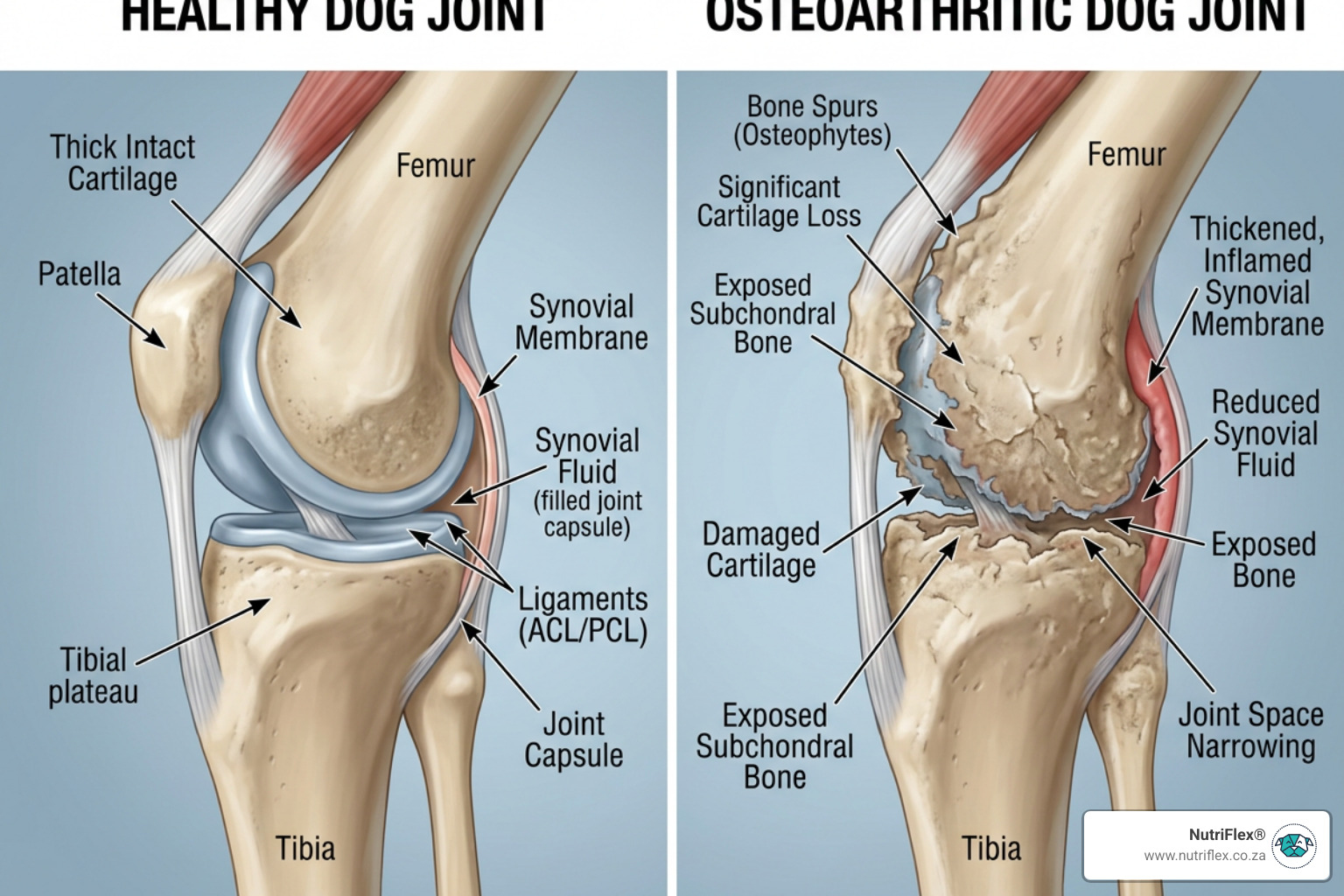
Osteoarthritis affects up to 80% of dogs over the age of eight. Yet joint degeneration does not begin at eight. It builds silently over years, driven by wear, inflammation and a gradual decline in the body’s natural collagen production. By the time stiffness becomes visible, meaningful cartilage loss has often already occurred.
The good news is that targeted nutritional support, started early and maintained consistently, can meaningfully slow that decline.
I am Sharon Milani, Director of SmartPack PTY Ltd and co-founder of NutriFlex®, South Africa’s first certified human-grade pet supplement range, which was developed after a collagen-based formulation helped my severely arthritic miniature schnauzer walk again when conventional medicine had run out of answers. My direct experience with chicken collagen dogs mobility informs everything NutriFlex® formulates, from ingredient sourcing to clinical alignment. In the sections that follow, we break down exactly how chicken collagen works, what the research shows and how to apply it practically for your dog.
Understanding Chicken Collagen for Dogs Mobility
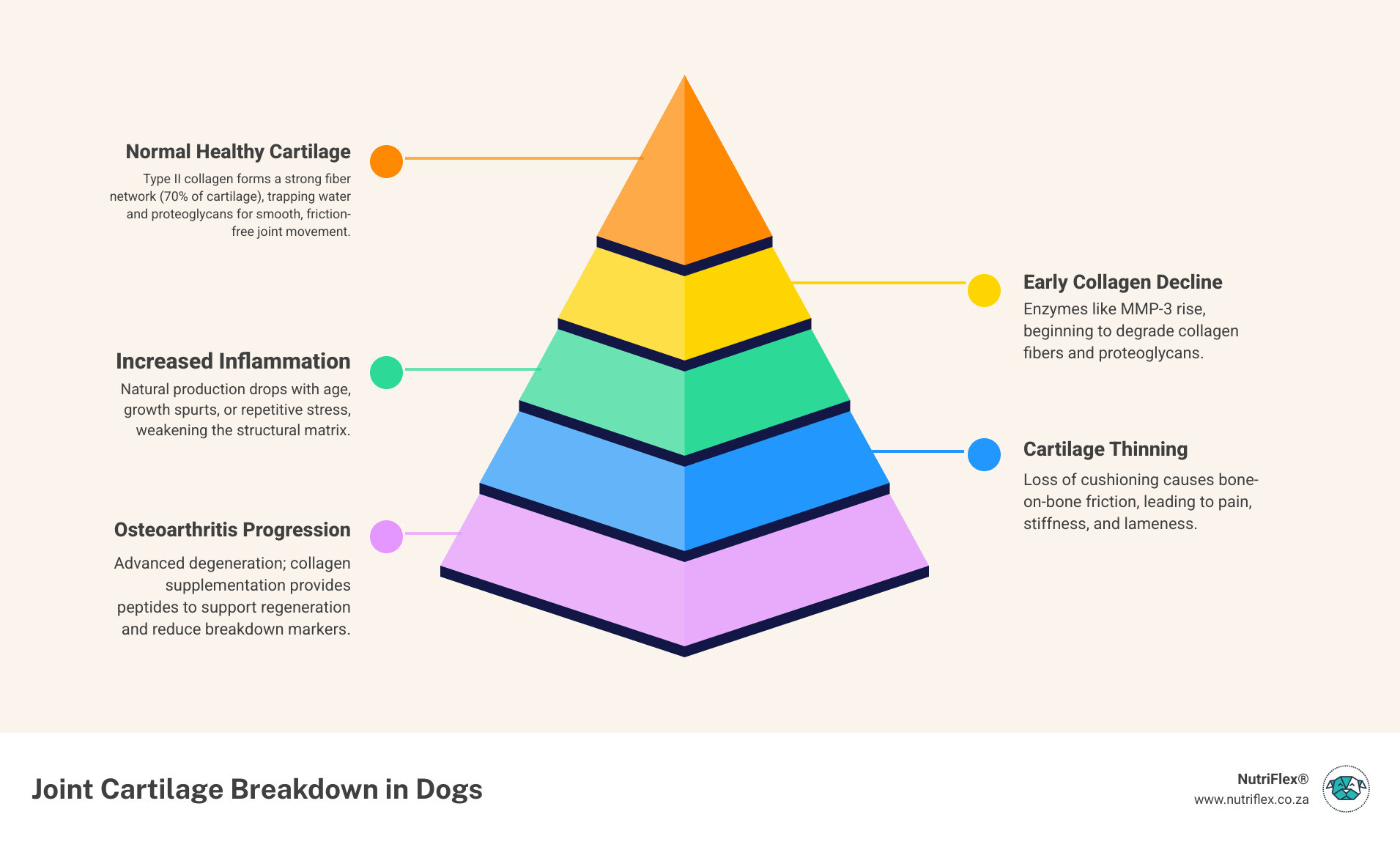
To understand why chicken collagen dogs mobility is such a critical area of canine nutrition, we first need to look at what is happening inside your dog’s joints. Think of a joint like a high-performance shock absorber. The “rubber” in that shock absorber is articular cartilage, a firm and slippery tissue that allows bones to glide over each other without friction.
At the heart of this cartilage is Type II collagen. While there are many types of collagen in the body, Type II is the specific structural protein that makes up over 70% of cartilage mass. It creates a dense network of fibres that traps water and proteoglycans, giving the joint its ability to resist compression and absorb impact.
As dogs age or experience physical stress from high activity, the rate at which they break down collagen begins to outpace the rate at which they can produce it. This leads to a thinning of the cartilage matrix. When we talk about chicken collagen in supplements, we are usually referring to collagen hydrolysate or bioactive peptides. These are proteins that have been broken down into smaller fragments through a process called hydrolysis.
Because these peptides are so small, they are highly bioavailable. Once ingested, they travel through the bloodstream and accumulate in the cartilage. Research has shown that these fragments do not just act as passive building blocks; they actively signal the dog’s own cells, known as chondrocytes, to increase the production of new Type II collagen and proteoglycans. This dual action, providing the raw materials and stimulating the repair process, is why Scientific research on the role of collagen in cartilage metabolism is so central to modern dog joint care.
Scientific Evidence: How Collagen Fights Osteoarthritis
For a long time, glucosamine and chondroitin were the only “go-to” options for dog joint supplements. However, recent scientific breakthroughs have shifted the spotlight toward collagen hydrolysates. One of the most compelling pieces of evidence comes from a 16-week clinical trial involving 52 dogs with early-stage osteoarthritis.
In this study, the dogs were divided into groups receiving different nutritional interventions. The results were striking: the collagen hydrolysate group showed the greatest reduction in lameness. By the end of the 16-week period, 9 out of 20 dogs in the collagen group were completely free from lameness. This was a significant improvement compared to other groups and highlights the potential for collagen to act as a natural supplement for dog arthritis.
Another critical study focused on 23 German Shepherd police dogs. Because these dogs are highly active and perform consistent physical tasks, they are an excellent model for studying joint wear. Researchers measured levels of Matrix Metalloproteinase-3 (MMP-3), an enzyme that is a known marker for cartilage degradation. After 8 weeks of collagen supplementation, MMP-3 levels were significantly reduced (p=0.01). This suggests that collagen doesn’t just help with symptoms; it may actually slow the biological “machinery” that destroys cartilage.
These findings are supported by more recent data published in Study on Bioactive Collagen Peptides for canine OA, which confirms that oral intake of specific peptides improves gait and quality of life in dogs with naturally occurring osteoarthritis. For South African pet owners, this means that benefits of collagen powder for dogs are backed by hard data, not just marketing claims. Further Research on gait improvement in large animal models continues to validate that collagen is a superior translational therapy for joint health.
Clinical Results: Improving Chicken Collagen Dogs Mobility
When vets evaluate chicken collagen dogs mobility, they look at more than just whether a dog “looks better”. They use objective measurements to track progress. Two of the most important metrics are Peak Vertical Force (PVF) and Vertical Impulse (VI). These measure how much weight a dog is actually willing to put on a limb.
In trials, dogs taking bioactive collagen peptides showed a significant increase in PVF compared to placebo groups. This means they were walking with more confidence and less pain. But perhaps the most interesting clinical finding was the change in thigh muscle circumference. When a dog has joint pain, they often “favour” the leg, leading to muscle wasting (atrophy). In collagen-treated dogs, thigh muscle circumference increased significantly over 16 weeks (p=0.0037 on the left and p=0.01 on the right). This indicates that the dogs were using their legs more normally, allowing muscle mass to return.
| Parameter | Collagen Group (16 Weeks) | Placebo/Control Group |
|---|---|---|
| Lameness Reduction | 45% of dogs lameness-free | Minimal change |
| MMP-3 (Degradation Marker) | Significant Reduction (p=0.01) | No significant change |
| Quality of Life Score | Most dogs “No/Minor Symptoms” | Persistent symptoms |
| Muscle Circumference | Significant Increase | Static or decreasing |
This clinical data, which includes the Assessment of joint pain sensitivity, proves that collagen helps address the signs of early joint problems in dogs before they become debilitating.
Chicken Collagen vs Glucosamine and Other Sources
A common question we receive at NutriFlex® is how chicken collagen compares to other sources like bovine or fish collagen, or traditional alternatives like glucosamine.
- Chicken Collagen (Type II): This is the gold standard for joint health because it matches the specific collagen found in joint cartilage. It is often more effective at targeting the cartilage matrix directly.
- Bovine Collagen (Type I and III): Excellent for skin, coat and general vitality but less specific to joint cushioning than Type II.
- Fish Collagen (Type I): Highly absorbable and useful for skin but it lacks the Type II specificity required for targeted joint support.
- Glucosamine and Chondroitin: These are the building blocks of the fluid that lubricates the joint. While they are helpful, they do not provide the structural scaffold that collagen does.
Modern research suggests that the best results come from a synergistic approach. Combining chicken collagen with glucosamine and chondroitin provides both the structural support, collagen, and the lubrication, glucosamine, the joint needs. You can find more about the Structure and molecular data of glucosamines to see how these molecules interact at a cellular level.
When we developed our advanced collagen powder for dogs and cats, we looked at these synergistic effects. By combining high-quality collagen with complementary ingredients like MSM and Green Lipped Mussel, we create a more comprehensive solution than single-ingredient supplements can offer. This is why joint-supplement-for-dogs discussions are increasingly moving towards multi-nutrient formulas.
Safety and Administration for South African Pet Owners
Safety is our top priority at NutriFlex®. Our supplements are produced in a certified human-grade facility in Cape Town, ensuring that your pet receives the same quality of ingredients that you would expect for yourself.
One concern pet owners often have is chicken allergies. While true chicken protein allergies exist in dogs, they are usually reactions to the larger proteins found in chicken meat. Hydrolysed chicken collagen is broken down into such small peptides that the immune system often does not recognise them as allergens. However, if your dog has a known severe allergy, it is always best to consult your vet or start with a very small test dose.
The Safety and efficacy of long term NSAID alternatives is a major reason why many South African owners are moving towards collagen. Non-steroidal anti-inflammatory drugs, or NSAIDs, are effective for pain but long-term use can lead to kidney or liver issues. Collagen offers a safer nutritional path that supports dogs with dog-arthritis-when-supplement-might-help.
Integrating collagen into your dog’s daily routine is simple. Because it is a tasteless, odourless powder, it can be mixed into wet food, kibble or even a small amount of plain yoghurt. For older dogs struggling to stand up, consistency is key. Collagen works through accumulation, not as an instant fix like a painkiller.
Dosage Guidelines for Chicken Collagen Dogs Mobility
Getting the dosage right is essential for seeing results. Clinical studies, such as the German Shepherd trial, used a dose of 20 g per day for large dogs. However, for general maintenance and prevention, a bodyweight-based approach is often more practical.
- Small Dogs (up to 10 kg): 2.5 g to 5 g daily, approximately 250 mg/kg to 500 mg/kg body weight.
- Medium Dogs (11 kg to 25 kg): 5 g to 10 g daily, approximately 200 mg/kg to 455 mg/kg body weight.
- Large Dogs (over 25 kg): 10 g to 20 g daily, approximately 400 mg/kg to 800 mg/kg body weight for a 25 kg dog, adjusted by body weight.
We always recommend starting with our everyday-maintenance-collagen-for-pets if you are using it as a preventative measure. If your dog is already showing signs of stiffness, the advanced-collagen-powder-for-dogs-and-cats is the better choice. Knowing when-to-start-joint-supplements-for-dogs is easy: the earlier, the better. Large breeds like Labradors, German Shepherds and Rottweilers should ideally start supplementation as they reach skeletal maturity to help protect their joints for the future.
Beyond Joints: Additional Benefits of Collagen
While we are focusing on chicken collagen dogs mobility, the benefits of this “super protein” extend far beyond the joints. Collagen is a systemic nutrient that supports the entire body.
- Skin and Coat Health: Collagen provides the elasticity and hydration the skin needs. Owners often report a dog-collagen-for-skin-and-joints “glow” after a few weeks of use, with less shedding and a softer coat.
- Gut Health: Amino acids like glycine and glutamine help repair the gut lining, which is essential for dogs with sensitive stomachs or “leaky gut” syndrome.
- Muscle Preservation: As dogs age, they lose muscle mass (sarcopenia). The amino acid profile of collagen helps maintain lean muscle, which in turn provides better support for the joints.
- Stronger Nails: If your dog has brittle nails that crack easily, collagen can help strengthen the nail bed.
There are at least 6-reasons-dogs-need-collagen-in-their-diet, and mobility is just the beginning. For a deeper dive into these systemic effects, check out our guide on collagen-for-dogs-what-you-need-to-know.
Frequently Asked Questions about Canine Collagen
How long does it take to see mobility improvements?
Most owners notice a difference in their dog’s energy and “spring in their step” within 3 to 4 weeks. However, for chronic conditions like severe osteoarthritis, it can take up to 8 to 12 weeks for the full structural benefits to manifest. Patience and consistency are vital.
Is chicken collagen safe for dogs with food sensitivities?
Yes, in most cases. Hydrolysed collagen is highly refined and lacks the complex proteins that typically trigger allergic reactions. However, always monitor your dog when introducing a new supplement. For more on this, see can-collagen-for-dogs-help-with-ageing-joints.
Can collagen replace traditional pain medication for dogs?
Collagen is a nutritional therapy, not a drug. While it can significantly reduce pain by improving joint structure, it should not be used to replace prescribed medication without consulting your vet. Many owners find that they can reduce the dosage of NSAIDs after their dog has been on a high-quality collagen regimen for several months.
Conclusion
At NutriFlex®, we believe that every dog deserves to live a life in motion. By focusing on functional animal nutrition and science-aligned formulations, we provide South African pet owners with the tools to fight back against the “rust” of aging. Our products are Act 36 registered and manufactured right here in Cape Town, ensuring the highest standards of safety and efficacy.
Don’t wait for your dog to struggle. Whether you have a playful puppy or a dignified senior, chicken collagen is a powerful, natural way to support their long-term health. Explore our dog-joint-care-tips-for-a-healthy-companion and take the first step toward a more mobile future for your best friend.
Ready to support your dog’s mobility? Buy joint support supplements for dogs
