
Why Giving Fish Oil to Dogs is One of the Smartest Health Decisions You Can Make
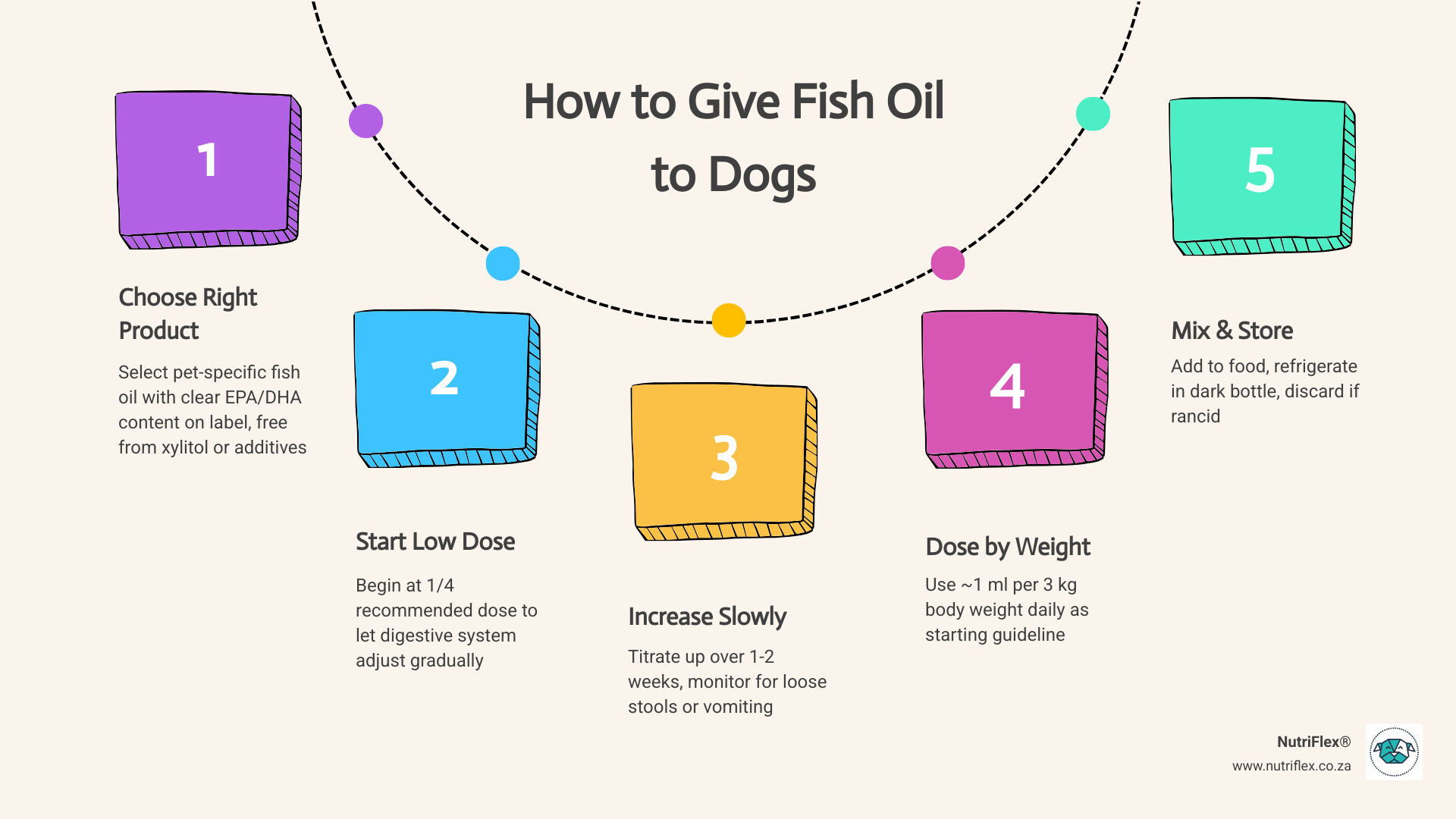
Giving fish oil to dogs is straightforward when you follow a few simple steps:
- Choose the right product – Use a pet-specific fish oil that lists EPA and DHA content on the label, free from additives like xylitol.
- Start with a low dose – Begin at roughly a quarter of the recommended dose to allow your dog’s digestive system to adjust.
- Work up gradually – Increase the dose slowly over one to two weeks while monitoring for loose stools or vomiting.
- Use the general guideline – Approximately 1 ml of fish oil per 3 kg of body weight per day is a widely used starting point.
- Mix it into food – Add liquid fish oil directly to your dog’s meal for easy administration.
- Store it correctly – Keep opened fish oil refrigerated in a dark bottle and discard it if it smells rancid.
- Consult your vet – Especially if your dog has an existing health condition or is on medication.
Fish oil is one of the most widely recommended supplements in veterinary practice, and for good reason. Rich in the omega-3 fatty acids EPA and DHA, it supports everything from joint mobility and skin health to heart function and cognitive performance. Yet many dog owners are unsure where to start, how much to give or which product to trust.
This guide cuts through the confusion and gives you practical, evidence-based answers.
I’m Sharon Milani, co-founder of NutriFlex® and director of SmartPack PTY Ltd, and my experience with giving fish oil to dogs began with my own miniature schnauzer, Hector, whose dramatic recovery from severe arthritis through targeted nutritional supplementation became the foundation of what NutriFlex® stands for today. Everything in this guide reflects that same commitment to formulation integrity and real-world results.
What is Fish Oil and Why is it Essential for Dogs?
Fish oil is a supplement derived from the tissues of oily, cold-water fish such as salmon, sardines, anchovies and mackerel. It is prized for its high concentration of omega-3 fatty acids, which are polyunsaturated fats that play a critical role in almost every biological process in a dog’s body.
The two most important components are eicosapentaenoic acid (EPA) and docosahexaenoic acid (DHA). These are known as long-chain fatty acids. While plants like flaxseed contain alpha-linolenic acid (ALA), dogs are very inefficient at converting ALA into the usable EPA and DHA their bodies require. This is why marine-sourced oils are considered superior for canine health.
Because dogs cannot produce these essential fatty acids on their own, they must obtain them through their diet. Modern commercial dog foods are often high in omega-6 fatty acids from cereal grains and vegetable oils, which can promote inflammation if not balanced correctly. Giving fish oil to dogs helps restore this balance, supporting cellular health and a healthy inflammatory response across all major organ systems.
When selecting an oil, you will often encounter Natural triglyceride oil. This is the form found naturally in fish and is highly bioavailable, meaning your dog’s body can absorb and use it easily. Other forms, like ethyl esters, are often more concentrated but may require more effort for the body to process.
The Proven Health Benefits of Giving Fish Oil to Dogs
The benefits of omega-3 supplementation are backed by extensive clinical research. Whether you have a playful puppy or a slowing senior, the systemic impact of these “good fats” is profound.

Joint Mobility and Arthritis Relief
One of the most common reasons for giving fish oil to dogs is to manage joint pain. Scientific research on fish oil for osteoarthritis has shown that high doses of EPA and DHA can significantly reduce the production of inflammatory enzymes that break down cartilage. In clinical trials, arthritic dogs showed a significantly improved ability to rise from resting and play after just 6 weeks of supplementation, with continued improvement in walking ability at 12 and 24 weeks.
Skin Barrier and Coat Shine
Omega-3s help strengthen the skin barrier, which is essential for dogs with seasonal allergies or dry, flaky skin. By reducing the inflammatory signals in the skin, fish oil can decrease itching and scratching. This leads to a softer, shinier coat and less dander. You can find more info about omega-3 benefits specifically for skin health on our dedicated resource page.
Cardiac and Cognitive Support
Fish oil has been found to reduce the heart’s vulnerability to irregular rhythms and may act as a natural anticoagulant to prevent blood clots in dogs with heart disease. Furthermore, DHA is a primary structural component of the brain. Research on DHA for puppy development indicates that puppies supplemented with DHA show increased learning ability and better memory retention compared to those who are not. In senior dogs, these same fatty acids help maintain cognitive function and may improve recognition of family members in dogs dealing with canine cognitive dysfunction.
A Step-by-Step Guide to Giving Fish Oil to Dogs Safely
Starting a new supplement should never be a “full dose on day one” affair. Because fish oil is a concentrated fat, a sudden introduction can lead to loose stools or “fishy” burps.
The Titration Protocol
We recommend a gradual introduction over 7 to 14 days. Start by giving your dog approximately a quarter of the target dose. If their digestion remains stable for three days, increase to half the dose. Continue this slow climb until you reach the full recommended amount. This titration allows the pancreas and digestive tract to adjust to the increased lipid load.
Administration Tips
For most dogs, mixing liquid fish oil directly into their wet or dry food is the easiest method. If you have a particularly picky eater, try mixing the oil with a small amount of plain yoghurt or sugar-free peanut butter.
While giving fish oil to dogs, it is important to monitor their health closely. According to a scientific study on heart health and anticoagulation, fish oil can affect blood clotting at very high doses. If your dog is scheduled for surgery, most veterinarians recommend stopping fish oil supplements 5 to 7 days prior to the procedure. For more tips on how this supplement can transform your dog’s health, consistency is key.
Recommended Dosage for Giving Fish Oil to Dogs by Weight
Dosage should always be calculated based on the combined milligrams of EPA and DHA, rather than the total volume of the oil, as concentrations vary between brands.
The National Research Council suggests an upper safe limit of 370 mg per kg of combined EPA/DHA. However, for therapeutic use in dogs with osteoarthritis, a maximum daily dosage of 310 mg per kg is often cited by veterinarians.
| Dog Weight (kg) | Approx. Weight (lb) | Daily EPA/DHA Target (mg) |
|---|---|---|
| 5 kg | 11 lb | 1000 mg |
| 10 kg | 22 lb | 1600 mg |
| 20 kg | 44 lb | 2800 mg |
| 30 kg | 66 lb | 3800 mg |
| 45 kg | 100 lb | 5400 mg |
A general maintenance guideline for healthy dogs is roughly 1 ml of fish oil per 3 kg of body weight per day. For a 20 lb (9.1 kg) dog with joint issues, research suggests a target of approximately 1623 mg of combined EPA/DHA. Always check your product label to see how many milligrams of EPA and DHA are contained in each millilitre or capsule. For a high-potency option, you can view more info about premium omega-3 formulations designed for South African pets.
Best Practices for Giving Fish Oil to Dogs Daily
Consistency is the secret to seeing results. The anti-inflammatory effects of fish oil are cumulative, meaning they build up in the cell membranes over time.
- Mealtime Integration: Give the supplement at the same time every day, preferably with a meal. The presence of other fats in the food can actually help the body absorb the fish oil more effectively.
- Liquid vs Capsules: Liquid oils are easy to dose for small dogs and mix well with food. Capsules protect the oil from oxidation and are convenient for larger dogs who can take them as a “treat” hidden in a piece of meat.
- Syringe Administration: If your dog refuses oil in their food, you can use a plastic syringe (without the needle) to gently administer the oil into the side of their mouth.
- Picky Eaters: Some dogs prefer the taste of certain fish over others. You can explore more info about sardines vs salmon to see which source might suit your dog’s palate and nutritional needs better.
Choosing and Storing High-Quality Omega-3 Supplements
Not all fish oils are created equal. Because fish can accumulate toxins from the ocean, purity is paramount.
What to Look For
Look for products that carry the National Animal Supplement Council (NASC) seal or those that have been third-party tested for purity and freshness. A high-quality manufacturer should be able to provide a Certificate of Analysis (CoA) proving the oil is free from heavy metals like mercury, lead and arsenic, as well as PCBs and dioxins.
Storage and Shelf Life
Fish oil is highly susceptible to oxidation, which happens when it is exposed to heat, light or air. Oxidised (rancid) oil not only tastes terrible but can actually cause inflammation rather than reducing it.
- Dark Glass Packaging: Choose oil in dark glass or opaque bottles to block out light.
- Refrigeration: Once opened, liquid fish oil should always be stored in the refrigerator.
- The Smell Test: Fresh fish oil should have a mild ocean scent. If it smells strongly “fishy,” sour or like old paint, it has likely gone rancid and should be discarded.
- Shelf Life: Most liquid fish oils should be used within 60 to 90 days of opening. If you have a small dog, buy smaller bottles to ensure the oil stays fresh. You can find out more about selecting the right omega-3 for dogs on our website.
Potential Side Effects and Veterinary Considerations
While giving fish oil to dogs is generally very safe, there are a few potential side effects to watch for.
- Gastrointestinal Upset: Diarrhea or vomiting can occur if the dose is too high or introduced too quickly.
- Weight Gain: Fish oil is a fat and contains calories (approx. 9 calories per ml). If you are giving a high dose, you may need to slightly reduce your dog’s daily food intake to prevent unwanted weight gain.
- Vitamin E Depletion: Long term use of high-dose fish oil can deplete a dog’s natural stores of Vitamin E. Many premium supplements add Vitamin E to the formula to prevent this.
- Pancreatitis Risk: Dogs with a history of pancreatitis or those sensitive to high-fat diets should only be given fish oil under strict veterinary supervision.
- Fishy Odour: Some dogs may develop a fishy smell to their breath or skin. This usually resolves if the dose is slightly lowered.
Research indicates that supplementing pets with fish oil may decrease harmful levels of triglyceride, which is especially critical for pets with heart disease or inflammatory bowel disease. However, always consult your vet before starting supplements if your dog has a known bleeding disorder or is taking anti-inflammatory medications. For those who prefer a mess-free option, omega-3 softgels can provide a precise, pre-measured dose.
Frequently Asked Questions about Fish Oil for Dogs
Can I give my dog human fish oil capsules?
While the oil itself is often the same, human supplements can be risky. Some contain flavourings, lemon scents or sweeteners like xylitol, which is highly toxic to dogs even in small amounts. Additionally, the concentration of EPA and DHA in human capsules is designed for a 70 kg adult, making it very difficult to dose accurately for a 5 kg or 10 kg dog. It is always safer to use a canine-specific product.
How long does it take to see results from fish oil?
Patience is necessary when giving fish oil to dogs. While some owners notice a shinier coat within 2 to 3 weeks, the deep anti-inflammatory benefits for joints and internal organs typically take 4 to 8 weeks of consistent daily use to become apparent.
Is fish oil safe for puppies and senior dogs?
Yes, it is beneficial for both. Puppies need DHA for brain and eye development, while senior dogs benefit from the joint support and cognitive “boost” that omega-3s provide. Just ensure the dosage is adjusted for their specific weight and life stage.
Conclusion
Giving fish oil to dogs is one of the most effective ways to support their long-term health and vitality. From the tips of their ears to the pads of their paws, the benefits of high-quality EPA and DHA are undeniable. By choosing a pure, high-potency product and introducing it gradually, you can help your dog move more comfortably, itch less and stay sharper well into their senior years.
At NutriFlex®, we are proud to be a South African pet supplement manufacturer operating from our human-grade, FSA accredited facility in Cape Town. Our mission is to provide science-aligned, functional nutrition that helps your pets thrive. If you are ready to start your dog on their wellness journey, you can shop premium omega-3 supplements directly from our online store. Your dog’s health is our fishy business, and we take that responsibility seriously.