
Why So Many South African Dog Owners Are Reaching for a Homemade Dog Wash
A homemade dog wash for itchy skin can offer real, gentle relief for dogs dealing with mild scratching, seasonal dryness or post-grooming flare-ups, using simple ingredients you likely already have at home.
Quick answer: The best homemade dog washes for itchy skin
| Wash Type | Best For | Key Ingredients |
|---|---|---|
| Oatmeal wash | General itch, dry or flaky skin | 60 g ground plain oats in 500 ml lukewarm water |
| Aloe and glycerine wash | Sensitive or inflamed skin | 15 ml aloe vera gel, 5 ml vegetable glycerine, 250 ml lukewarm water |
| Apple cider vinegar rinse | Odour, yeast-prone coats (intact skin only) | 1 part vinegar to 4 parts water |
| No-soap oat water rinse | Puppies, very reactive skin | Plain oat-steeped lukewarm water, no additives |
Important: Homemade washes help with mild symptoms. If your dog has hair loss, open sores, a strong smell, pus or persistent itch beyond 7 days, see your vet before using any home remedy.
Dogs scratch. Some scratch occasionally after a roll in the grass. Others scratch constantly, bite at their paws and rub their faces into every surface they can find. For South African dog owners, warm summers, coastal sand, dry Highveld winters and year-round flea pressure all add to the problem.
The good news is that a simple, correctly prepared homemade wash can calm mild irritation, support the skin barrier and rinse away surface allergens without the harsh chemicals found in many commercial products.
But not all DIY recipes are safe. Ingredients like undiluted essential oils, neat vinegar, Castile soap or human shampoo can actually make itchy skin worse by disrupting your dog’s natural skin pH, which sits between 6.2 and 7.4, significantly different from human skin.
This guide walks you through what works, what to avoid and when to stop and call your vet instead.
I’m Sharon Milani, Director of SmartPack PTY Ltd and co-founder of NutriFlex®, South Africa’s first certified human-grade pet supplement range, and my work with dogs managing chronic skin and inflammation challenges has given me a practical understanding of when a homemade dog wash for itchy skin genuinely helps and when it falls short. In the sections ahead, I’ll share the recipes and safety guidelines I trust, alongside the nutritional context your dog’s skin health truly depends on.
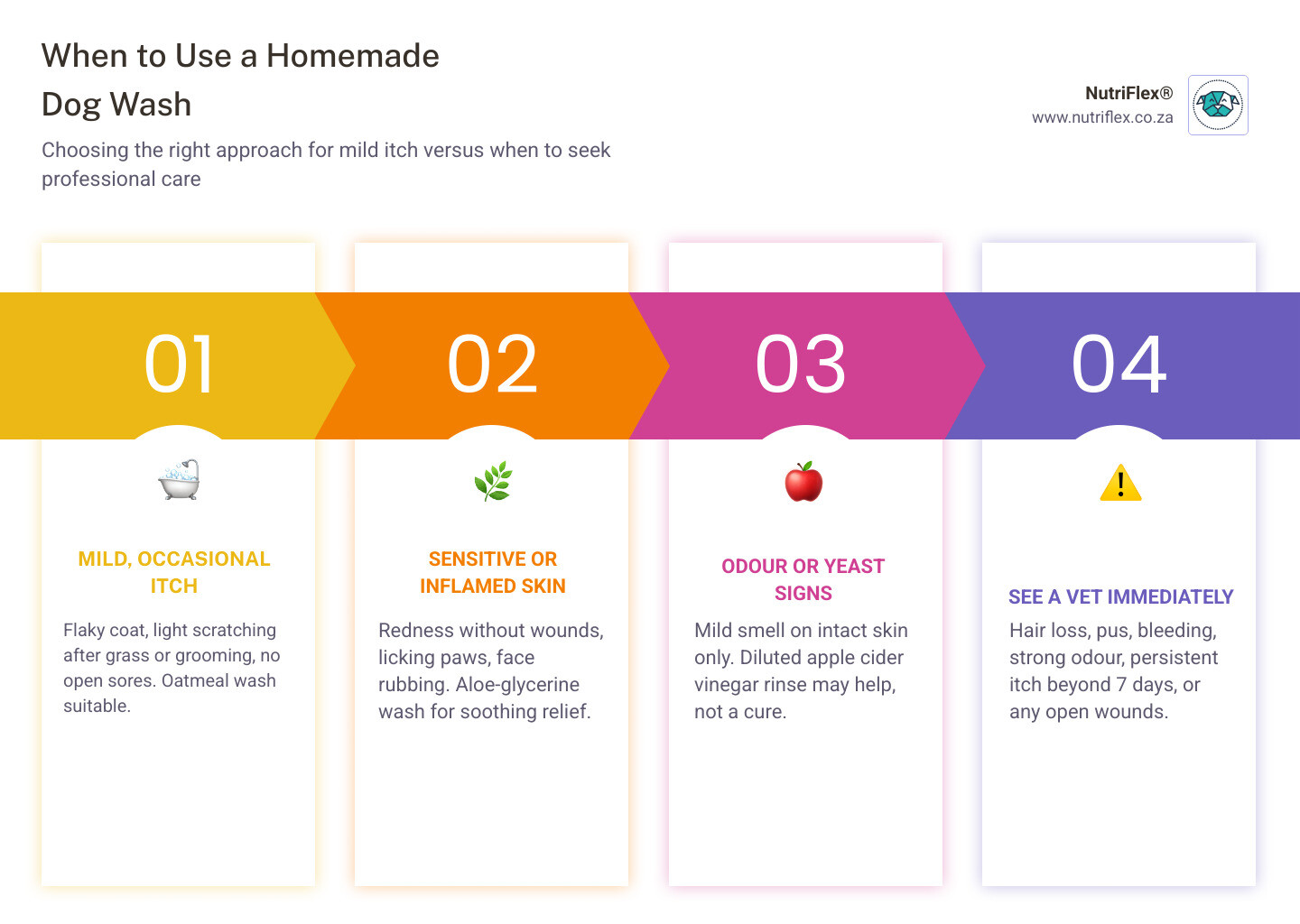
Homemade dog wash for itchy skin terms to know:
Why Dogs Get Itchy Skin and When a Homemade Wash Can Help
Itchy skin is a symptom, not a diagnosis. A homemade wash can help when the problem is mild surface irritation, dryness or allergens sitting on the coat. It cannot fix infection, uncontrolled fleas, food allergy, mange, hormonal disease or chronic atopic dermatitis on its own.
Atopic dermatitis is one of the most common chronic causes of itchy skin in dogs and accounts for around 10 to 15% of canine dermatology cases seen by vets. These dogs often need a long-term plan that may include parasite control, nutrition, medicated shampoos, allergy management and veterinary monitoring.
A gentle wash is most useful when your dog has:
- Mild dry flakes
- Light itch after grass exposure
- A dull coat from dust or sand
- Minor post-grooming irritation
- Seasonal pollen on the coat
- Mild redness without wounds
- Paw licking after outdoor walks
For a broader look at home support, see our guide to dog itchy skin remedy natural solutions and our deeper resource on help for itchy dogs the definitive guide.
Mild Itching Versus Skin Disease
Mild itching usually comes and goes. Your dog may scratch after lying on grass, lick a paw briefly or have a little dandruff during dry weather. The skin should still look mostly normal and your dog should be comfortable when touched.
Skin disease looks different. Watch for:
- Hair loss
- Open sores
- Bleeding or scabs
- Pus or wet patches
- Thickened or blackened skin
- A strong yeasty or rotten smell
- Pain when touched
- Constant paw chewing
- Face rubbing that does not stop
- Ear scratching or head shaking
- Itching that continues beyond 7 days
If your dog yelps, pulls away or guards a spot, do not scrub it with any homemade recipe. Painful skin needs a vet, not a pantry experiment.
Common South African Triggers for Itchy Dogs
South African dogs face a mix of skin triggers across seasons and living environments. In Cape Town and the Western Cape, we often see itch linked to:
- Summer flea pressure
- Grass pollen and seed irritation
- Dust and dry wind
- Sea sand trapped in the coat
- Dry indoor air in winter
- Grooming product residue
- Bedding allergens
- Household cleaners
- Food sensitivities
- Contact irritation from garden sprays
Fleas deserve special attention. One flea bite can trigger intense itching in flea-allergic dogs. If fleas are involved, a wash may rinse away flea dirt but it will not replace proper flea control.
If your dog flares during certain months, our article on seasonal skin allergy treatment for your itchy best friend can help. If itch appears after meals or comes with ear and paw issues, read more about food triggers that affect pets skin health.
Best Homemade Dog Wash for Itchy Skin Recipes
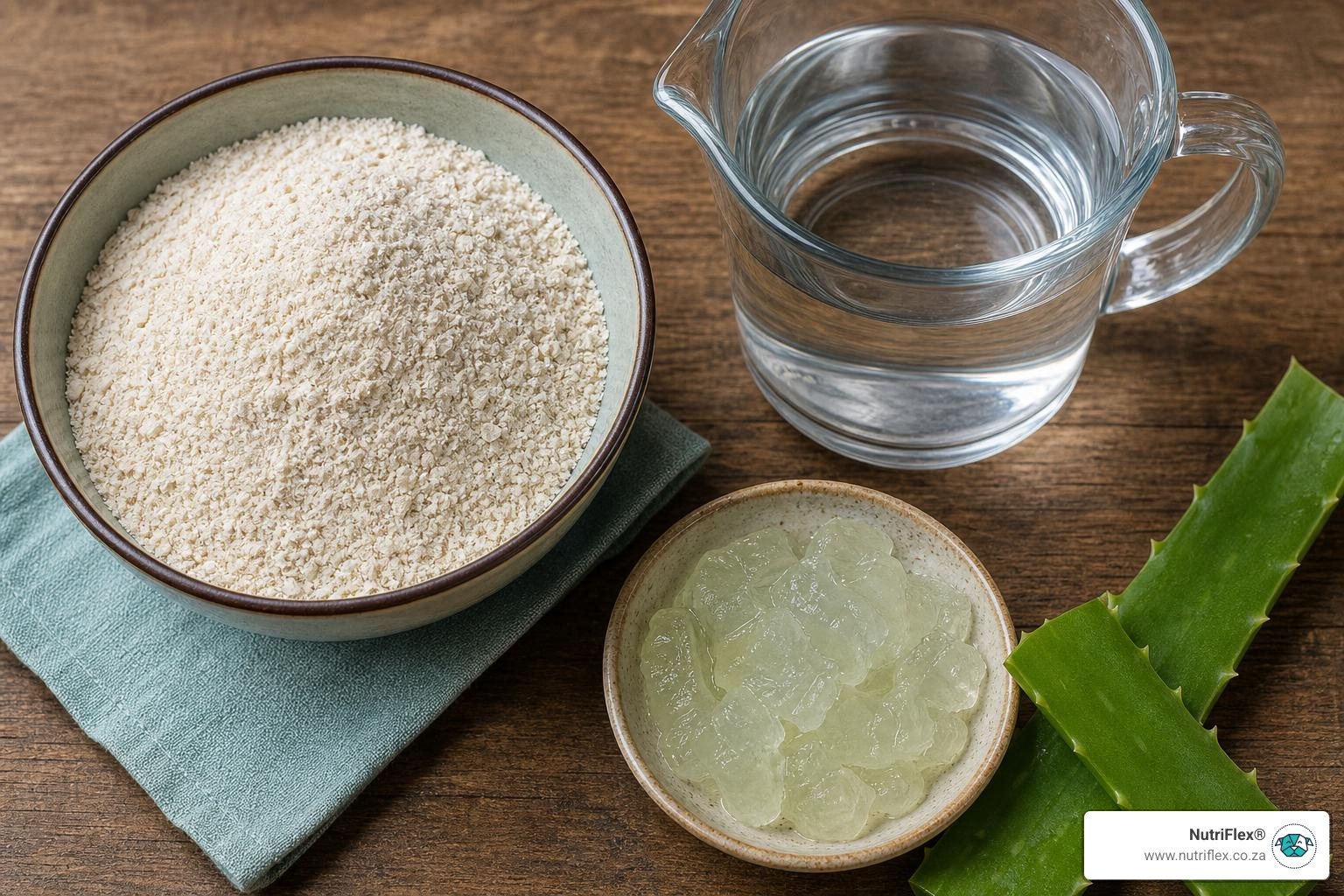
The safest recipes are simple, fragrance-free and easy to rinse. We prefer washes that support the skin barrier rather than strip it.
| Homemade Wash | Best Use | Main Benefit | Avoid If |
|---|---|---|---|
| Oatmeal wash | Mild itch, flakes, dryness | Soothes and supports moisture barrier | Dog has infected or oozing skin |
| Aloe and glycerine wash | Sensitive skin | Light moisturising support | Aloe product contains alcohol, dyes or fragrance |
| No-soap oat rinse | Puppies over 8 weeks, reactive skin | Very gentle rinse-off support | Puppy is unwell, chilled or very young |
| Apple cider vinegar rinse | Odour on intact skin, paws after walks | Helps deodorise and rinse coat | Skin is broken, raw or inflamed |
Oatmeal-Based Homemade Dog Wash for Itchy Skin
Oatmeal is the star ingredient for itchy dogs because finely ground colloidal oatmeal can help calm irritation and support the skin’s moisture barrier. Oatmeal is also recognised as a skin protectant with anti-inflammatory properties.
Use only plain rolled oats. Do not use instant sachets with sugar, salt, flavouring, cinnamon or milk powder.
Ingredients
- 60 g plain rolled oats
- 500 ml lukewarm water at about 37 to 38°C
Method
- Grind the oats in a blender or clean coffee grinder until they become a fine powder.
- Test the powder by stirring 5 g into a small glass of lukewarm water. It should turn cloudy and milky rather than sinking in large pieces.
- Add 60 g oat powder to 500 ml lukewarm water.
- Stir well and allow it to stand for 3 to 5 minutes.
- Apply to your dog’s wet coat from the neck down.
- Massage gently into itchy areas for 5 to 10 minutes.
- Rinse thoroughly with clean lukewarm water.
- Towel dry by pressing, not rubbing.
For a detailed oatmeal bathing method, see this oatmeal bath method.

Aloe and Glycerine Homemade Dog Wash for Itchy Skin
Aloe vera gel and vegetable glycerine can support moisture on dry, sensitive skin. This is not a cleanser. It is a gentle rinse for dogs that need comfort rather than deep cleaning.
Ingredients
- 250 ml lukewarm water
- 15 ml pure aloe vera gel
- 5 ml vegetable glycerine
Method
- Mix all ingredients in a clean bottle.
- Shake well until evenly combined.
- Patch test on a small area of skin and wait 24 hours.
- If there is no redness or increased itch, apply to the coat after wetting.
- Leave on for 3 to 5 minutes.
- Rinse very thoroughly.
Choose aloe gel with a short ingredient list. Avoid dyed gels, fragranced gels and products containing alcohol.
Simple No-Soap Rinse for Very Sensitive Skin
Some dogs are so reactive that the best “wash” is barely a wash at all. For very sensitive dogs, puppies over 8 weeks or dogs with mild inflammation, use plain lukewarm water or oat water without detergent.
Oat water method
- Add 30 g finely ground plain oats to 500 ml lukewarm water.
- Let it stand for 5 minutes.
- Strain through clean muslin or a fine sieve if your dog has a long coat.
- Pour over the coat from the neck down.
- Leave for 5 minutes.
- Rinse and towel dry.
Keep puppy baths short, calm and warm. If a puppy is younger than 8 weeks, unwell or shivering, avoid home bathing and speak to your vet.
Apple Cider Vinegar Rinse for Odour and Yeast-Prone Coats
Apple cider vinegar can help deodorise the coat and may be useful as a rinse for intact skin. It is not a treatment for yeast infection. A strong yeasty smell, greasy coat, brown staining, recurring ear problems or thickened skin needs veterinary assessment.
Safe dilution
- 1 part apple cider vinegar
- 4 parts water
For example, mix 50 ml apple cider vinegar with 200 ml water.
Use only when:
- Skin is intact
- There are no cuts, sores or raw patches
- Your dog does not have severe redness
- You can avoid the eyes, ears and genitals
Apply briefly, massage lightly and rinse off. For paws, dip for 30 to 60 seconds, then rinse and dry between the toes.
Safe Ingredients, pH Balance and What to Avoid
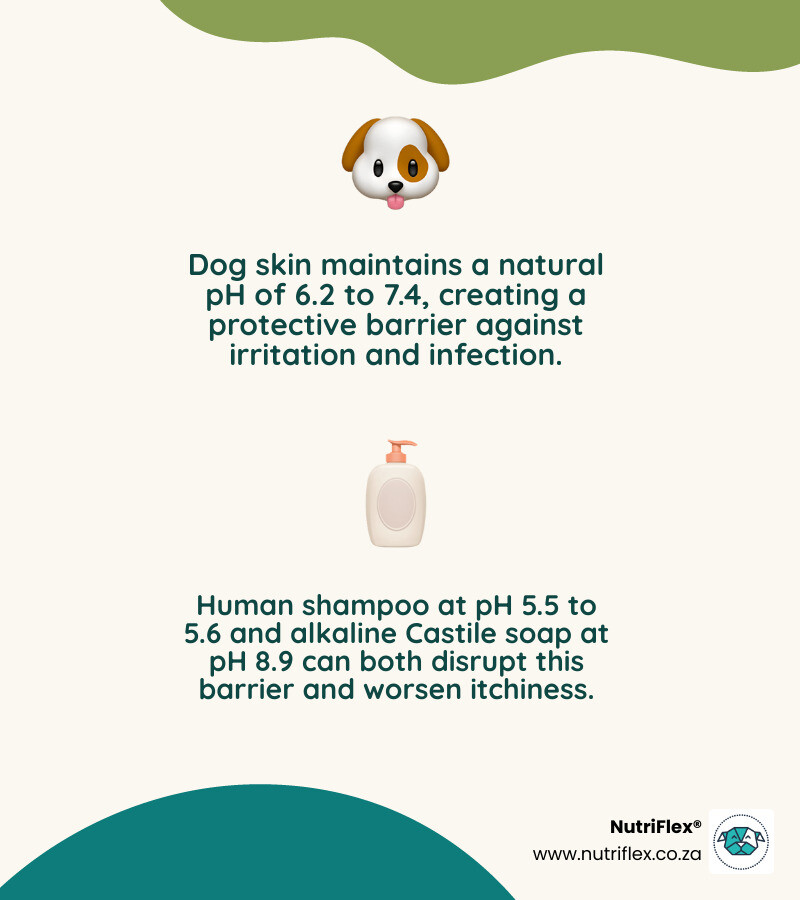
Dog skin is not the same as human skin. Human shampoo typically sits around pH 5.5 to 5.6, while dog skin is usually around pH 6.2 to 7.4. A dog shampoo is generally safest when it is close to pH 6.5 to 7.5.
This matters because the skin barrier is part of your dog’s immune defence. When we strip it, scratch it or shift its pH too far, itch can worsen.
Castile soap is often recommended online but it can be very alkaline, around pH 8.9. That may strip natural oils, especially on dogs already dry and itchy. If you use any cleanser, use a dog-appropriate, fragrance-free base and test the pH with strips where possible.
For general DIY shampoo safety, this guide on how to make homemade dog shampoo safely is a useful reference.
Why pH Matters in a Homemade Dog Wash for Itchy Skin
Your dog’s skin has a protective acid mantle, natural oils and a living microbiome. Together, they help maintain moisture and limit overgrowth of unwanted microbes.
Wrong pH can contribute to:
- Dryness
- Redness
- Flaking
- Barrier disruption
- Residue sensitivity
- Increased scratching
- Greater infection risk in vulnerable skin
This is why we do not recommend human shampoo, even “natural” versions. Baby shampoo may be less harsh than adult shampoo in an emergency but it is still not ideal for repeated use. If your choice is baby shampoo or plain water for a mildly dirty itchy dog, choose plain lukewarm water and rinse well.
Ingredients That Are Usually Safer for Itchy Dog Skin
Safer DIY ingredients include:
- Plain finely ground oats
- Colloidal oatmeal
- Pure aloe vera gel
- Vegetable glycerine
- Small amounts of coconut oil
- Lukewarm water
- Fragrance-free dog-safe cleanser only if needed
Use coconut oil carefully. Too much oil can trap dirt, leave residue and make some coats greasy. If used, keep it to 2.5 to 5 ml in a full wash and rinse well.
Olive oil can be moisturising but it is heavy. We prefer not to add it to full-coat washes unless specifically advised by a vet or groomer familiar with your dog’s coat type.
Ingredients to Avoid in DIY Dog Washes
Avoid:
- Tea tree oil
- Wintergreen oil
- Pennyroyal oil
- Undiluted essential oils
- Strong citrus oils
- Artificial fragrance
- Colourants
- Instant oatmeal sachets
- Sugar, salt or spices
- Harsh dish soap
- Table salt
- Neat vinegar
- Strong baking soda pastes
- Human shampoo
Baking soda appears in many recipes but it is alkaline and can irritate sensitive skin if overused. If your dog is already itchy, we suggest leaving it out unless your vet has advised otherwise.
Are Essential Oils Safe in Homemade Dog Shampoo?
Our practical answer: leave them out unless your vet has approved the exact oil, dilution and use for your dog.
Essential oils are concentrated plant chemicals. Dogs can absorb them through the skin, inhale them during bathing and lick residue from their coat. Risk is higher in:
- Puppies
- Pregnant dogs
- Senior dogs
- Dogs with liver disease
- Dogs with epilepsy
- Small breeds
- Dogs with broken skin
- Dogs already on medication
Some oils are known to be dangerous for dogs, including tea tree, wintergreen and pennyroyal. Even oils considered “dog safe” can irritate sensitive skin if the dilution is wrong. A plain oatmeal wash will not win a perfume contest but your dog’s skin is not asking to smell like a spa candle.
How to Apply, Rinse and Time Baths Without Worsening Itchiness
The recipe matters but technique matters just as much. Poor rinsing is one of the most common reasons a well-meant wash makes itching worse.
Step-by-Step Bathing Method for Itchy Dogs
Brush first
Remove loose hair, sand, grass seeds and mats before wetting the coat.Prepare the bath area
Use a non-slip mat. Keep towels ready. Choose a warm, calm room.Use lukewarm water
Aim for about 37 to 38°C. Hot water can increase dryness and irritation.Wet the coat fully
Start at the shoulders and work backwards. Avoid spraying directly into the ears, eyes and nose.Apply from the neck down
Massage gently into the belly, underarms, paws and tail base. These are common itch zones.Do not scrub lesions
If you find red, wet, painful or broken skin, stop and contact your vet.Allow contact time
For oatmeal, 5 to 10 minutes is enough. Longer is not better if your dog is stressed.Rinse longer than you think
Rinse until the coat feels completely clean and no slippery residue remains.Dry carefully
Press with a towel. Do not rub hard. If using airflow, keep it cool or low heat.Dry folds and paws
Moisture trapped between toes, under armpits or in skin folds can worsen irritation.
If your dog already has angry red skin, read more about red and inflamed skin dog before bathing.
How Often to Use a Homemade Dog Wash for Itchy Skin
For most itchy dogs, use a homemade wash once every 2 to 4 weeks.
For short-term mild flare-ups, an oatmeal bath may be used once weekly for 2 to 3 weeks if the skin is improving. Some dogs tolerate oatmeal baths once to twice weekly for mild itch but if your dog needs that much bathing to stay comfortable, the underlying cause needs investigation.
General bathing frequency depends on lifestyle. Many dogs only need a bath every 1 to 3 months. Over-bathing strips natural oils and can create the exact dry, itchy skin we are trying to avoid.
Stop bathing and call your vet if:
- Itching worsens after washing
- Redness spreads
- The coat develops a strong smell
- Your dog becomes painful
- Flakes become scabs
- Your dog licks constantly after the bath
Storage and Hygiene for Homemade Washes
Homemade washes do not contain preservatives. That is part of their appeal but it also means they spoil quickly.
Follow these rules:
- Fresh batch is best
- Refrigerate leftovers for no more than 48 to 72 hours
- Label the bottle with the date
- Use a clean bottle every time
- Discard if smell, colour or texture changes
- Do not dip dirty hands into stored mixtures
- Warm refrigerated wash gently in a bowl of warm water before use
- Do not store oily mixtures long term
If in doubt, throw it out. A spoiled wash on itchy skin is not a money-saving win.
Common Mistakes and When to See a Vet
Homemade care works best when we know its limits. The most common problem we see is not that owners do nothing. It is that they do too much for too long before getting a diagnosis.
For more support, read our guides on homemade remedies for dog skin allergies to save your sanity and stop the itch with these home dog allergy remedies.
Mistakes That Make Itchy Skin Worse
Avoid these common DIY errors:
- Bathing with hot water
- Using strong soap
- Using human shampoo
- Adding too much baking soda
- Adding too much coconut or olive oil
- Leaving oat residue in the coat
- Scrubbing red lesions
- Washing too often
- Adding essential oils “for smell”
- Skipping a patch test
- Using old mixtures
- Applying vinegar to raw skin
- Ignoring fleas
- Assuming all itch is food allergy
- Delaying vet care when symptoms persist
A patch test is simple. Apply a small amount of the wash to one small area of intact skin, rinse and wait 24 hours. If redness or itch increases, do not use it.
Red Flags That Need Veterinary Care
See your vet if your dog has:
- Itch for longer than 7 days
- Hair loss
- Bleeding
- Scabs
- Pus
- Swelling
- Strong odour
- Ear scratching
- Head shaking
- Blackened skin
- Constant licking
- Fleas or ticks
- Lethargy
- Appetite loss
- Recurring skin infections
- Severe discomfort
- Sudden widespread rash
A vet may need to check for parasites, bacterial infection, yeast, allergy, food sensitivity or hormonal disease. Home washes can sit alongside a treatment plan but they should not delay diagnosis.
Benefits and Limits of Oatmeal Baths
Oatmeal baths can be genuinely helpful for mild skin discomfort.
Benefits include:
- Helps soothe itching
- Supports the skin moisture barrier
- Softens dry flakes
- Helps rinse away surface allergens
- Can improve coat feel
- Usually gentle when prepared correctly
Limits include:
- Does not cure allergies
- Does not kill fleas reliably
- Does not treat yeast infection
- Does not treat bacterial infection
- Does not replace parasite control
- Does not fix diet-related inflammation
- Can leave residue if not ground finely and rinsed well
Think of oatmeal as supportive care. Helpful, gentle and sensible, but not magic porridge. For more skin-focused resources, visit our category allergies and itchy skin.
Frequently Asked Questions About Homemade Dog Wash for Itchy Skin
Can I use human shampoo on my dog?
No, not as a routine wash. Human shampoo is usually too acidic for dog skin. Human skin sits around pH 5.5 to 5.6, while dog skin is generally closer to pH 6.2 to 7.4. Repeated use can disrupt the skin barrier, causing dryness, redness and more itch.
If your itchy dog is dusty but not greasy, plain lukewarm water is safer than human shampoo. If your dog needs frequent bathing, ask your vet for a pH-appropriate dog shampoo.
What is the best homemade dog wash for itchy skin if my dog has allergies?
The oatmeal wash is usually the best starting point for allergy-prone dogs because it is simple, gentle and helps rinse allergens from the coat while supporting comfort.
Use:
- 60 g finely ground plain oats
- 500 ml lukewarm water
- 5 to 10 minutes contact time
- Thorough rinsing
However, allergies need root-cause management. That may include flea control, environmental changes, nutrition support, a veterinary food trial or medication. For a broader skin care view, see natural skincare for dogs silvia.
Is a homemade dog wash safe for puppies and senior dogs?
It can be, but keep it very simple.
For puppies over 8 weeks:
- Use plain lukewarm water or weak oat water
- Avoid essential oils
- Avoid vinegar
- Keep bath time short
- Dry thoroughly
- Prevent chilling
For senior dogs:
- Use a non-slip surface
- Keep water lukewarm
- Avoid long standing time
- Support sore joints
- Patch test first
- Ask your vet if your dog is frail or has chronic disease
If a puppy or senior dog has severe itching, hair loss or sores, do not rely on home care. Book a veterinary check.
Conclusion
A well-made homemade dog wash for itchy skin can be a safe, useful tool for mild scratching, dry flakes and seasonal irritation. The best option is usually a finely ground oatmeal wash made with lukewarm water, followed by careful rinsing and gentle towel drying.
The key is restraint. Use pH-aware ingredients, avoid essential oils unless approved by your vet and do not over-bathe. If your dog’s itch persists beyond 7 days or comes with odour, hair loss, sores or pain, the skin needs proper veterinary assessment.
At NutriFlex®, we believe healthy skin starts with a complete plan: gentle external care, good parasite control, appropriate veterinary support and nutrition-first supplementation. Our Act 36 registered pet health supplements are manufactured in Cape Town in a certified human-grade facility within an FSA accredited manufacturing environment, with a focus on functional animal nutrition for South African dogs and cats.
If your dog struggles with itchy skin, you can also support itchy skin from the inside out with targeted nutritional support designed for long-term skin and coat resilience.
