
When Your Dog Won’t Stop Scratching: What South African Pet Owners Need to Know
DIY dog anti itch remedies can offer quick, affordable relief for mild skin irritation in dogs. Here is a fast overview of the most effective options:
| Remedy | How to Use | Best For |
|---|---|---|
| Apple cider vinegar spray | 50/50 with water, spray on intact skin | Hot spots, flea irritation |
| Oatmeal bath | Ground oats in lukewarm water, 10-15 min soak | General itching, dry skin |
| Chamomile or rooibos tea rinse | Brew, cool, apply to affected areas | Sensitive or inflamed skin |
| Coconut oil | Massage into skin, rinse after 5-10 min | Dry, flaky patches |
| Aloe vera gel | Apply directly to irritated areas | Redness, hot spots |
Most dogs show improvement within 3 to 7 days of consistent treatment with natural remedies.
If your dog is scratching constantly, chewing their paws or rubbing their face on the furniture, you are not alone. Itchy skin is one of the most common reasons South African pet owners visit the vet. In many cases, though, mild flare-ups can be managed at home while you work on identifying the root cause.
The sounds are hard to ignore. The scratching, the licking, the 3am rustling. And the frustration of watching your dog uncomfortable while not knowing what to reach for first.
This article walks you through the safest and most practical DIY options available, what to avoid and when home remedies are simply not enough.
I’m Sharon Milani, co-founder of NutriFlex® and a long-time advocate for natural, nutrition-first approaches to pet health, including diy dog anti itch strategies that complement veterinary care. My experience formulating human-grade supplements for South African dogs has given me a clear view of where topical home remedies help and where internal nutritional support is the missing piece.
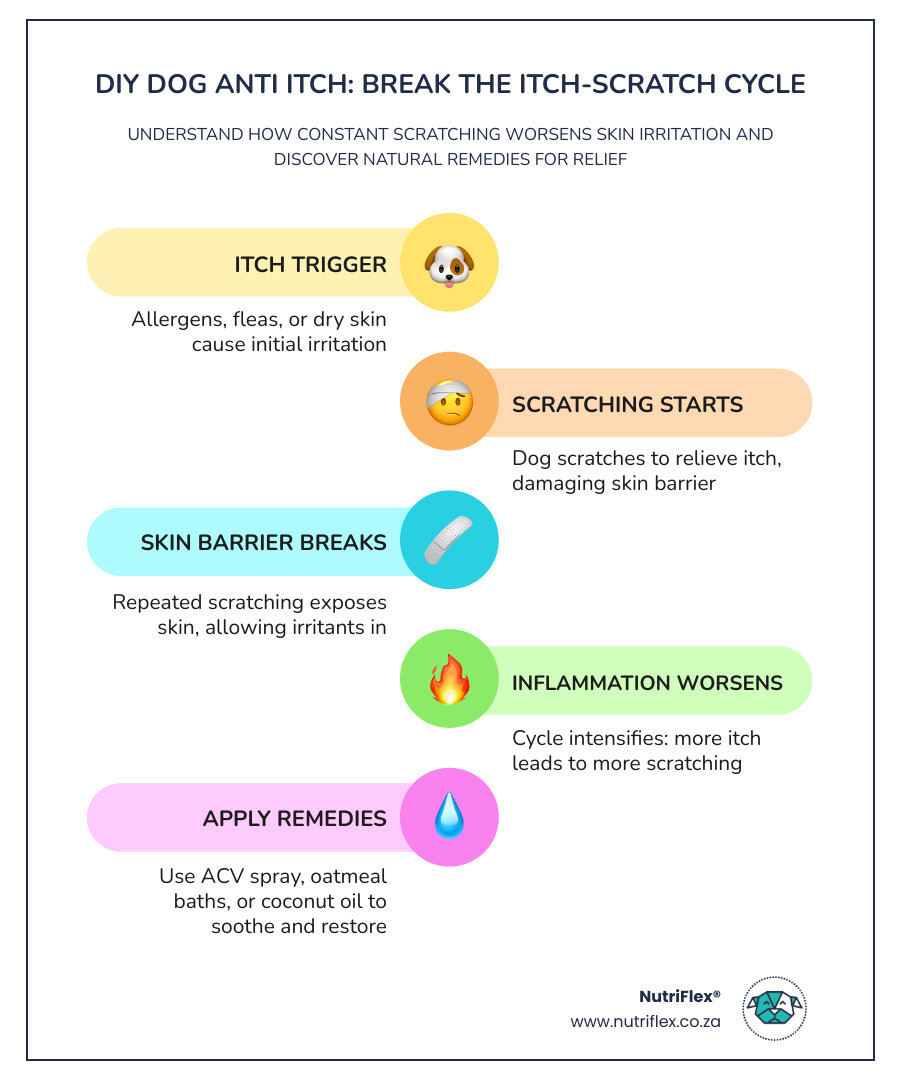
Diy dog anti itch word list:
Common Causes of Itching in South African Dogs
Before we dive into the recipes, we must understand why our dogs are scratching. In South Africa, our unique climate and flora play a massive role in skin health. Identifying the trigger is the first step toward long-term relief.
Environmental Allergens
Seasonal changes are a major factor. Many South African dogs experience Dog Has Allergy Problems in Summer when pollen counts from grasses and trees peak. Common local culprits include:
- Kikuyu Grass: While it makes for a hardy lawn, many dogs are sensitive to its blades or the pollen it produces.
- Fynbos Pollen: In the Western Cape, the diverse fynbos biome can release allergens that irritate sensitive skin.
- Dust Mites and Mould: These are year-round issues but can worsen during humid months or in the winter when we use indoor heating, which dries out the air and the skin.
Flea Allergy Dermatitis (FAD)
It only takes one flea bite to send an allergic dog into a scratching frenzy. This is known as Pet Allergy Triggers & Treatment for flea saliva. Even if you don’t see fleas, they could be the culprit.
Food Sensitivities
While less common than environmental allergies, Food Triggers That Affect Pets’ Skin Health can cause chronic itching, especially around the paws, ears and belly. Common triggers include specific proteins like beef or chicken, as well as grains and artificial additives.
Dry Winter Air
In regions like Gauteng, the dry winter air can strip the natural oils from a dog’s coat. This leads to flaky, tight skin that becomes itchy and uncomfortable.
Top DIY Dog Anti Itch Sprays and Rinses
Creating a diy dog anti itch spray is one of the most cost-effective ways to provide relief. You can often make multiple variations for under R350 using simple household items.
Apple Cider Vinegar (ACV) Spray
Apple cider vinegar is a powerhouse for skin health due to its antifungal and antibacterial properties. According to Itchy Dog? These DIY Dog Itch Spray Recipes Will Save the Day – DIY For Pets, it is particularly effective for yeast-related itching.
- Recipe: Mix 250ml distilled water with 250ml raw, unfiltered apple cider vinegar (look for “with the mother”).
- Application: Mist onto itchy spots or use it as a paw soak after walks to remove allergens.
- Important: Never use ACV on broken skin or open wounds, as the acidity will sting.
Herbal Tea Rinses
If your dog has Red and Inflamed Skin Dog, herbal teas can provide a gentle, cooling effect.
- Green Tea: Packed with antioxidants that help reduce inflammation and support skin healing.
- Chamomile: Known for its calming properties, it is excellent for soothing “hot” skin.
- Rooibos Tea: A true South African gem. Rooibos is naturally hypoallergenic and anti-inflammatory. We often recommend a cooled rooibos rinse for dogs with sensitive skin as part of Natural Skincare for Dogs: Silvia.
How to Make a Tea Rinse
- Steep 2-3 tea bags in 500ml of hot water.
- Allow it to cool completely (refrigerate for an extra cooling effect).
- Pour the rinse over your dog after a bath or use a soft cloth to dab it onto specific areas. Let it drip dry to allow the beneficial compounds to stay on the skin.
H3: How often can I apply a diy dog anti itch spray?
For most homemade sprays, we recommend applying them 1 to 2 times daily. You can use them as spot treatments whenever you notice your dog starting to scratch. Because these recipes are water-based and contain no preservatives, store them in the refrigerator and discard any leftovers after 7 to 10 days.
How to Prepare a DIY Dog Anti Itch Oatmeal Bath

The oatmeal bath is often considered the “gold standard” for natural itch relief. It contains avenanthramides, which are natural anti-inflammatory compounds that calm the skin and help restore the skin barrier.
Step-by-Step Guide
- Prepare the Oats: Take plain, unflavoured oats and grind them into a very fine powder using a blender or food processor. It should look like flour.
- Test the Solubility: Stir a tablespoon of the powder into a glass of warm water. If it turns the water milky and stays suspended, it is ready.
- Run the Bath: Fill your tub with lukewarm water. Avoid hot water, as it can further irritate inflamed skin.
- Soak: Stir the oatmeal powder into the bath. Let your dog soak for 10 to 15 minutes. Use a cup to pour the milky water over their back and neck.
- Rinse and Dry: Rinse with lukewarm water and pat dry with a soft towel. Do not rub vigorously.
As noted in Stop the Itch with These Home Dog Allergy Remedies, this treatment is safe to use once or twice a week to maintain moisture and reduce irritation.
Topical DIY Dog Anti Itch Treatments: Oils and Gels
For targeted relief on dry patches or specific Hot Spots on Dogs: Causes, Symptoms, Treatment, and Prevention, thicker topical treatments are often more effective than sprays.
Aloe Vera
Pure aloe vera gel is incredibly cooling and helps reduce redness. It is a great choice for belly rashes or insect bites. However, be cautious: while the gel is safe, the outer leaf of the aloe plant can be toxic if ingested. Always use 100% pure, pet-safe aloe vera gel without added fragrances or alcohols.
Coconut Oil
Coconut oil is a versatile tool in our diy dog anti itch kit. It has moisturising, antibacterial and antifungal properties. It can even be used as part of Mites on Dogs: Natural Home Remedies to soothe the crusty skin associated with mild parasitic irritations.
H3: Benefits of coconut oil for diy dog anti itch
Coconut oil creates a natural moisturising barrier on the skin. To apply:
- Massage a small amount of organic, virgin coconut oil into the itchy area.
- Let it sit for 5 to 10 minutes to absorb.
- Rinse off the excess with lukewarm water. Expert Tip: Do not leave coconut oil on the skin for more than 10 minutes or overnight. Its high viscosity can clog pores and lead to further skin issues if left too long.
When to Consult a Veterinarian for Persistent Itching
While we love the power of home remedies, they have limitations. Sometimes, a diy dog anti itch approach is like putting a plaster on a wound that needs stitches.
You should consult your vet if you notice:
- Secondary Infections: If the skin smells yeasty or foul, or if there is yellow discharge, a bacterial or yeast infection has likely set in.
- Open Sores or Bleeding: Persistent scratching that breaks the skin requires professional treatment to prevent sepsis.
- Severe Hair Loss: This can indicate underlying issues like Mange No More with Natural and Homeopathic Remedies for Your Itchy Pup or hormonal imbalances.
- No Improvement: If you have followed a consistent routine for 7 days with no change, it is time for a professional diagnosis.
Our Help for Itchy Dogs: The Definitive Guide provides more detail on when to stop DIY-ing and start medical treatment. As 5 Natural Remedies to Help Your Itchy Dog – AKC Pet Insurance points out, home remedies provide relief but do not always cure the underlying chronic allergy.
Frequently Asked Questions about DIY Dog Anti Itch Remedies
Is apple cider vinegar safe for open wounds?
No. Because apple cider vinegar is acidic, it will cause a sharp stinging sensation on broken skin, abrasions or cuts. This can cause your dog to become fearful of treatments. Only apply ACV sprays to intact, non-broken skin. For open sores, a cooled chamomile or rooibos tea rinse is a much safer, pain-free alternative.
Can diet help reduce my dog’s itching?
Absolutely. We believe that skin health starts from within. You can Solve Persistent Dog Allergies Naturally with Diet by focusing on species-appropriate nutrition.
- Omega-3 Fatty Acids: These are essential for strengthening the skin barrier and reducing the inflammatory response. Adding a high-quality Omega-3 fish oil to your dog’s daily meal can make a significant difference in skin elasticity and itch levels.
- Gut Health: Since 70% to 80% of the immune system resides in the gut, a healthy microbiome helps the body manage allergens more effectively.
Are essential oils safe for homemade sprays?
Some essential oils can be used if they are properly diluted, but you must be careful.
- Lavender: Generally safe and acts as a natural antihistamine. Use only 3 to 5 drops per 250ml of water.
- Peppermint: Provides a cooling sensation but must be used in very small amounts (1 to 2 drops) and never on small puppies.
- Tea Tree Oil: We recommend avoiding tea tree oil in DIY recipes. It can be toxic to dogs (and especially cats) if not diluted with extreme precision. Always consult a vet before using any essential oils on your pet.
Conclusion
Managing your dog’s skin allergies is a journey that requires patience and a holistic approach. By combining diy dog anti itch topical treatments with preventative measures like regular grooming and washing bedding in hypoallergenic detergents, you can significantly improve your dog’s quality of life.
At NutriFlex®, we understand that topical relief is only half the battle. To truly save your sanity and your dog’s skin, you need to support their immune system from the inside out. Our Allermax Allergy & Itch Relief for Pets is designed to provide that essential internal support.
Whether you are dealing with seasonal flare-ups or chronic sensitivities, explore our full range of Allergy and Itch solutions to find the perfect match for your pup. A scratch-free future is possible with the right blend of home care and premium nutrition.