
YeastEaze™
Works on what keeps feeding the flare.
Seven ingredients that discourage yeast, cut its food supply, bind what it releases and support the gut balance that gives flare-ups less to build on. A four to six week course.
For dogs stuck in the cycle of red paws, yeasty ears, constant licking, scratching and repeat flare-ups. YeastEaze™ goes deeper. OmegaMax™ supports the recovery. Two targeted products. Two different jobs. One smarter approach to recurring skin problems.
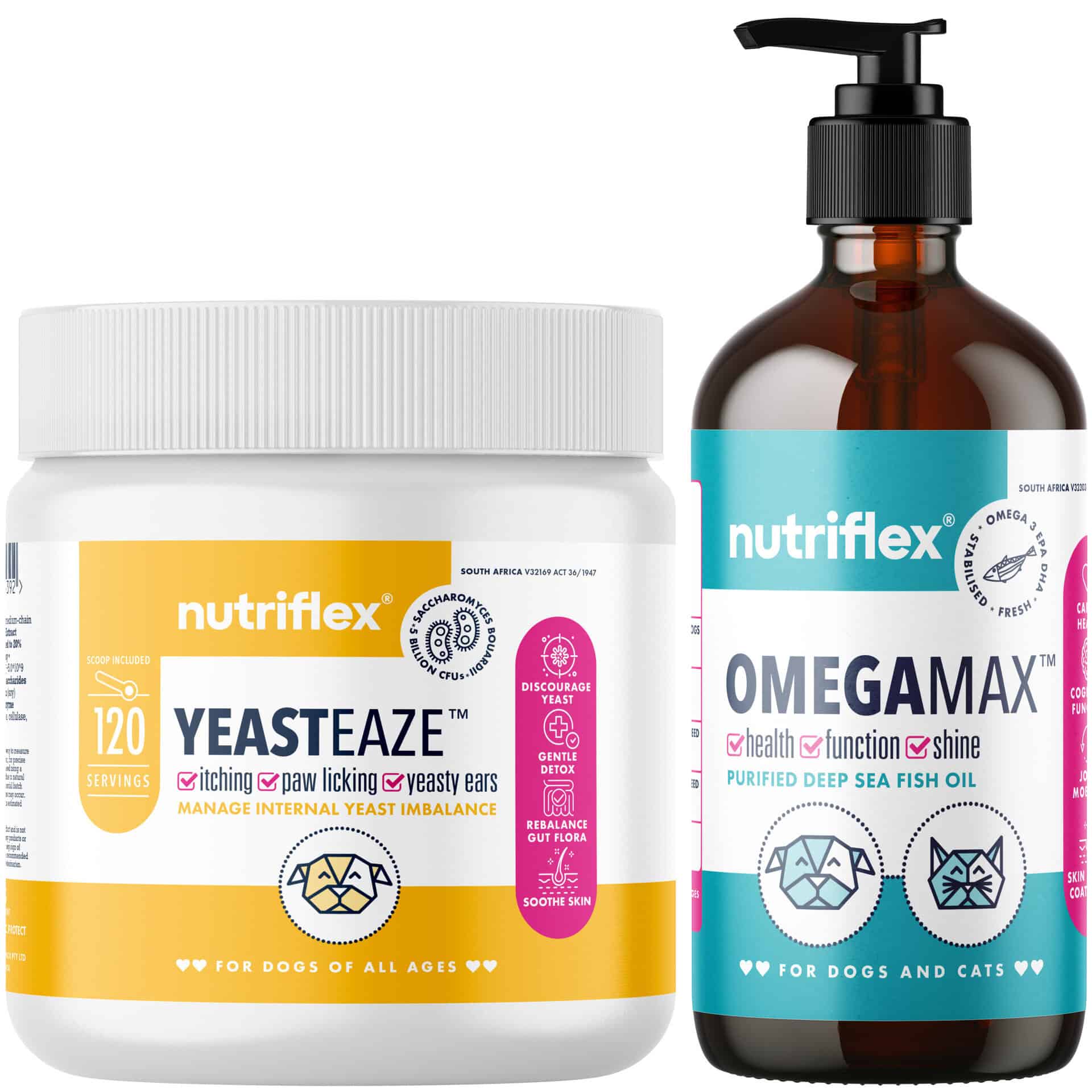
Skin Reset Bundle for Dogs. YeastEaze™ Gut Balance Powder and OmegaMax™ Omega 3 Liquid Fish Oil.
Price range: R799,00 through R1159,00
Recurring yeasty flares are usually fed by an unbalanced gut and made worse by a weak skin barrier. Shampoos and drops calm what you can see. The Skin Reset works on the two things you can't.
Red paws, yeasty ears, the smell. Where you see the flare.
Shampoos, wipes, dropsA dry, leaky barrier lets irritants in and moisture out, so every flare lands harder.
OmegaMax™An unbalanced gut keeps the immune system on edge and gives resident yeast room to overgrow.
YeastEaze™Works on what keeps feeding the flare.
Seven ingredients that discourage yeast, cut its food supply, bind what it releases and support the gut balance that gives flare-ups less to build on. A four to six week course.
Works on what the flare lands on.
High-strength EPA and DHA from wild sardines and anchovies to support a stronger skin barrier, calmer skin and a better coat. A daily habit that carries on after the course.
Treat only one layer and the other keeps the cycle going. That is why these two come as a pair.
If you are reading this, your dog is likely on something from the vet for the constant scratching.
These treatments can provide valuable relief, but they generally work only while they are being used.
Stop them and the itching often returns.
Not because the treatment failed, but because suppressing a signal is not the same as addressing what is driving it.
So the real question is
Why is your dog itching?
It supports the underlying factors associated with recurring yeast-related itching rather than simply quietening the symptom.
Decisions about your dog’s prescription are between you and them.
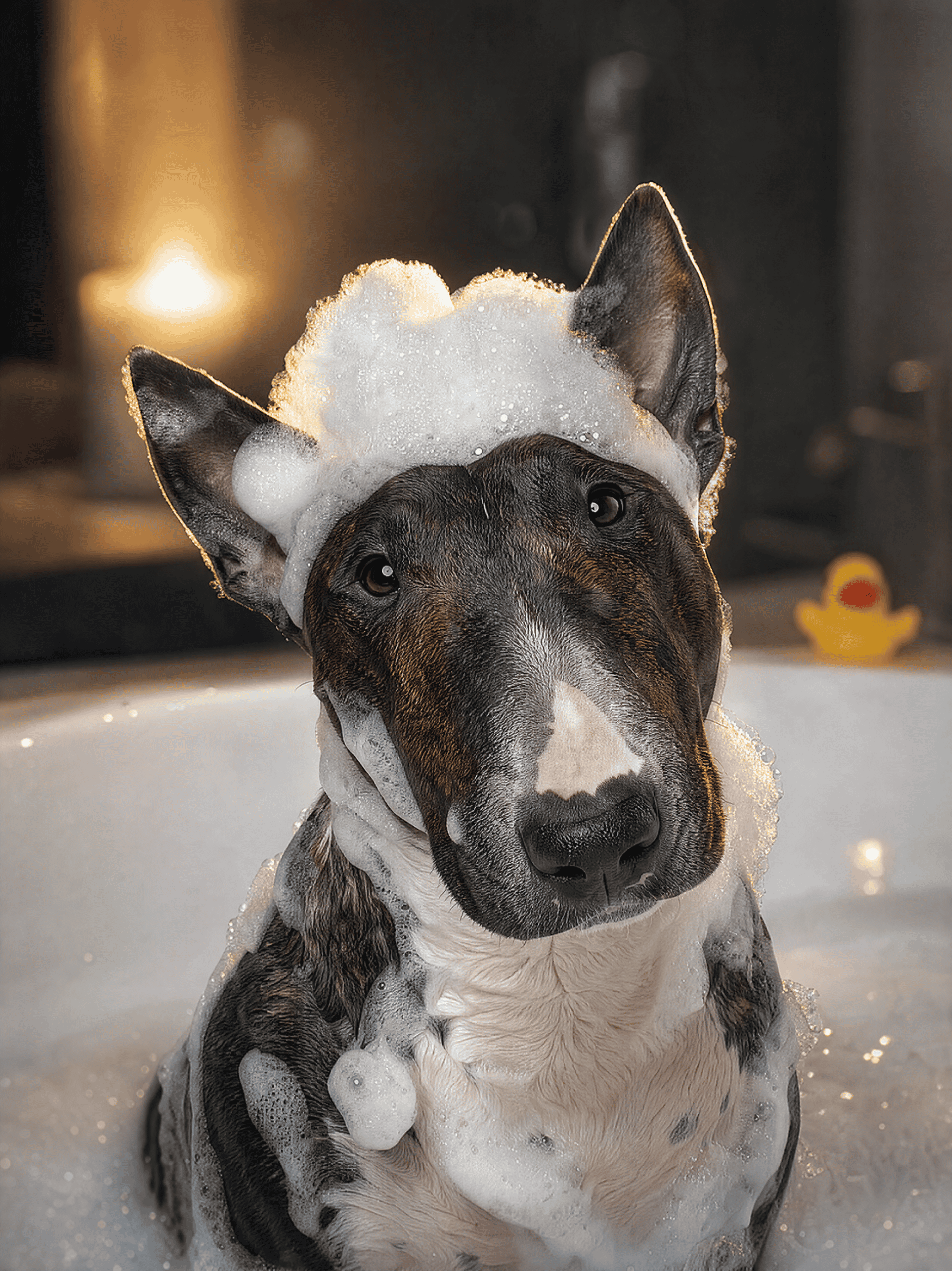 Another bath. Same itch.
“But it’s hypoallergenic…”
That does not automatically mean it is helping your dog’s skin.
On skin that is already struggling, a bath can also:
A cycle that feeds itself.
Drier skin
More irritation
More licking and scratching
Another bath, because the skin looks worse
…and the cycle starts again.
Even products labelled “gentle” or “hypoallergenic” can irritate an individual dog. Hypoallergenic does not mean incapable of causing irritation.
Excessive bathing can dry the skin and coat. Veterinary guidance warns that shampoo residue is a common cause of irritation and that over-bathing can aggravate some skin problems.
A bath can calm the surface for a day or two. It cannot reach what keeps the skin flaring. If you do bathe, rinse until the water runs completely clear and dry the paws and skin folds well.
Calming the surface is useful. Understanding what keeps driving the flare matters more.
Kibble is rich in omega-6 and light on omega-3. Omega-6 leans the body towards inflammation. Omega-3 leans it back. Dogs cannot make EPA and DHA themselves, so what is in the bowl is what they get.
Illustrative. Exact ratios vary by food.
A dog eating a flare-friendly diet every day will keep landing flares on skin that is already on edge.
YeastEaze™ quietens the driver. OmegaMax™ gives the skin its footing back.
Drag the handle to compare the picture owners come to us with and where the goal sits.
Itchy skin, paw licking, yeasty ears, an unsettled tummy.
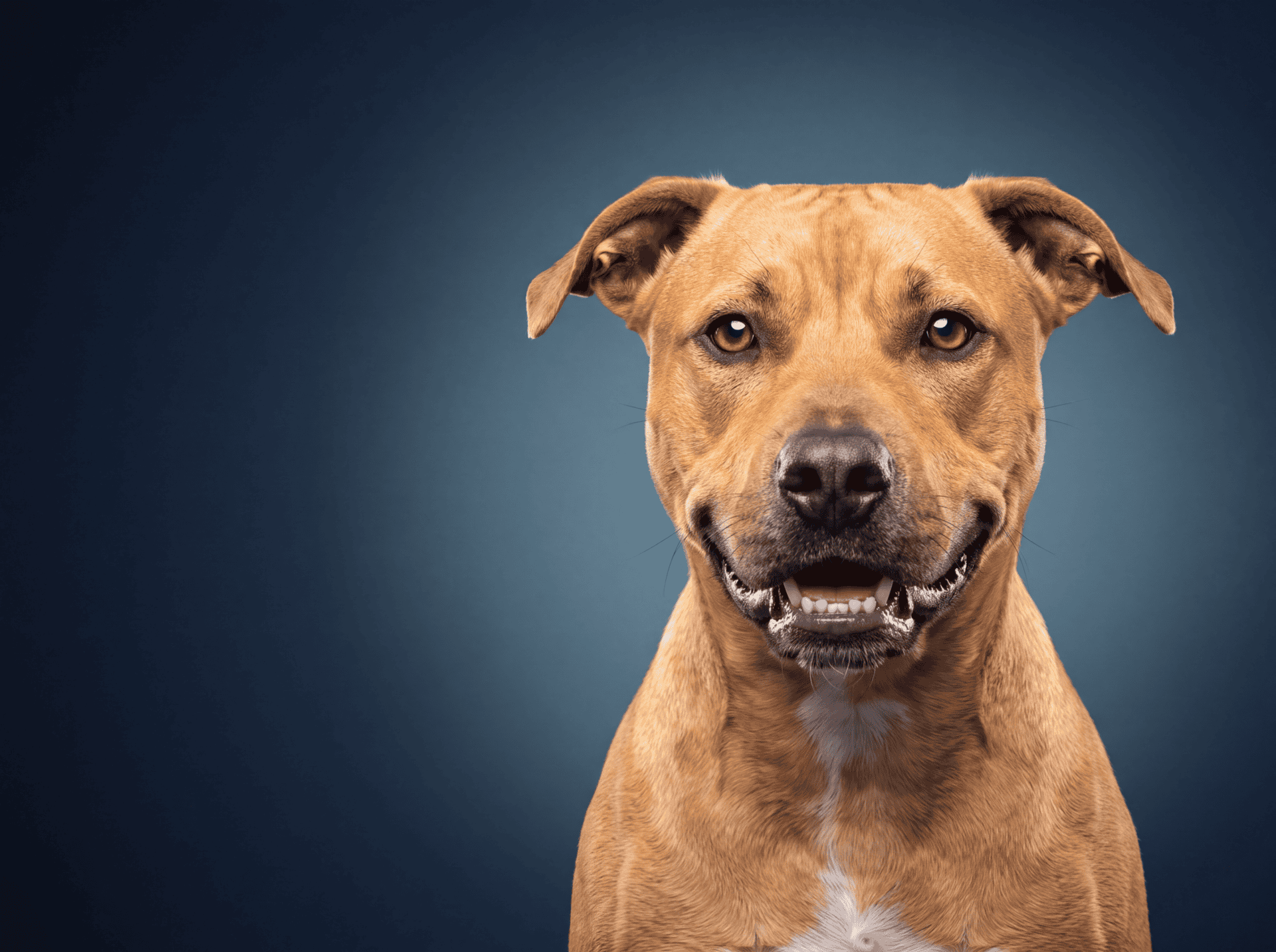 After
After
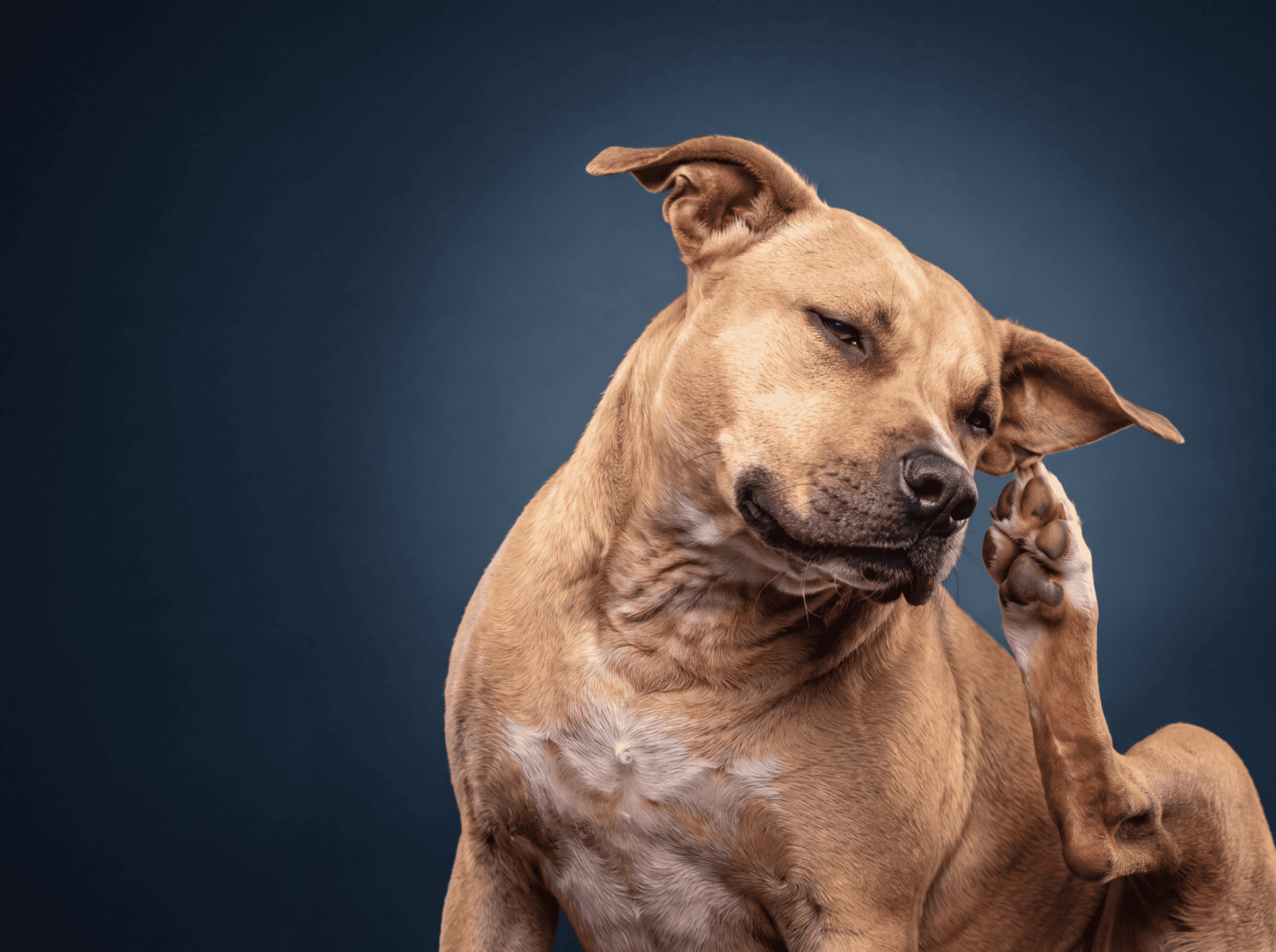 Before
Calmer skin, a settled tummy, back to themselves.
Illustrative. Individual results vary.
Two products, one simple rhythm. YeastEaze™ goes in away from food. OmegaMax™ goes on food. Keep two hours between them.
YeastEaze™
One scoop per 10 kg in plain yoghurt or a little warm bone broth.
Away from foodOmegaMax™ on the meal
Pump straight onto food. Fat is absorbed best alongside a meal.
On foodYeastEaze™
Second scoop, again away from food and any medication.
Away from foodDinner as usual
Nothing to add. Fresh water always within reach.
Plain mealYeastEaze™ contains bentonite clay to bind what yeast releases as it recedes. Given alongside other supplements, it can bind those too. Two hours apart, each does its own job.
Omega-3 is a fat. It is absorbed best with food and is gentler on the stomach that way. Start with a smaller pump for the first few days if your dog has a sensitive tummy.
Morning and afternoon for the gut. One pump at breakfast for the skin.
YeastEaze™ runs for a set four to six weeks, then stops. OmegaMax™ starts on the same day and keeps going, so the skin stays supported after the gut has settled.
YeastEaze™ works through the yeast cycle while OmegaMax™ builds up in the skin. Expect a possible wobble around day two to five. Cut back, do not stop.
Improving? Finish the course, up to six weeks. Nothing changed at all? It probably was not yeast. Stop YeastEaze™ and speak to your vet.
YeastEaze™ stops. OmegaMax™ stays in the bowl every day to keep the skin barrier supported, which is what a flare-prone dog needs to hold on to.
For most dogs, one 250 ml bottle runs well past the end of the course, so the handover happens without you having to reorder anything.
YeastEaze™ is dosed by weight, so the tub size decides how far the course goes. Pick the bundle that covers a full four-week course for your dog.
YeastEaze™: 1 scoop (2 g) per 10 kg, twice daily. Not sure? Call us on 021 001 0198.
If this sounds like your dog, start the reset.
These products are not intended to diagnose, treat, cure or prevent any disease. If symptoms persist, consult your veterinarian. Results may vary.
Identifying an internal yeast imbalance early allows you to intervene before chronic scratching and discomfort take hold. Here’s how to tell if your dog may be dealing with yeast overgrowth and what to do next.
Even after ruling out fleas, food sensitivities, or seasonal allergies, an underlying yeast issue often presents as relentless scratching, especially around the paws, groin, tail base and ears.
Look for intermittent soft stools, occasional gas, or a change in stool odour. These can occur in conjunction with a yeast die-off when the balance of gut flora shifts.
A husky, misshapen coat or reddened, inflamed skin patches can reflect systemic inflammation driven by yeast byproducts.
Dogs with yeast overgrowth often develop a musty or “cheesy” smell on their breath, skin, or coat.
Malassezia and other yeasts thrive in warm, moist environments, so chronically “yeasty” ears may accompany an internal imbalance.
This guide covers every root cause. These reads take the two biggest ones further: recurring yeast and the itch medication many dogs are already on.
What makes yeast thrive, why shampoos and itch medication fall short and a step-by-step plan for inside and out, with a realistic timeline.
SignsTriggersDietTimelineKeeping it away Read the articleSorry, no reviews match your current selections