
Why the Right Fish Oil for Dogs Dosage Chart Could Transform Your Dog’s Health
A fish oil for dogs dosage chart gives you a simple, weight-based reference to work out the correct daily omega-3 intake for your dog. Here is a quick-reference chart to answer your question directly:
| Dog Weight | Daily EPA + DHA (Maintenance) | Daily EPA + DHA (Joint Support) |
|---|---|---|
| Under 5 kg | 100 to 275 mg | Up to 574 mg |
| 5 to 10 kg | 275 to 550 mg | 574 to 965 mg |
| 10 to 25 kg | 550 to 1,375 mg | 965 to 2,270 mg |
| 25 to 45 kg | 1,375 to 2,475 mg | 2,270 to 3,500 mg |
| Over 45 kg | 2,475 mg and above | 3,500 mg and above |
Dosages are expressed as combined EPA + DHA in milligrams per day. Always confirm with your veterinarian before starting supplementation.
The general maintenance range is 20 to 55 mg of combined EPA and DHA per kilogram of body weight per day. For dogs with joint conditions like osteoarthritis, therapeutic doses can reach up to 310 mg per kg of metabolic body weight daily.
Getting the dose right matters. Too little and your dog sees no real benefit. Too much and you risk digestive upset, altered immune function or bleeding complications. The difference often comes down to reading the label correctly and matching the dose to your dog’s actual weight and health goals.
I’m Sharon Milani, co-founder of NutriFlex® and a long-time advocate for science-led pet nutrition. My work formulating omega-3 supplements for dogs across South Africa has given me practical, hands-on experience with fish oil for dogs dosage chart principles and how to apply them safely in real-world settings.
Understanding Omega-3 Fatty Acids for Dogs
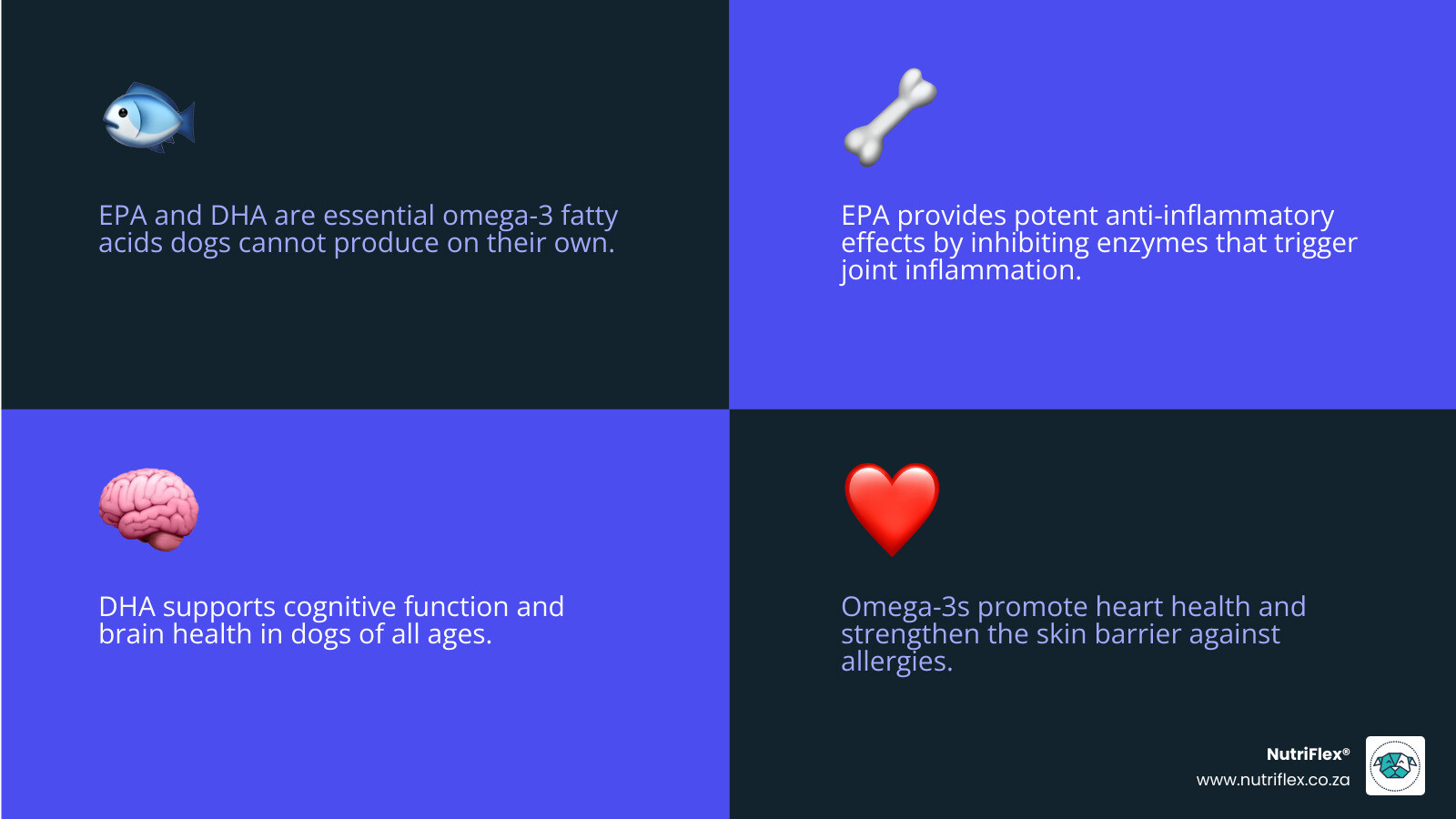
Omega-3 fatty acids are often described as the unsung heroes of canine nutrition. Unlike some nutrients that dogs can produce internally, essential fatty acids must be provided through their diet. The two most critical components found in fish oil are Eicosapentaenoic Acid (EPA) and Docosahexaenoic Acid (DHA).
According to the National Research Council (NRC) nutrient requirements, these long-chain fatty acids are vital for various biological functions. EPA is primarily known for its potent anti-inflammatory properties. It works by inhibiting the enzymes that produce inflammatory chemicals, making it a cornerstone for managing joint pain and skin allergies.
DHA, on the other hand, is a major structural component of the brain and retina. It is essential for cognitive function, particularly in growing puppies and ageing senior dogs. Research highlighted by PetMD insights on fish oil benefits suggests that omega-3s also support the skin barrier, reducing trans-epidermal water loss. This helps pets with dry, flaky skin or those prone to “hot spots” and ear infections.
In South Africa, where our pets often face harsh sun and seasonal allergens, ensuring a steady supply of omega-3 for dogs is a proactive way to maintain their heart health and immune resilience.
How to Calculate the Correct Fish Oil for Dogs Dosage Chart
Calculating the perfect dose is not just about the total weight of the fish oil in the capsule or bottle. It is about the concentration of EPA and DHA. Many pet owners make the mistake of giving a “1,000 mg capsule” assuming that is the dose, but that 1,000 mg might only contain 300 mg of active omega-3s.
To use a fish oil for dogs dosage chart effectively, we must look at the label. We calculate the dose based on the sum of EPA + DHA. The general maintenance guideline is approximately 20 to 55 mg of combined EPA/DHA per pound of body weight, which converts to roughly 45 to 120 mg per kilogram.
For more technical applications, veterinarians use metabolic body weight (kg raised to the power of 0.75). This accounts for the fact that smaller dogs have a higher metabolic rate than larger ones. Scientific research on omega-3 absorption shows that liquid forms may be absorbed more efficiently than standard capsules because they can be emulsified more easily in the digestive tract.
When reading a label, ignore the “Total Omega-3” figure if it includes ALA (Alpha-Linolenic Acid) from flaxseed. Dogs are notoriously poor at converting ALA into the active EPA and DHA they need. Focus only on the marine-sourced EPA and DHA totals to ensure you are getting the fish oil benefits you are paying for.
The Comprehensive Fish Oil for Dogs Dosage Chart
Every dog is an individual, but weight categories provide a safe starting point for most pet parents. Whether you have a tiny Yorkie or a massive Boerboel, the goal is to hit the “Goldilocks Zone” where the dose is effective but safe.

Maintenance Fish Oil for Dogs Dosage Chart
Maintenance dosing is intended for healthy dogs to support their coat shine, brain health and general immunity. If your dog has no current health issues, aim for the lower end of the milligram range.
| Dog Size | Weight (kg) | Suggested Daily EPA + DHA (mg) |
|---|---|---|
| Extra Small | 2 to 5 kg | 100 to 250 mg |
| Small | 5 to 10 kg | 250 to 500 mg |
| Medium | 10 to 25 kg | 500 to 1,200 mg |
| Large | 25 to 45 kg | 1,200 to 2,200 mg |
| Extra Large | 45 kg+ | 2,200 mg+ |
For those who prefer the convenience of pre-measured doses, omega-3 for dogs and cats softgels are an excellent choice for small to medium breeds.
Therapeutic Fish Oil for Dogs Dosage Chart for Joint Support
When a dog suffers from osteoarthritis or chronic inflammatory conditions, maintenance doses are often insufficient. Therapeutic dosing is significantly higher to achieve a pharmacological anti-inflammatory effect.
AVMA research on therapeutic fish oil suggests a maximum dose of 310 mg/kg of metabolic body weight for dogs with osteoarthritis. For a 25 kg dog, this could mean upwards of 2,300 mg of EPA + DHA daily. However, we always recommend starting at 25% of this target and titrating up over several weeks to prevent digestive upset. High-potency options like premium Omega-3 fatty acids for dogs are designed specifically for these higher requirements.
Liquid vs Capsules: Choosing the Best Form
Choosing between liquid fish oil and capsules usually comes down to your dog’s preference and your need for precision.
American Kennel Club advice on liquid fish oil notes that liquids are often more palatable for picky eaters and allow for very specific dosing adjustments. If your dog weighs 12.5 kg, you can easily measure out the exact millilitres needed. However, liquid fish oil is highly susceptible to oxidation. Once the bottle is opened, it should be refrigerated and used within 60 to 90 days to prevent the oil from going rancid.
Capsules offer better protection against oxygen and light, making them more shelf-stable. They are convenient for travel and mess-free. For small dogs, you can puncture the softgel and squeeze the oil onto their food.
When comparing sources, consider the sardines vs salmon oil comparison. Smaller fish like sardines and anchovies are often preferred because they sit lower on the food chain, meaning they accumulate fewer heavy metals like mercury compared to larger predatory fish.
Safety, Side Effects and Quality Standards
While fish oil is remarkably safe, “more” is not always “better”. Introducing fish oil too quickly can lead to loose stools or “fishy” breath.
There are a few clinical risks to keep in mind:
- Vitamin E Depletion: Processing high levels of omega-3s can deplete a dog’s Vitamin E stores. Ensure your supplement includes Vitamin E (tocopherols) as an antioxidant.
- Blood Thinning: Omega-3s have natural anti-coagulant properties. While this helps prevent blood clots, it can be a concern for dogs on blood-thinning medication or those scheduled for surgery.
- NSAID Interactions: Many dogs with arthritis take Non-Steroidal Anti-Inflammatory Drugs. Because fish oil also reduces inflammation, combining them can sometimes increase the risk of gastrointestinal side effects.
Always look for products that undergo third-party testing for purity. In South Africa, NutriFlex® ensures all supplements are produced in a certified human-grade facility, providing a level of fish oil and vitality support you can trust.
Frequently Asked Questions about Fish Oil Dosing
Is 1,000 mg of fish oil safe for my dog?
Yes, for most medium to large dogs, 1,000 mg of fish oil is perfectly safe. However, the “1,000 mg” refers to the total oil. A 1,000 mg capsule usually contains about 300 mg of EPA + DHA. For a 5 kg dog, 1,000 mg of pure EPA + DHA would be too high as a starting dose, whereas for a 30 kg dog, it is a standard maintenance amount.
How long does it take to see results from fish oil?
Patience is key. While skin and coat improvements might be visible in 3 to 4 weeks, joint support benefits often take 8 to 12 weeks to manifest. This is because it takes time for the fatty acids to incorporate into the cell membranes and begin altering the inflammatory response.
Can I give my dog human fish oil capsules?
Technically yes, provided they do not contain xylitol, heavy flavourings or added Vitamin D, which can be toxic to dogs in high amounts. However, human capsules are often dosed for a 70 kg adult, making them difficult to portion for a 10 kg dog. Using a dedicated pet supplement ensures the concentration is appropriate and the sourcing is safe.
Conclusion
Navigating a fish oil for dogs dosage chart does not have to be a mathematical headache. By focusing on the combined EPA and DHA levels and matching them to your dog’s weight, you can safely unlock the immense health benefits of omega-3s.
As a premier South African pet supplement manufacturer, NutriFlex® is committed to the highest standards of preventative pet health. Our products are Act 36 registered and produced in an FSA accredited manufacturing environment in Cape Town. We prioritise functional, science-aligned ingredients that make a real difference in your pet’s quality of life.
Ready to support your dog’s mobility and shine? Shop Omega-3 for Dogs South Africa and give your companion the premium nutrition they deserve.