
When Fish Oil Becomes Too Much: What Every Dog Owner Needs to Know
Too much fish oil for dog health is a real concern, even though omega-3 supplements are widely recommended by vets and pet nutritionists. Fish oil can cause a range of side effects when given in excess, from loose stools and vomiting to more serious risks like delayed wound healing and increased bleeding time.
Quick answer: what happens with too much fish oil for dogs?
| Side Effect | When It Typically Occurs |
|---|---|
| Diarrhoea and vomiting | Most common; often the first sign of excess |
| Weight gain | Fish oil contains roughly 40 calories per 5 ml |
| Increased bleeding risk | High doses reduce platelet aggregation |
| Delayed wound healing | Omega-3s suppress the inflammation needed for repair |
| Fishy breath and oily coat | Sign of excess circulating fatty acids |
| Immune suppression | Seen at very high therapeutic doses |
| Vitamin E depletion | Omega-3s increase oxidative demand |
Fish oil is genuinely beneficial for dogs. It supports skin health, joint mobility, heart function and cognitive health. But dose matters enormously. The difference between a therapeutic amount and an excessive one is smaller than most pet owners realise.
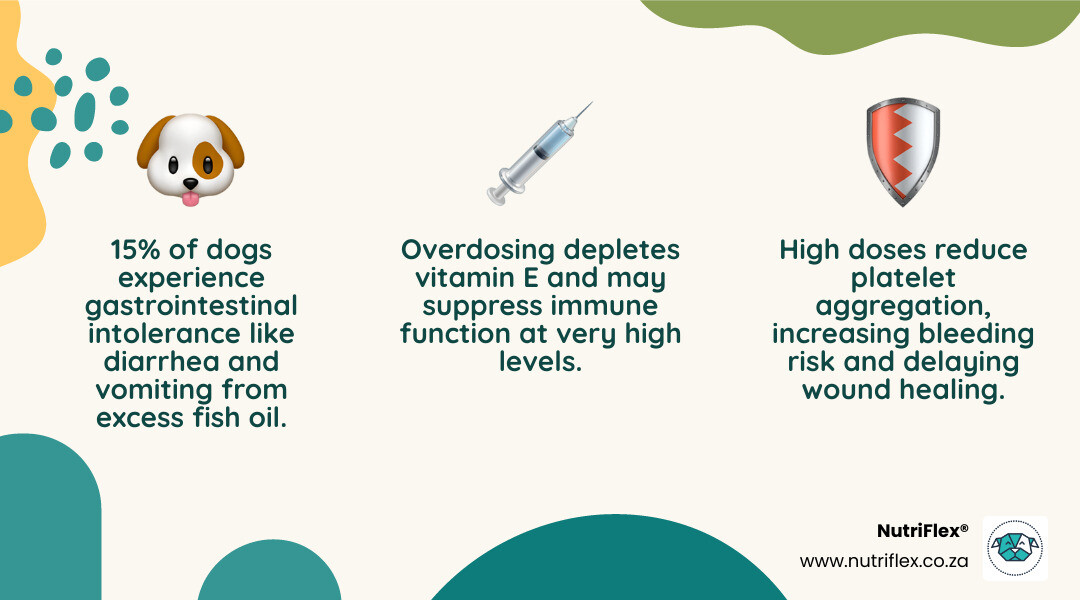
About 15% of dogs experience gastrointestinal intolerance to fish oil, and the risks increase significantly when dosing is based on total fish oil volume rather than the actual EPA and DHA content. Many owners are unknowingly overdosing their dogs simply because they are not reading labels correctly.
I’m Sharon Milani, Director of SmartPack PTY Ltd and co-founder of NutriFlex, and my work developing South Africa’s first certified human-grade pet supplement range has given me a detailed understanding of exactly where too much fish oil for dog health becomes harmful. In this guide, I’ll walk you through the science behind safe dosing, the real signs of excess and how to supplement smartly.
Understanding the Benefits of Omega-3 for Dogs
Before we dive into the dangers of excess, it is important to acknowledge why we give these supplements in the first place. Fish oil is a powerhouse of long-chain omega-3 fatty acids, specifically Eicosapentaenoic acid (EPA) and Docosahexaenoic acid (DHA). Unlike humans, dogs are incredibly inefficient at converting plant-based Alpha-linolenic acid (found in flaxseed) into these usable forms. This makes marine-sourced oils essential for omega-3 for dogs fish oil benefits to be realised.
EPA acts primarily as a natural anti-inflammatory agent. It competes with pro-inflammatory omega-6 fatty acids, helping to manage conditions like itchy skin allergies and stiff, arthritic joints. Scientific research on fish oil and arthritis shows that dogs receiving adequate EPA and DHA levels tend to be more comfortable and agile.
DHA, on the other hand, is a structural component of the brain and retina. It is vital for puppy brain development and has been shown to improve cognitive function in senior dogs, helping them stay sharp and recognise family members longer. Furthermore, fish oil can reduce the heart’s vulnerability to irregular rhythms and slow the progression of chronic kidney disease by reducing protein loss in urine.
What Happens if You Give Too Much Fish Oil for Dog Health?
While these benefits are impressive, the “more is better” philosophy is a dangerous one in pet nutrition. When a dog receives too much fish oil for dog safety standards, the body’s delicate balance is disrupted.
The most immediate consequence is often gastrointestinal upset. However, there are metabolic costs as well. Fish oil is calorie-dense, providing approximately 40 to 45 calories per 5 ml (one teaspoon). For a small dog, this can quickly lead to unwanted weight gain, which ironically places more stress on the very joints the oil was meant to protect.
A more hidden danger is lipid peroxidation. Omega-3 fatty acids are highly unstable. Inside the body, high levels of these fats can increase oxidative stress, leading to vitamin E depletion. Because the body uses vitamin E to protect these fats from going rancid (oxidising) within the cells, a high-dose fish oil regimen without antioxidant support can leave your dog deficient in this vital nutrient. Scientific research on potential adverse effects suggests that chronic over-supplementation can even lead to immune system suppression, as the anti-inflammatory effects become so strong they dampen the dog’s natural ability to fight off infections.

Gastrointestinal Distress and Pancreatitis Risks
Diarrhoea, vomiting and “fishy burps” are the most common signs that your dog is receiving too much oil. Research indicates a roughly 15% intolerance rate among dogs. When the gut is flooded with more fat than it can process, the result is often oily, loose stools or urgent diarrhoea.
There is also a theoretical risk regarding pancreatitis. While fish oil itself is often used to lower triglycerides (which helps prevent pancreatitis), the sheer volume of fat in an overdose can be a trigger for sensitive dogs. Pancreatitis is a painful inflammation of the pancreas that requires immediate veterinary attention. Signs include intense abdominal pain, a “praying position” (front legs down, rear end up), fever and persistent vomiting. To avoid these risks, many owners opt for premium omega-3 supplements that provide high concentrations of EPA and DHA in smaller, more manageable liquid volumes.
Blood Clotting and Wound Healing Risks
One of the more serious side effects of too much fish oil for dog safety is its impact on haemostasis (blood clotting). Omega-3s can reduce platelet aggregation, essentially acting as a mild blood thinner. While this is helpful for dogs with heart disease, it can be dangerous for dogs prone to injury or those scheduled for surgery.
Furthermore, fish oil can interfere with the early stages of wound healing. Healing requires an initial “pro-inflammatory” burst to clear away debris and start tissue repair. Because fish oil is so effective at dampening inflammation, it can slow down epithelialisation (the growth of new skin) and tissue contraction. Scientific research on omega-3 and blood thinning advises caution when using high doses perioperatively. At NutriFlex, we generally recommend pausing high-dose fish oil supplementation at least one week before any scheduled surgical procedure.
Calculating the Correct Dosage to Avoid Overdose
The secret to safe supplementation is dosing based on the dog’s metabolic body weight and the specific concentration of EPA and DHA, not the total volume of the oil. A 1000 mg capsule of “fish oil” might only contain 300 mg of actual omega-3s, with the rest being filler fats.
When introducing fish oil, we always recommend titration. Start with a quarter of the recommended dose and gradually increase it over two to three weeks. This allows the dog’s digestive enzymes to adjust and helps you spot early signs of intolerance.
| Dog Weight (kg) | Typical Daily EPA + DHA Target (mg) | Maximum Safe Upper Limit (mg) |
|---|---|---|
| 5 kg | 100 – 275 mg | 1,040 mg |
| 10 kg | 200 – 550 mg | 2,080 mg |
| 20 kg | 400 – 1,100 mg | 3,500 mg |
| 30 kg | 600 – 1,650 mg | 4,700 mg |
| 40 kg | 800 – 2,200 mg | 5,800 mg |
Note: These ranges are based on general health maintenance versus therapeutic needs for conditions like osteoarthritis.
Scientific research on maximum fish oil dosage specifically for dogs with osteoarthritis suggests a maximum of 310 mg per kg of metabolic body weight, but this high level is often poorly tolerated and should only be attempted under strict veterinary supervision.
Maximum Safe Daily Dosage of EPA and DHA
The National Research Council (NRC) and AAFCO provide guidelines for essential fatty acids, but they often focus on minimums to prevent deficiency rather than maximums for safety. A widely accepted safe upper limit for dogs is 2,800 mg of combined EPA and DHA per 1,000 kcal of diet.
For most South African pet owners, a simpler rule of thumb is 20 to 55 mg of combined EPA and DHA per kilogram of body weight. If your dog is already eating a therapeutic “joint support” kibble, it likely already contains high levels of fish oil. Adding a supplement on top of this can easily push your pet into the too much fish oil for dog danger zone. Check the omega-3 for dogs guidelines to ensure your total daily intake remains within safe boundaries.
Signs of Too Much Fish Oil for Dog Toxicity
If you suspect your dog has had an overdose, look for these clinical symptoms:
- Oily or Greasy Coat: The skin may feel “slick” to the touch, and the dog might develop a strong, rancid fish odour.
- Skin Flakes: Paradoxically, while fish oil helps dry skin, an overdose can cause seborrhoea (excessive oiliness and flaking).
- Fishy Breath: A persistent smell of old fish on the breath, even hours after ingestion.
- Delayed Healing: Scratches or small wounds that take much longer than usual to scab over.
- Increased Bruising: Small purple spots on the gums or skin (petechiae) can indicate clotting issues.
- Lethargy: Excessive fat intake can make a dog feel sluggish or nauseous.
Quality Matters: Rancidity and Contaminants
Not all fish oils are created equal. The quality of the oil is just as important as the dose. Because omega-3s are highly prone to oxidation, poor storage or low-quality manufacturing can turn a healthy supplement into a toxic one. Oxidised fats (rancid oil) contain trans fats and free radicals that cause cellular damage rather than healing.
Furthermore, low-quality oils sourced from large, long-lived fish can contain high levels of heavy metals like mercury, lead and PCBs. Always look for oils that are molecularly distilled and third-party tested (such as IFOS certification). Scientific research on lipid peroxidation highlights that using an opaque bottle and keeping the oil refrigerated are non-negotiable steps for maintaining safety. If the oil smells “off” or foul, throw it away immediately.
Alternatives and Safe Supplementation Practices
If your dog is particularly sensitive to standard fish oil, there are other ways to provide essential fatty acids. Feeding small, oily fish like sardines once or twice a week is a fantastic whole-food approach. Sardines are low on the food chain, meaning they accumulate fewer toxins than larger fish. You can read more about sardines vs salmon oil to see which fits your dog’s lifestyle best.
Another alternative is krill oil or green-lipped mussel. These sources provide omega-3s in a phospholipid form, which is often absorbed up to 50 times more efficiently than the triglyceride form found in standard fish oils. This allows you to give a much smaller dose while achieving the same therapeutic effect, significantly reducing the risk of diarrhoea.
Managing Too Much Fish Oil for Dog Side Effects
If your dog develops loose stools, don’t panic. The first step is a simple dose reduction. Cut the amount in half and see if the symptoms resolve within 24 to 48 hours. Adding a little extra fibre to the diet (like plain canned pumpkin) or a high-quality probiotic can help firm up the stools.
At NutriFlex, we believe in the “Vitamin E pairing” strategy. Because fish oil increases the body’s requirement for antioxidants, our omega-3 product range is formulated to support the dog’s metabolic needs without causing depletion. Always ensure you are using human-grade standards; if it isn’t good enough for you, it isn’t good enough for your dog.
Frequently Asked Questions about Fish Oil Safety
Can I give my dog human fish oil capsules?
While the oil itself is often similar, we advise against using human supplements for two main reasons. First, human capsules are often much higher in concentration, making it very easy to accidentally give too much fish oil for dog safety. Second, human supplements may contain additives like xylitol (a sweetener that is highly toxic to dogs) or lemon flavourings that can cause stomach upset. Canine-specific formulations are safer and easier to dose accurately.
How should I store fish oil to prevent it from going bad?
Fish oil is extremely sensitive to light, heat and oxygen. Always store liquid fish oil in the refrigerator in an airtight, opaque container. If you use capsules, keep the bottle in a cool, dark cupboard. Never leave the bottle on a sunny windowsill or near the stove. Proper storage can extend the shelf life and prevent the formation of harmful oxidised fats.
How long does it take for side effects to resolve?
Most gastrointestinal side effects like diarrhoea or vomiting will resolve within 24 to 48 hours once the supplement is stopped or the dose is significantly reduced. However, metabolic issues like vitamin E depletion or weight gain take much longer to correct and may require dietary adjustments and several weeks of careful management.
Conclusion
Fish oil is one of the most effective natural tools we have for supporting our dogs’ health, but it must be respected as a potent nutraceutical. By understanding the risks of giving too much fish oil for dog health and choosing high-quality, Act 36 registered supplements, you can provide all the anti-inflammatory benefits without the digestive drama.
NutriFlex is proud to be a leading South African manufacturer, producing science-aligned supplements in a certified human-grade facility in Cape Town. Our commitment to functional nutrition ensures that your pet receives exactly what they need for a long, mobile and vibrant life.