
Why Your Dog’s Itchy Skin May Need More Than a Shampoo
Fish oil for dog skin allergies is one of the most well-supported nutritional interventions available to pet owners today. It works by supplying omega-3 fatty acids, specifically EPA and DHA, that help reduce the chronic inflammation driving your dog’s itch-scratch cycle.
Quick answer: How fish oil helps dog skin allergies
| What it does | How it helps |
|---|---|
| Reduces inflammation | EPA and DHA lower inflammatory cytokines that trigger itching |
| Improves skin barrier | Omega-3s support the lipid layers that keep moisture in and allergens out |
| Reduces steroid reliance | Clinical studies show fish oil can lower the amount of prednisone needed to control itching |
| Improves coat condition | Supports natural oil production for healthier, less flaky skin |
| Takes effect gradually | Most dogs show measurable improvement within 10 weeks of consistent supplementation |
South African dogs face a particular challenge. Year-round exposure to grass pollens, dust mites and environmental allergens means atopic dermatitis, the most common form of canine skin allergy, is not just a seasonal problem here. The itch-scratch cycle it triggers causes real distress, damages the skin barrier further and often leads pet owners down a frustrating path of trial and error.
Fish oil does not cure allergies. But the evidence shows it can meaningfully reduce inflammation, support skin structure and, in some cases, reduce the amount of medication a dog needs to stay comfortable.
I’m Sharon Milani, co-founder of NutriFlex® and a long-time advocate for functional nutrition in pet health. My work formulating human-grade omega-3 supplements for dogs has given me a close understanding of how fish oil for dog skin allergies works in practice and what separates an effective supplement from one that simply sits on the shelf. Read on for a practical, evidence-based guide to getting it right.
Understanding Fish Oil for Dog Skin Allergies
To understand why fish oil for dog skin allergies is so effective, we first need to look at what it actually is. Fish oil is a concentrated source of long chain omega-3 fatty acids, primarily eicosapentaenoic acid (EPA) and docosahexaenoic acid (DHA). These are essential fatty acids, meaning your dog’s body cannot produce them on its own. They must be consumed through diet or supplementation.
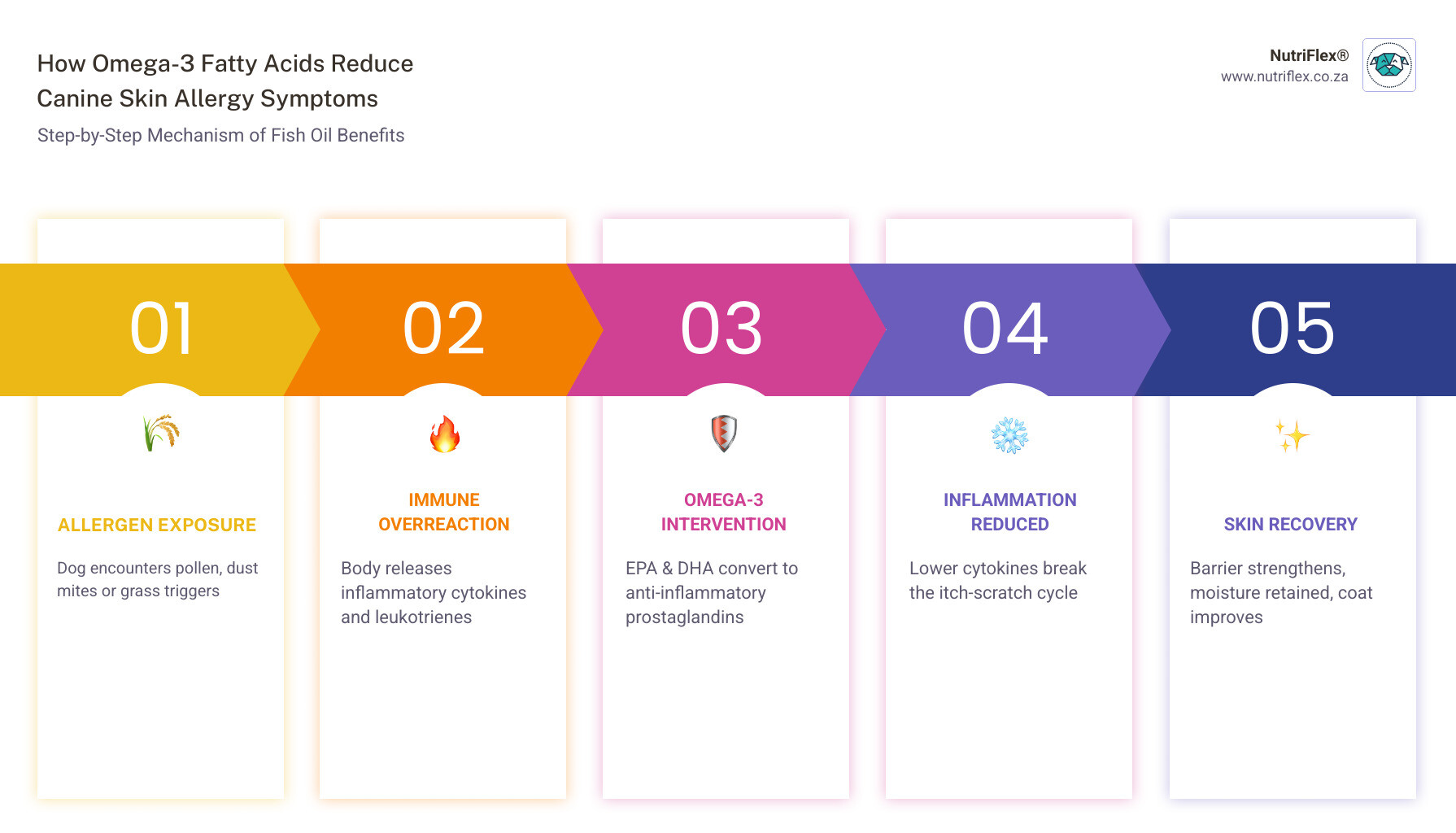
When a dog suffers from allergies, their immune system overreacts to common environmental triggers. This overreaction leads to the production of pro-inflammatory chemicals. EPA and DHA act as precursors to anti-inflammatory compounds called prostaglandins. By increasing the levels of these “good” fats in the cellular membranes, we can shift the body’s internal chemistry away from inflammation and towards healing. You can learn more about common triggers in our guide on Pet Allergy Triggers & Treatment.
How fish oil for dog skin allergies reduces inflammation
Inflammation is the primary cause of the redness and heat you see on an allergic dog’s belly or paws. At a microscopic level, this involves the release of substances called cytokines and leukotrienes. These are the “alarm bells” of the immune system that tell the body to itch.
Omega-3 fatty acids are sometimes called biological antifreeze because they help maintain the fluidity and health of cell membranes, even in cold-water fish. In your dog’s body, they work by competing with pro-inflammatory omega-6 fatty acids. Most commercial dog foods are very high in omega-6 from grain and poultry sources, which can inadvertently fuel inflammation. By supplementing with fish oil for dog skin allergies, we help restore a healthy balance, effectively turning down the volume on those internal alarm bells. This is particularly helpful for dogs with Red and Inflamed Skin Dog issues.
Improving skin barrier and structure
One of the most exciting aspects of fish oil is its ability to physically change the structure of the skin. Allergic dogs often have a “leaky” skin barrier. This means they lose moisture too quickly (transepidermal water loss) and allow allergens like pollen to penetrate the skin more easily.
A 2011 pilot study published in Veterinary Research Communications showed that essential fatty acid supplements improved the fat content and organized structure of the skin in allergic dogs. By improving these lipid layers, the skin becomes more resilient and similar to that of a non-allergic dog. This structural reinforcement is a key reason why we see such a reduction in flakiness and dryness over time. You can read the Scientific research on skin lipid improvement for more technical details.
Scientific Evidence for Allergy Relief
We don’t just rely on anecdotes; the benefits of fish oil for dog skin allergies are backed by rigorous clinical trials. One of the most significant findings is the steroid-sparing effect. In a 2004 randomised controlled study, researchers found that dogs supplemented with fish oil required significantly lower doses of the steroid prednisone to manage their itching compared to those who did not receive the oil.
Another double-blinded trial involving 29 dogs with atopic dermatitis demonstrated that clinical scores (a measure of the severity of skin lesions and itching) improved significantly after 10 weeks of omega-3 supplementation. The placebo group showed no such improvement. This evidence suggests that for many dogs, fish oil is a vital component of long-term management. For a deeper dive into managing these symptoms, see our Help for Itchy Dogs: The Definitive Guide.
Supporting Conventional Allergy Management
It is important to manage expectations: fish oil is rarely a “miracle cure” that works instantly on its own for severe cases. Instead, it is best used as an adjunct therapy within a multimodal management plan. This means using it alongside other treatments prescribed by your vet, such as medicated shampoos or modern allergy medications like Apoquel or Cytopoint.
Because of the steroid-sparing effect mentioned earlier, adding fish oil to your dog’s routine might allow your vet to reduce the dosage of more powerful medications that carry a higher risk of side effects. This integrative approach is often the most successful way to provide Dog Itchy Skin Remedy: Natural Solutions while maintaining safety.
Dosage and Results Timeline
When using fish oil for dog skin allergies, the dosage needs to be higher than what is typically recommended for general health. Research suggests a therapeutic dose of approximately 125 mg of combined EPA and DHA per kilogram of metabolic body weight daily.
Calculating metabolic body weight can be tricky, so we have simplified the general therapeutic guidelines in the table below. Always consult your veterinarian to tailor the dose to your dog’s specific health needs.
| Dog Weight (kg) | Approximate Daily EPA + DHA (mg) |
|---|---|
| 5 kg | 390 mg |
| 10 kg | 650 mg |
| 20 kg | 1100 mg |
| 30 kg | 1500 mg |
| 40 kg | 1900 mg |
For more details on the clinical basis for these amounts, refer to the Scientific research on therapeutic dosing.
Administering fish oil for dog skin allergies effectively

Consistency is the most important factor when starting a supplement. We recommend a gradual introduction to allow your dog’s digestive system to acclimate. Start with a quarter of the recommended dose for the first week, then slowly increase it over 14 to 21 days.
Do not expect overnight results. It takes time for the fatty acids to be incorporated into the cell membranes and for the skin cells to turn over. Most owners begin to see a shinier coat within 3 to 4 weeks, but the full anti-inflammatory benefits for skin allergies typically take 10 weeks (around 70 days) to manifest. You can find high-quality options on our Omega 3 for Dogs page.
Choosing High Quality Supplements
Not all fish oils are created equal. In the South African market, you will find various forms, including natural triglyceride oil and ethyl ester oil. Natural triglyceride oil is often considered the most bioavailable (easiest for the body to absorb), while ethyl ester oils are often more concentrated and highly purified.
When choosing a supplement, look for:
- Sourcing: Cold-water, oily fish like sardines, anchovies or mackerel are ideal. Icelandic waters are known for being particularly clean.
- Purity: Ensure the oil is tested for heavy metals like mercury and lead.
- Certification: Look for IFOS (International Fish Oil Standards) certification to guarantee freshness and potency.
- Concentration: Check the label specifically for the amount of EPA and DHA, not just the total “fish oil” amount.
For a comparison of different fish sources, see our article on Sardines vs Salmon: Which Omega Supplement is Best for Your Dog?.
Storage and oxidation prevention
Fish oil is highly sensitive to heat, light and oxygen. When fish oil oxidizes, it becomes rancid. Not only does rancid oil smell terrible, but it can actually increase inflammation in the body—the exact opposite of what we want.
To keep your fish oil for dog skin allergies fresh:
- Buy only what you can use within 30 to 60 days.
- Store the oil in dark glass bottles to protect it from light.
- Keep it in the refrigerator after opening.
- Ensure the supplement contains Vitamin E (tocopherols) as a natural preservative to prevent oxidation.
Learn more about maintaining the potency of your supplements in Fish Oil Transform Dogs Health & Vitality.
Safety and Potential Side Effects
While fish oil is generally very safe, there are a few potential side effects to watch for, especially at the higher therapeutic doses used for allergies. The most common issues are gastrointestinal, such as loose stools, diarrhea or “fishy” breath.
In rare cases, very high doses can interfere with blood clotting or slow down wound healing. If your dog is scheduled for surgery, most vets recommend stopping fish oil supplements 5 to 7 days beforehand. Additionally, dogs with a history of pancreatitis should use fish oil with caution, as it is a concentrated fat source. Always monitor your pet and read more about Omega-3 for Dogs: Fish Oil Benefits to stay informed.
Why human fish oil is unsafe for dogs
It is tempting to share your own supplements with your dog, but we strongly advise against this. Human fish oil supplements are formulated for human physiology and concentrations. More importantly, they may contain additives that are harmless to us but toxic to dogs.
The most dangerous additive is xylitol (a birch sugar sweetener), which is found in some liquid or gummy human supplements and can cause life-threatening low blood sugar and liver failure in dogs. Human oils may also contain flavourings or concentrations of Vitamin D that are inappropriate for canines. For your dog’s safety, always stick to products specifically formulated and registered for animal use. Detailed safety data can be found in this Scientific research on fish oil safety.
Frequently Asked Questions about Fish Oil
Can dogs be allergic to fish oil?
It is technically possible but extremely rare. Most food allergies in dogs are reactions to the proteins in the food. Since high-quality fish oil is a purified fat, it should not contain the fish proteins that trigger an allergic response. If your dog is known to be allergic to whole fish, consult your vet before starting oil, but most “fish-allergic” dogs tolerate pure oil perfectly well.
How long does it take to see results?
As mentioned, this is a long-game strategy. You are essentially rebuilding your dog’s skin from the inside out. While you might notice a softer coat in a few weeks, the reduction in itching and the repair of the skin barrier typically requires 60 to 70 days of consistent, daily dosing.
Are there natural food sources of omega-3?
Yes, you can supplement your dog’s diet with whole food sources. Fresh or canned sardines (in water, no salt added), mackerel and salmon are excellent sources of omega-3s. However, to reach the therapeutic levels needed for fish oil for dog skin allergies, you would have to feed a large amount of fish, which can unbalance the rest of the diet. Supplements offer a more controlled way to reach these levels without adding too many calories. You can explore Solve Persistent Dog Allergies Naturally with Diet for more nutritional tips.
Conclusion
Managing a dog with skin allergies requires patience, but fish oil for dog skin allergies is a powerful, science-backed tool that can make a massive difference in their quality of life. By reducing inflammation and strengthening the skin barrier, we can help break the itch-scratch cycle and give our dogs the comfort they deserve.
At NutriFlex®, we are committed to providing premium, functional nutrition for South African pets. Our supplements are Act 36 registered and produced in an FSA accredited, human-grade facility in Cape Town. We prioritise purity and potency, ensuring that every drop of oil helps support your dog’s journey to better health. If you are ready to help your pup find relief, Shop Omega 3 for Dogs and start their transformation today.
