
Why Getting the Omega 3 for Dogs Dosage Right Matters
Omega 3 for dogs dosage is one of the most searched pet health topics in South Africa, and for good reason. Get it right and you support your dog’s joints, skin, heart and brain. Get it wrong and you risk side effects or simply waste money on a supplement that does nothing.
Here is a quick-reference guide to daily EPA + DHA dosage by dog size:
| Dog Size | Weight | Recommended Daily EPA + DHA |
|---|---|---|
| Small | Up to 9 kg | 150 to 200 mg |
| Medium | 10 to 25 kg | 300 to 600 mg |
| Large | 25 to 45 kg | 600 to 1,000 mg |
| Giant | 45 kg+ | 1,000 mg+ |
Key rules to remember:
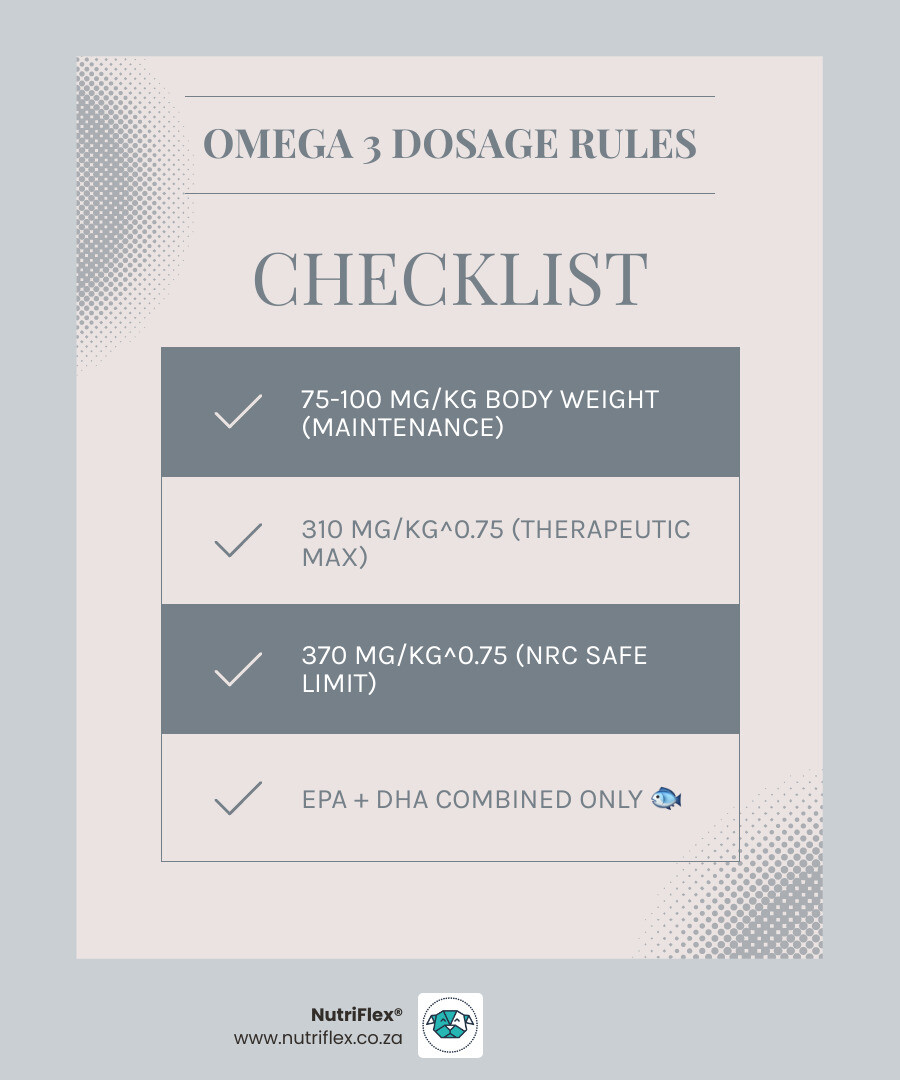
- Always dose based on combined EPA + DHA, not total fish oil
- The standard maintenance dose is roughly 75 to 100 mg per kg of body weight per day
- For therapeutic use (such as osteoarthritis), doses may go up to 310 mg/kg^0.75 per day
- Never exceed the NRC safe upper limit of 370 mg/kg^0.75 per day
- Always consult your vet before starting supplementation, especially if your dog is on medication
These numbers are a starting point. Your dog’s specific health needs, current diet and body condition all affect the right dose.
Omega 3 is not a simple “one cap fits all” supplement. Most commercial dog foods contain very little EPA or DHA because these oils are expensive and degrade quickly during processing. That gap is exactly why so many South African dog owners turn to supplementation.
I’m Sharon Milani, co-founder of NutriFlex® and Director of SmartPack PTY Ltd, and my journey with omega 3 for dogs dosage started with my own miniature schnauzer Hector, whose severe arthritis at age 12 led me to develop a clinically informed approach to canine supplementation. In the sections below, I’ll walk you through the science, the calculations and the practical steps to get omega 3 right for your dog.
Understanding Omega 3 Fatty Acids and Their Benefits
To understand the correct omega 3 for dogs dosage, we first need to look at what these fatty acids actually do. Omega 3s are polyunsaturated fats that are “essential” because a dog’s body cannot produce them on its own. They must come from the diet.
There are three primary types of omega 3 fatty acids:
- EPA (Eicosapentaenoic Acid): This is the powerhouse of inflammation control. It helps reduce the production of pro-inflammatory cytokines that cause pain and swelling in joints.
- DHA (Docosahexaenoic Acid): This is a primary structural component of the brain and retina. It is vital for puppy brain development and maintaining cognitive function in senior dogs.
- ALA (Alpha-Linolenic Acid): Found in plants like flaxseed. While healthy, dogs are very inefficient at converting ALA into the active EPA and DHA they need.
The health benefits of marine-sourced EPA and DHA are extensive. Research shows that fish oil is potentially helpful in reducing tumor growth in certain cancers as well as improving cognitive function in senior dogs. For dogs struggling with mobility, studies show that when fish oil is given to arthritic dogs, these animals tend to be more comfortable and agile.
Beyond joints and brains, omega 3s protect the heart by reducing the risk of irregular rhythms and acting as a mild anticoagulant to prevent blood clots. They also provide a barrier for the skin, helping dogs with allergies find relief from dry, flaky, or itchy conditions. You can find more info about omega 3 for dogs on our dedicated education page.
Calculating the Correct Omega 3 for Dogs Dosage
Calculating the right amount isn’t as simple as following the “one pump” instruction on a bottle. Veterinary professionals distinguish between maintenance doses (for general wellness) and therapeutic doses (for treating specific conditions like arthritis or kidney disease).
For general wellness, a common recommendation is 20 mg to 55 mg of combined EPA and DHA per pound of body weight, which translates to roughly 44 mg to 121 mg per kilogram. However, for dogs with chronic inflammation, veterinarians often use a formula based on metabolic body weight.
Scientific research on fish oil dosage for osteoarthritis suggests a maximum daily dosage of 310 mg per kg of metabolic body weight (kg^0.75). This sounds complicated, but it ensures that a giant Great Dane doesn’t get a toxic amount while a tiny Chihuahua gets enough to actually make a difference.
Maintenance vs Therapeutic Doses
| Dog Weight (kg) | Maintenance Dose (mg EPA+DHA) | Therapeutic Dose (mg EPA+DHA) |
|---|---|---|
| 5 kg | 250 – 500 mg | Up to 1,000 mg |
| 10 kg | 500 – 1,000 mg | Up to 1,750 mg |
| 20 kg | 1,000 – 2,000 mg | Up to 2,900 mg |
| 40 kg | 2,000 – 4,000 mg | Up to 4,900 mg |
Daily Omega 3 for Dogs Dosage by Weight
When you are looking at a supplement label, ignore the “Total Fish Oil” number. Instead, look for the “Combined EPA + DHA” content.
- Small Breeds (Up to 9 kg): These dogs typically require between 150 mg and 200 mg of EPA/DHA daily. If you are using a high-concentration liquid, this might only be a few drops.
- Medium Dogs (10 to 25 kg): A range of 300 mg to 600 mg is standard for maintenance. For skin allergies, you may find the higher end of this range more effective.
- Large Breeds (25 to 45 kg): Large dogs need 600 mg to 1,000 mg. Because these breeds are prone to hip dysplasia, ensuring they hit their target dose is crucial for long-term mobility.
- Giant Dogs (45 kg+): These dogs often require 1,000 mg or more. At this size, using a concentrated liquid is often more cost-effective than feeding dozens of capsules.
For a deeper dive into how these fats change your dog’s life, read more info about fish oil benefits.
Determining the Maximum Safe Omega 3 for Dogs Dosage
While omega 3 is beneficial, more is not always better. The National Research Council (NRC) has established a safe upper limit for total EPA and DHA in dogs at approximately 370 mg/kg^0.75. For a 20 kg dog, this is roughly 3,500 mg per day.
Exceeding the safe omega 3 for dogs dosage can lead to side effects such as:
- Diarrhea or loose stools
- Vomiting
- A “fishy” odour to the breath or skin
- Delayed wound healing (due to the anti-inflammatory effect on platelets)
- Weight gain (fish oil is pure fat and calorie-dense)
If your dog accidentally consumes a large amount of fish oil, monitor them for signs of pancreatitis, which includes abdominal pain and lethargy. It is also important to consider the mercury and toxin levels in the fish used. For more on sourcing, see our more info about sardines vs salmon guide.
Choosing the Best Source: Fish Oil vs Plant Based Alternatives
Not all omega 3 sources are created equal. Many pet owners try to use flaxseed oil or chia seeds because they are cheaper and easier to store. However, dogs lack the specific enzymes needed to efficiently convert the ALA in plants into the EPA and DHA their cells require. Only about 5% to 10% of plant-based ALA gets converted, meaning your dog would have to eat a massive amount of flaxseed to get the same benefit as a small dose of fish oil.
Marine lipids from wild-caught fish are the gold standard. They are highly bioavailable, meaning the dog’s body can use them immediately.
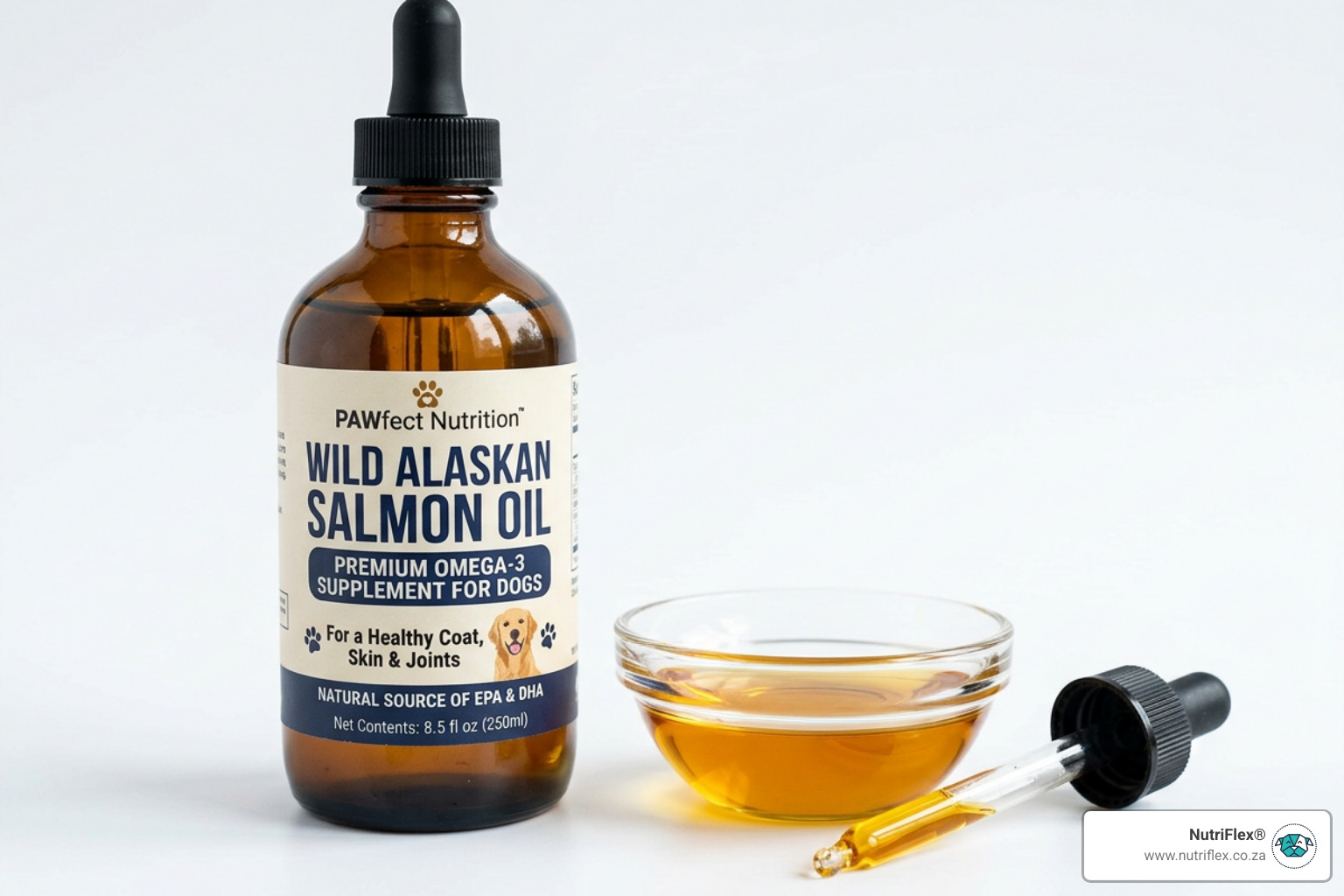
When choosing a supplement, look for:
- Purity: Third-party testing for heavy metals (mercury, lead) and PCBs.
- Sustainability: Sourcing from small, oily fish like anchovies or sardines, which are lower on the food chain and more sustainable.
- Concentration: A product with high EPA and DHA per ml means you feed less “filler” oil and fewer calories.
For a high-potency option, you can see more info about premium omega 3 on our shop.
Administration and Safety Precautions
How you give the supplement is just as important as the dose itself.
- Liquid vs Capsules: Liquid fish oil is typically absorbed faster and more completely than capsules. It also offers more dosing flexibility. Capsules are convenient and have a longer shelf life because the oil is protected from air.
- Oxidation Prevention: Omega 3 oils are extremely fragile. Once exposed to oxygen, they begin to oxidise (turn rancid). Rancid oil is pro-inflammatory and can actually harm your dog. Always store liquid fish oil in the refrigerator and keep capsules in a cool, dark place.
- Label Transparency: Ensure the label clearly states the milligrams of EPA and DHA. If a label only says “1,000 mg Fish Oil,” you have no way of knowing if your dog is getting the therapeutic levels they need.
- Gradual Introduction: To avoid “the runs,” start with a quarter of the recommended dose and slowly increase it over two weeks.
If your dog is a picky eater, you might prefer omega 3 softgels which can be hidden in a treat or a bit of peanut butter.
Frequently Asked Questions about Omega 3 for Dogs
Can I give my dog human fish oil supplements?
While the fish oil itself is often the same, human supplements can be risky for dogs. Some human capsules contain xylitol (a sweetener that is highly toxic to dogs) or lemon flavourings that can cause digestive upset. Additionally, human doses are often much higher than what a small dog requires, making it easy to accidentally overdose your pet. Always stick to pet-specific formulations that are Act 36 registered in South Africa.
How long does it take to see results from omega 3?
Patience is key. It takes time for these fatty acids to incorporate into the lipid bilayers of your dog’s cells. While you might see an improvement in coat shine within 2 to 3 weeks, it typically takes a full two months of consistent supplementation to see significant changes in joint mobility or cognitive function.
Are there any drug interactions with fish oil?
Yes. Because fish oil has a mild blood-thinning effect, it should be used with caution in dogs taking anticoagulants or those scheduled for surgery. There is also evidence that fish oil can reduce the heart’s vulnerability in developing an irregular rhythm, but it should always be discussed with your vet if your dog is on heart medication or NSAIDs for pain.
Conclusion
Finding the right omega 3 for dogs dosage is one of the most impactful things you can do for your dog’s long-term health. By focusing on high-quality, marine-sourced EPA and DHA and dosing correctly based on your dog’s weight, you can help them live a more mobile, comfortable and vibrant life.
At NutriFlex®, we take this science seriously. Our supplements are Act 36 registered and produced in a certified human-grade facility in Cape Town. We prioritise functional, science-aligned ingredients that deliver real results for South African pets.
Whether you are looking to support a growing puppy or a stiff senior, we are here to help. You can Shop NutriFlex Omega 3 online today and give your dog the premium support they deserve.
