
What Every South African Pet Parent Should Know About Chicken Bone Broth
A good chicken bone broth recipe is one of the most practical things you can have in your kitchen. It is simple to make, uses ingredients you likely already have and delivers real nutritional value for both you and your pets.
Quick answer: How to make chicken bone broth
- Place roughly 1 to 2 kilograms of chicken bones (carcass, wings or necks) in a large pot.
- Cover with cold filtered water (approximately 3 to 4 litres).
- Add 15 millilitres of apple cider vinegar, two carrots, two celery stalks and one onion.
- Bring to a gentle boil, skim off any foam and reduce to a low simmer.
- Cook for 12 to 24 hours on the stovetop or in a slow cooker.
- Strain through a fine mesh strainer, cool and refrigerate or freeze in portions.
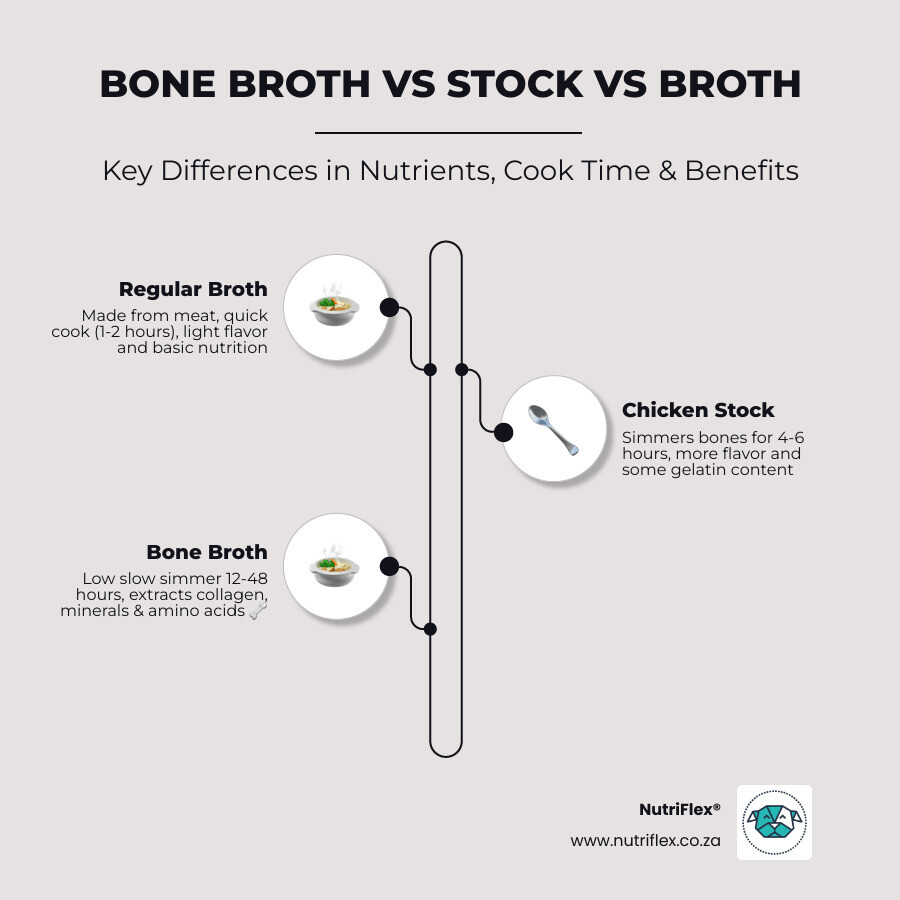
Bone broth is not the same as regular chicken stock or broth. The key difference is time and what that time extracts from the bones.
- Regular broth uses meat, cooks quickly and is lighter in body and nutrition.
- Chicken stock simmers bones for several hours and develops more flavour and some gelatin.
- Bone broth simmers bones low and slow for 12 to 48 hours, drawing out collagen, minerals and amino acids that shorter methods simply cannot achieve.
That long, slow simmer is what makes bone broth particularly interesting from a nutritional standpoint, especially for pets with joint, gut or immune concerns.
I’m Sharon Milani, co-founder of NutriFlex® and a South African pet supplement formulator with years of experience researching functional ingredients like collagen and bone broth for canine and feline health. My work developing a certified human-grade chicken bone broth recipe for dogs gives me a practical understanding of what good bone broth looks like, from the pot to the bowl.
Understanding the Power of Chicken Bone Broth
In recent years, the culinary and wellness worlds have rediscovered what our grandmothers always knew. Bone broth is often referred to as Winter’s New Miracle Drink because it is exceptionally hydrating and packed with bioavailable nutrients. For those of us in South Africa looking to support our pets through the changing seasons, understanding the Bone Broth for Pets Diet is a game changer for long term health.
The magic lies in the structural proteins. When we simmer chicken bones for an extended period, the collagen within the connective tissues breaks down into gelatin. This gelatin is rich in amino acids like glycine, proline and glutamine. These are the building blocks for healthy joints, skin and a resilient gut lining.
For dogs and cats, bone broth provides:
- Joint Support: Natural glucosamine and chondroitin help maintain mobility, which is vital for aging pets.
- Immune Resilience: The minerals and amino acids support the body’s natural defences.
- Digestive Balance: Gelatin helps soothe and repair the gut lining, making it an excellent choice for pets with sensitive stomachs or “leaky gut” issues.
- Liver Detoxification: Glycine supports the liver in processing toxins.
In the South African market, where we value natural and wholesome solutions, making your own broth is an affordable way to boost your pet’s functional animal nutrition.
Essential Ingredients for Your chicken bone broth recipe
Creating a high quality broth starts with the right components. You do not need expensive ingredients, but you do need specific ones to ensure the best nutrient extraction.
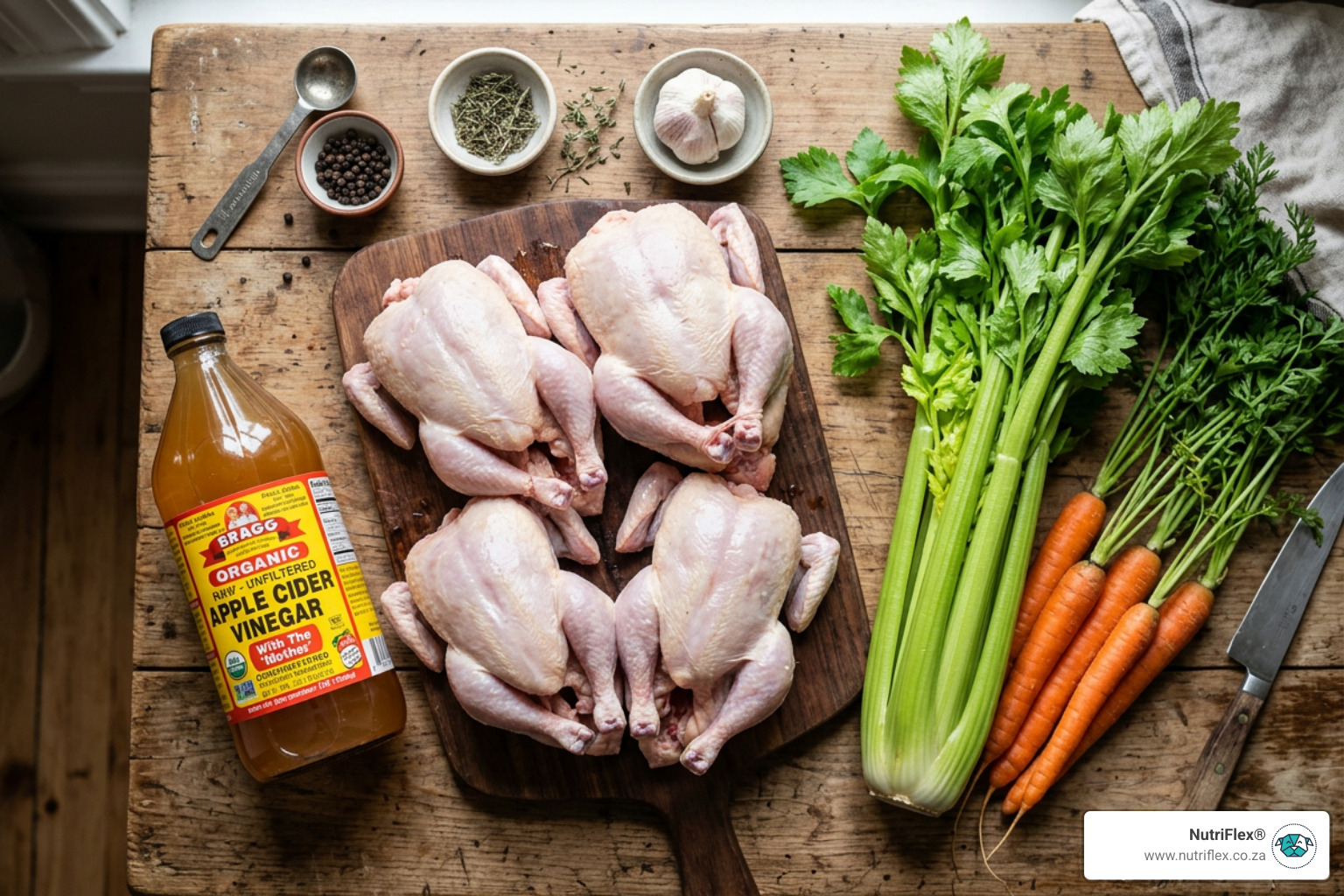
The basic list for a standard chicken bone broth recipe includes:
- Chicken Bones: 1 to 2 kilograms of high quality bones.
- Filtered Water: Enough to cover the bones by at least 5 centimetres (usually 3 to 6 litres).
- Acid: 15 to 30 millilitres of apple cider vinegar to help leach minerals.
- Vegetables (Mirepoix): Carrots, celery and onions for flavour and added vitamins.
- Herbs: Fresh parsley or thyme (optional but great for vitamins).
A Note on Pet Safety: If you are making this broth specifically for your dog or cat, keep it simple. Avoid adding salt, as most pets get enough sodium from their regular diet. Also, while onions are traditionally used in human broth, they can be toxic to pets in large amounts. For a pet-focused broth, we recommend sticking to carrots and celery or using very small amounts of onion that are strained out later.
Selecting the Best Bones for Your chicken bone broth recipe
The quality of your broth depends entirely on the bones you choose. To get that desired “jelly” consistency, you need bones high in connective tissue.
- Carcasses: Using the leftover frame from a roasted chicken is a fantastic way to reduce waste.
- Feet: Chicken feet are the “secret weapon” of bone broth. They are packed with collagen and will almost guarantee a thick, gelatinous result.
- Wings and Necks: These are meaty bones that add significant flavour and gelatin.
- Rotisserie Leftovers: Yes, you can use the bones from a store-bought rotisserie chicken. Just ensure they are cleaned of any heavy sauces or excessive salt.
In South Africa, sourcing organic or free range bones is ideal to ensure you are providing the cleanest nutrition possible. For more on sourcing, check out Bone Broth for Dogs South Africa. We suggest aim for roughly 2 kilograms of bones for a large batch.
Why Apple Cider Vinegar is Vital for Your chicken bone broth recipe
Many people ask if they can skip the vinegar. While you can, your broth will not be as nutrient dense. The acidity of the vinegar acts as a solvent, helping to break down the hard exterior of the bone to release the marrow and minerals like calcium, magnesium and phosphorus.
Adding just 15 millilitres of a high quality ACV helps with Searching for the Best Bone Broth Gravy for Dogs. It does not affect the final taste significantly but makes a massive difference in the collagen release. If you do not have vinegar, lemon juice can work in a pinch, but apple cider vinegar with “the mother” is the gold standard for health.
Step-by-Step Cooking Methods
There are several ways to tackle your chicken bone broth recipe, depending on the equipment you have and how much time you want to spend in the kitchen.
When preparing your broth, consider the following South African context: Loadshedding. If you are using an electric stovetop or slow cooker, check your schedule. A slow cooker is generally safer for long periods, but an Instant Pot is the most “loadshedding-friendly” because it finishes the job in just 2 hours.
The Stovetop Method
This is the traditional way to make broth. It requires a large stock pot and a bit of patience.
- Combine: Place your bones and vinegar in the pot. Let them sit in the water for 30 minutes before turning on the heat. This “soaking” period helps the vinegar start its work.
- Boil and Skim: Bring the pot to a gentle boil. You will see a greyish foam (scum) rise to the top. Use a large spoon to skim this off and discard it. This ensures a clear, clean-tasting broth.
- Simmer: Reduce the heat to the lowest setting. You want a “lazy” bubble, not a rolling boil.
- Time: Let it cook for at least 12 hours. Some enthusiasts go up to 24 hours for chicken.
- Add Veggies: Add your vegetables in the last 4 to 6 hours of cooking so they do not turn the broth bitter.
The Slow Cooker and Instant Pot Methods
For most busy households, these methods are the winners. A slow cooker allows you to “set it and forget it” for 24 hours on a low heat setting.
The Instant Pot (pressure cooker) is the fastest route. By cooking under high pressure, you can achieve in 2 hours what takes 24 hours on a stove. This method is excellent for preserving the clarity of the broth and is highly efficient.
Whether it is a hot winter meal or understanding Why Summer Bone Broth for Dogs is Great, these modern appliances make health accessible.
Storing and Serving Your Homemade Broth
Once your broth has finished cooking, it is time to preserve that liquid gold.
- Strain: Use a fine mesh strainer to remove all bones and vegetable bits. Discard the solids.
- Cool Quickly: To prevent bacterial growth, cool the broth quickly. You can place the pot in a sink filled with ice water.
- Remove Fat: Once the broth is refrigerated, a layer of hard yellow fat will form on top. You can scrape this off with a spoon. This fat (schmaltz) can be used for cooking or discarded if you want a leaner broth for your pet.
- Portioning: Store your broth in glass jars or BPA-free containers.
- Shelf Life: It stays fresh in the fridge for 4 to 5 days.
- Freezing: This is the best way to keep a steady supply. Freeze in 500 millilitre portions or even in ice cube trays for easy serving. It will last up to 6 months in a deep freeze.
You can use this broth as a base for soups, to cook rice or as one of many Meal Toppers to hydrate your pet’s kibble.
Frequently Asked Questions about Chicken Bone Broth
How do I know when my chicken bone broth is done?
The best way to tell is the “bone test.” After 12 to 24 hours, take a large bone (like a leg bone) out of the pot. If it snaps easily in half or feels soft to the touch, it means the minerals and marrow have been successfully extracted into the liquid.
Should I roast the bones before making bone broth?
Roasting is optional but highly recommended for flavour. If you are using raw bones, roast them in the oven at 200 degrees Celsius for about 20 to 30 minutes until they are golden brown. This adds a rich, smoky depth to the broth. If you are using a leftover roasted carcass, you can skip this step.
Why did my bone broth not turn into a jelly?
If your broth is still liquid when cold, do not worry—it is still nutritious! Usually, this happens if you used too much water relative to the amount of bones, or if you did not include enough collagen-rich parts like feet or wings. Next time, try reducing the water or simmering for a few more hours.
Conclusion
Making a chicken bone broth recipe at home is a rewarding experience that aligns perfectly with the NutriFlex® philosophy of preventative pet health and functional animal nutrition. By using simple, human-grade ingredients, you are providing your pets with a powerful tool for mobility and digestive health.
We are proud to be a South African pet supplement manufacturer based in Cape Town, producing all our products in a certified human-grade facility. If you find yourself short on time but still want the benefits of a premium broth, our Gravy Meal Topper 180g Chicken Bone Broth for Dogs is a convenient, Act 36 registered alternative that brings the same science-aligned nutrition to your pet’s bowl.
Whether you simmer it yourself or use our specialised toppers, incorporating bone broth into your pet’s routine is one of the best ways to support their vitality for years to come.