
Can a Dog Survive Chocolate Poisoning Without Treatment?
Can a dog survive chocolate poisoning without treatment depends on several critical factors. Here is a quick summary:
| Factor | Lower Risk | Higher Risk |
|---|---|---|
| Dog size | Large breed (e.g. 30+ kg) | Small breed (e.g. under 5 kg) |
| Chocolate type | White or milk chocolate | Dark or baking chocolate |
| Amount eaten | Trace amount | Large quantity |
| Time since eating | Under 2 hours | Over 6 hours |
| Health status | Young, healthy dog | Older dog or heart condition |
The short answer: some dogs survive mild exposure without treatment, but it is never safe to wait and see. Without veterinary care, death can occur within 24 to 48 hours in severe cases. The toxic compounds in chocolate, theobromine and caffeine, break down far more slowly in dogs than in humans. A half-life of up to 17.5 hours means these substances accumulate to dangerous levels in a dog’s system.
Even if your dog appears fine after eating chocolate, symptoms can take 6 to 12 hours to appear. By then, the window for safe decontamination may already be closed.
I’m Sharon Milani, Director of SmartPack PTY Ltd and co-founder of NutriFlex®, and my work developing clinically informed pet health solutions has given me a deep understanding of how quickly a dog’s physiology can be overwhelmed by everyday toxins, including the question of can a dog survive chocolate poisoning without treatment. What follows is a practical, evidence-based guide to help South African dog owners understand the risks, act quickly and protect their pets.
Understanding the Toxicity Thresholds in Dogs
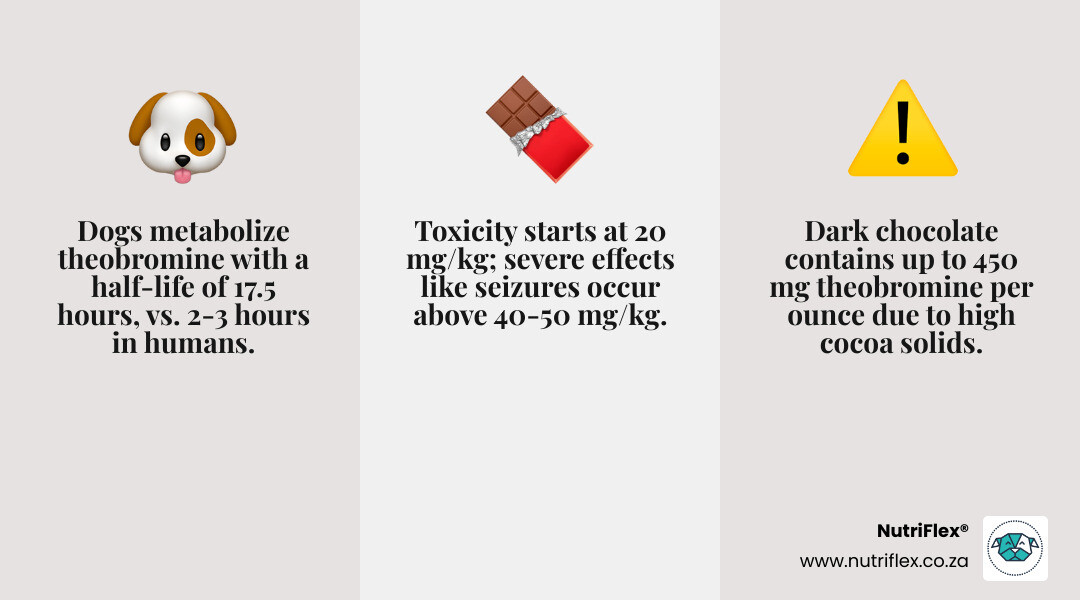
To understand why chocolate is so dangerous, we have to look at the chemistry. Chocolate is derived from the roasted seeds of Theobroma cacao, which contain two primary methylxanthine alkaloids: theobromine and caffeine. While humans metabolise these stimulants rapidly, dogs are far more sensitive. The half-life of theobromine in a dog is approximately 17.5 hours, compared to just 2 to 3 hours in a human. This means the toxin stays in their bloodstream for an incredibly long time, overstimulating the central nervous system and the heart.
The level of danger is directly linked to the concentration of cocoa solids. The darker and more bitter the chocolate, the higher the methylxanthine content.
| Chocolate Type | Theobromine Content (approx. mg/g) | Risk Level |
|---|---|---|
| White Chocolate | 0.1 mg/g | Very Low (High Fat Risk) |
| Milk Chocolate | 2.3 mg/g | Moderate |
| Dark Chocolate | 5 mg to 15 mg/g | High |
| Baking Chocolate | 15 mg to 16 mg/g | Extreme |
| Cocoa Powder | 20 mg to 28.5 mg/g | Critical |
According to the Chocolate Toxicosis in Animals – Toxicology – Merck Veterinary Manual, mild clinical signs like vomiting and restlessness can appear at a dose of just 20 mg of methylxanthines per kilogram of body weight. Heart-related symptoms, such as a racing pulse or arrhythmias, typically occur at 40 mg to 50 mg/kg. Seizures and potential death become a reality at doses exceeding 60 mg/kg.
Can a dog survive chocolate poisoning without treatment

Whether a dog survives an untreated chocolate ingestion is a game of biological maths. If a 40 kg Boerboel eats a single milk chocolate button, the dose of theobromine is so low that it is unlikely to cause anything more than a mild stomach upset. In this specific scenario, the dog survives because the toxic threshold was never reached.
However, the question of can a dog survive chocolate poisoning without treatment becomes far more grim when dealing with smaller breeds or darker chocolates. Research published in Chocolate poisoning indicates that less than 100 g of plain chocolate can be fatal for a 10 kg dog. Without veterinary intervention to remove the toxins from the stomach or manage the heart rate, the body eventually succumbs to the overstimulation of the nervous system.
In South Africa, where emergency veterinary access can vary depending on your location, knowing the difference between “he might be fine” and “this is a crisis” is vital for every pet owner.
Factors that determine if a dog can survive chocolate poisoning without treatment
Several variables dictate the outcome of an untreated ingestion:
- Dog Weight: A larger body mass can dilute the concentration of theobromine. This is why a Chihuahua is at significantly higher risk than a Labrador when eating the same piece of chocolate.
- Chocolate Type: As shown in our table, cocoa powder and baking chocolate are the “silent killers” because they pack a massive toxic punch in a very small volume.
- Amount Ingested: Even milk chocolate becomes lethal if eaten in massive quantities (approximately 60 g per kilogram of body weight).
- Individual Sensitivity: Just like humans, some dogs have a slower metabolism or a genetic predisposition that makes them more sensitive to stimulants.
- Age and Pre-existing Conditions: Older dogs or those with heart disease are at a much higher risk of sudden cardiac arrest when exposed to methylxanthines.
For a detailed breakdown of your specific situation, you can refer to our Dog Chocolate Toxicity: A Guide to When You Should Worry which helps categorise the risk based on these variables.
Risks of attempting to let a dog survive chocolate poisoning without treatment
Choosing to “wait it out” is a dangerous gamble. Even if the dog does not die, the internal damage can be severe. Theobromine causes the heart to beat faster and harder while simultaneously restricting blood vessels. This can lead to:
- Cardiac Arrhythmia: Irregular heartbeats that can lead to sudden collapse.
- Seizures: Prolonged seizing can cause the body temperature to skyrocket (hyperthermia), leading to brain damage.
- Internal Organ Damage: The kidneys and liver can be strained as they struggle to process the high levels of toxins over several days.
- Respiratory Failure: In the final stages of severe poisoning, the muscles responsible for breathing may fail.
The Dog Chocolate Poisoning: Timing and Survival report highlights that the 24 to 48 hour window is the most critical. If a dog survives this period without treatment, they may still face long-term health complications.
The Critical Timeline of Chocolate Ingestion
Timing is everything. If you catch your dog with their head in the chocolate box, the clock starts immediately.
- 0 to 2 Hours (The Decontamination Window): This is the “golden hour”. The chocolate is still in the stomach. A veterinarian can induce vomiting and administer activated charcoal to prevent the toxins from ever entering the bloodstream.
- 2 to 6 Hours: The toxins begin to be absorbed. You might notice early signs like hyperactivity, panting or a bloated abdomen.
- 6 to 12 Hours (Symptom Onset): This is when most owners realise something is wrong. Symptoms like vomiting, diarrhoea, extreme thirst and restlessness become obvious. According to the Chocolate toxicity: What should I do if my dog eats chocolate? | Cornell University College of Veterinary Medicine, signs can last for several days because theobromine is reabsorbed from the bladder back into the system.
- 12 to 24 Hours (Peak Toxicity): This is the most dangerous phase. Heart rates can exceed 200 beats per minute and muscle tremors or seizures may begin.
- 24 to 72 Hours (The Recovery Period): If the dog survives the peak, the body slowly clears the remaining methylxanthines. Supportive care like intravenous fluids is often necessary during this time to prevent dehydration and kidney strain.
Emergency Steps for South African Dog Owners
If you suspect your dog has eaten chocolate, do not wait for symptoms. Follow these steps immediately:
- Identify the Culprit: Find the wrapper. Note the type of chocolate (e.g. 70% dark, milk, or white) and estimate how many grams were consumed.
- Use a Calculator: Quickly check the risk level using our Dog Chocolate Toxicity Calculator. This will give you an immediate idea of whether you are facing a mild upset or a life-threatening emergency.
- Call Your Vet: Phone your local vet or the nearest emergency animal hospital. Tell them the breed, weight and what was eaten.
- Do Not Induce Vomiting at Home Without Guidance: While it is sometimes necessary, doing it incorrectly can lead to aspiration pneumonia. Only do this if specifically instructed by a veterinary professional.
- Seek Professional Stabilisation: At the clinic, the vet may use intravenous fluids to flush the kidneys and medications to control the heart rate or stop seizures. Monitoring the heart rhythm (ECG) is often vital in dark chocolate cases.
Long-term Recovery and Prevention Strategies
Even after the initial danger has passed, the “chocolate hangover” can have lasting effects. One of the most common secondary issues is pancreatitis. Chocolate is high in fat and sugar, which can cause the pancreas to become inflamed. This condition is painful and can become chronic if not managed.
- Low Fat Diet: Following an ingestion, we recommend a bland, low-fat diet for several days to give the digestive system a break.
- NutriFlex® Health Support: To support your dog’s recovery and long-term vitality, consider high-quality supplementation. Our range of Pet Health Supplements is designed to support immune resilience and digestive balance.
- Digestive Care: If your dog has suffered from GI upset, our digestive support formulations can help restore gut health. You can learn more about choosing the right products in our Dog Supplements Guide.
- Safe Alternatives: If you want to treat your dog, use carob. It looks and tastes similar to chocolate but contains no theobromine or caffeine.
- Secure Storage: In South Africa, many of us buy chocolate in bulk or keep festive treats during holidays like Easter or Christmas. Ensure these are stored in high cupboards or sealed containers that are “dog-proof”.
Frequently Asked Questions about Chocolate Poisoning
How much dark chocolate is fatal for a 10kg dog?
For a 10 kg dog, as little as 50 g to 100 g of dark chocolate can be fatal. If the chocolate is high-quality baking chocolate with high cocoa solids, even 25 g can cause severe cardiac symptoms. This is why dark chocolate is considered a high-priority emergency.
Can a dog eat white chocolate safely?
White chocolate contains negligible amounts of theobromine (about 0.1 mg/g), so it rarely causes chocolate poisoning. However, it is not “safe”. It is extremely high in fat and sugar, which can trigger acute pancreatitis, especially in breeds like Miniature Schnauzers who are prone to fat-processing issues.
What are the first signs of chocolate toxicity to watch for?
The very first signs are usually behavioural. You might notice your dog acting “wired” or hyperactive. They may pace, pant excessively and drink much more water than usual. Vomiting and diarrhoea often follow shortly after. If you see muscle tremors or a “jittery” appearance, the toxicity is progressing to the nervous system.
Conclusion
The question of can a dog survive chocolate poisoning without treatment is one no pet owner should ever have to test. While some lucky dogs may walk away with a mild stomach ache, the risk of heart failure, seizures and death is too high to ignore.
As a premium South African pet supplement manufacturer, NutriFlex® is committed to preventative pet health. We believe that an informed owner is a dog’s best defence. If your dog has eaten chocolate, please use our Dog Chocolate Toxicity Calculator and contact your veterinarian immediately. Proactive care is always cheaper, safer and more effective than waiting for a crisis to unfold. Keep your treats high up and your pets safe!