
When Your Dog Makes You Sneeze (or Scratch): Quick Answers on Home Dog Allergy Remedies
Home dog allergy remedies can make a real difference — both for humans reacting to their pets and for dogs suffering from environmental allergies themselves.
Here are the most effective options, fast:
For humans allergic to dogs:
- Use HEPA air purifiers and vacuum with a HEPA-filter vacuum weekly
- Keep dogs out of the bedroom and off upholstered furniture
- Bathe your dog weekly to reduce dander
- Take non-drowsy antihistamines like cetirizine (Zyrtec) or loratadine (Claritin)
- Wash bedding in hot water (at least 130°F) weekly
For dogs with environmental allergies:
- Soothing oatmeal baths 1-2 times per week
- Paw soaks in diluted Epsom salt or apple cider vinegar (50:50 with water)
- Omega-3 / fish oil supplements (allow 4-8 weeks to see results)
- Wipe paws and coat after outdoor walks
- Limit outdoor time on high-pollen days
Up to 3 in 10 Americans are allergic to dogs or cats. And dogs themselves suffer too — itching, licking their paws, shaking their ears. Watching your dog scratch constantly is just as frustrating as dealing with your own sneezing fits.
The good news? You don’t always need a vet visit or a prescription to find relief. Many practical, safe remedies work well for mild to moderate symptoms — at home, today.
This guide covers the best remedies for both sides of the allergy equation: your comfort and your dog’s.
Identifying Symptoms in Humans and Pets
Before we dive into the home dog allergy remedies, we need to know what we’re fighting. Interestingly, humans and dogs often express allergies in very different ways. While we might be reaching for the tissues, our dogs are usually reaching for their back leg to get a good scratch going.
Common Symptoms in Humans
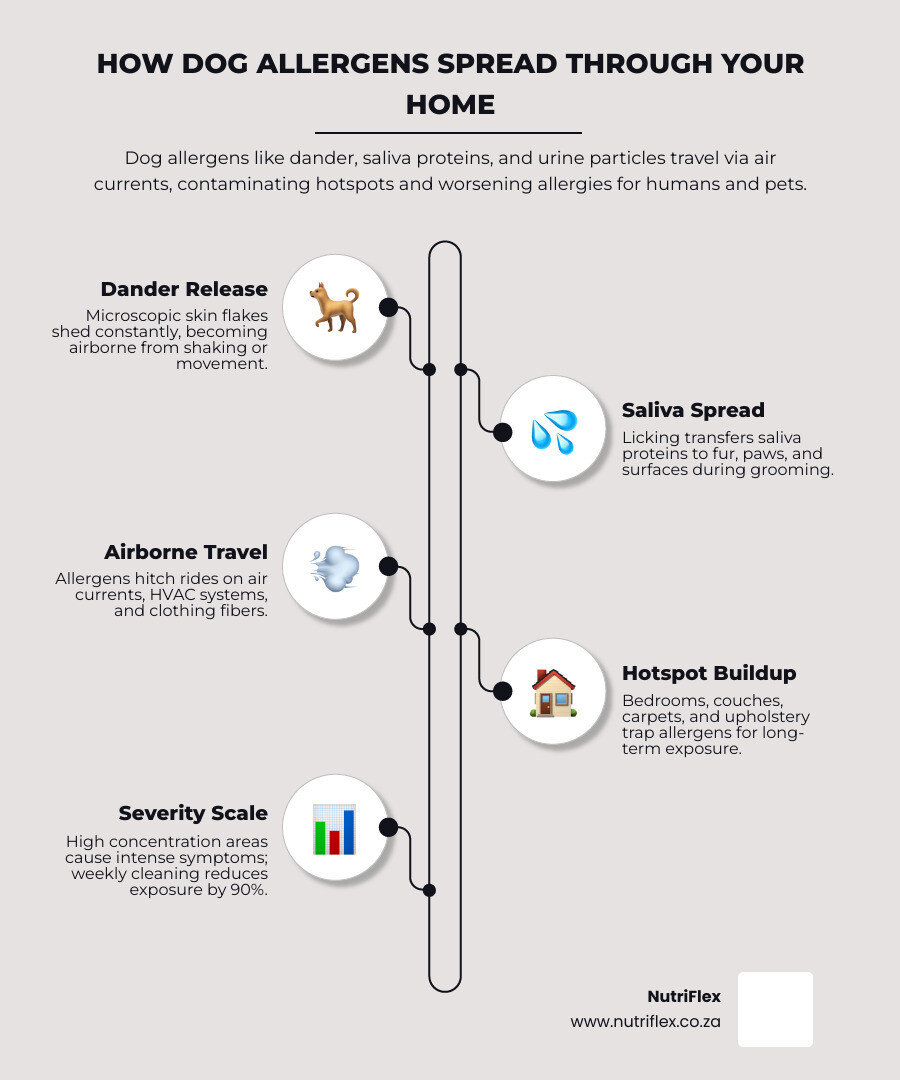
If you are allergic to your dog, your immune system is overreacting to proteins found in the dog’s dander (dead skin cells), saliva, or even urine. According to Scientific research on pet allergy prevalence, nearly 30% of people with allergies have reactions to cats and dogs.
Common human symptoms include:
- Sneezing and a runny or stuffy nose.
- Red, itchy, or watery eyes.
- Nasal congestion.
- Itchy nose, roof of the mouth, or throat.
- Coughing or wheezing (especially in those with asthma).
- Skin rash or hives where the dog has licked you.
Common Symptoms in Dogs
Dogs rarely get “hay fever” in the way we do. Instead, their allergies almost always manifest through their skin. We call this atopic dermatitis. If your dog is struggling with environmental triggers like pollen or dust mites, look for:
- Excessive scratching and biting: Specifically at the flanks and belly.
- Paw licking: This is a classic sign of environmental allergies. The paws pick up pollen and irritants from the grass.
- Red, inflamed skin: Often seen in the armpits, groin, and between the toes.
- Ear infections: Chronic “floppy ear” issues or frequent head shaking.
- “Boot scoots”: Dragging their bottom across the carpet (often due to skin irritation or anal gland discomfort linked to inflammation).

It is vital to distinguish between dander and saliva. Many people believe they are allergic to “dog hair,” but the hair is actually just the vehicle that carries dander and dried saliva. Even “hypoallergenic” breeds produce these proteins; they just shed less hair, which can keep the allergens from spreading as quickly. For more detail on what exactly is making your pet (and you) miserable, check out More info about pet allergy triggers.
Effective Home Dog Allergy Remedies for Your Pet
When your dog is itchy, they aren’t just “being a dog”—they are uncomfortable. Fortunately, your kitchen pantry and bathroom cabinet are likely stocked with some of the best home dog allergy remedies available.
Colloidal Oatmeal Soaks
Oatmeal isn’t just for breakfast. Colloidal oatmeal (oatmeal ground into a fine powder) has anti-inflammatory properties that can soothe red, angry skin.
- How to use: Grind plain, unflavored oats in a blender until they look like flour. Mix into a lukewarm bath. Let your dog soak for 10–15 minutes. It helps create a protective barrier on the skin and reduces the urge to itch.
Apple Cider Vinegar (ACV)
ACV is a powerhouse for balancing skin pH and inhibiting yeast growth, which often follows an allergic flare-up.
- The Golden Rule: Never use ACV at full strength. Always mix it 50:50 with water.
- How to use: Use it as a spray for itchy spots or a paw soak. However, never use it on open wounds or “hot spots,” as the acid will sting intensely.
Epsom Salt Paw Soaks
If your dog is constantly licking their paws after a walk, they are likely reacting to grass or pollen. Epsom salts can help draw out toxins and reduce swelling.
- How to use: Dissolve Epsom salt in lukewarm water and soak your dog’s paws for 5–10 minutes. Ensure you rinse the paws afterward so they don’t ingest the salt if they lick themselves later.
Chamomile and Green Tea Compresses
These teas have natural cooling properties. If your dog has a specific “hot spot” or an itchy patch, a tea compress can provide immediate relief.
- How to use: Steep several tea bags in hot water, then let the tea cool completely in the fridge. Apply the cold bags directly to the itchy area for 5 minutes.
For a deeper dive into these topical solutions, you can find Natural remedies for itchy dogs and More info about itchy dog solutions on our site.
Soothing Baths as Home Dog Allergy Remedies
While you might have heard that “too many baths dry out the skin,” this isn’t necessarily true for allergic dogs—if you use the right products. In fact, weekly bathing is one of the most effective home dog allergy remedies because it physically removes the allergens (pollen, dust, mold) from the coat before they can penetrate the skin.
- Use Lukewarm Water: Hot water can actually increase inflammation and make the itching worse.
- Choose the Right Shampoo: Look for hypoallergenic, soap-free shampoos containing ingredients like aloe vera or oatmeal. Avoid human shampoos; our skin is more acidic (pH 5.5) than a dog’s (pH 7.0), and using our products can strip their natural oils.
- Focus on Moisture: After bathing, a dog-specific conditioner can help lock in moisture and support the skin barrier.
For a step-by-step guide on the perfect bath routine, read More info about helping itchy dogs.
Dietary Supplements and Home Dog Allergy Remedies
True relief often starts from the inside out. If the skin barrier is weak, allergens have an easy time causing trouble.
Omega-3 Fatty Acids
Fish oil is perhaps the most well-studied supplement for dog allergies. These fatty acids reduce inflammation throughout the body. At NutriFlex, we believe in the power of pure, high-quality Omega-3s to support skin health. Fish oil isn’t an “overnight” fix—it typically takes 4–8 weeks of consistent use to see a noticeable improvement in skin quality.
Local Honey: Fact or Fiction?
There is a popular theory that feeding your dog local honey can help them build an immunity to local pollen. According to Scientific research on honey for allergies, while the clinical evidence is limited, many pet owners swear by it. The idea is that by ingesting small amounts of the pollen found in the honey, the immune system becomes “desensitized.” Just be careful with the sugar content, especially for overweight or diabetic dogs!
Probiotics
Since a large portion of the immune system resides in the gut, a healthy microbiome can help the body manage allergic responses more effectively. Adding a high-quality probiotic or even a bit of canned pumpkin puree can support digestive health and, by extension, skin health. For more on how nutrition plays a role, check out More info about diet and allergies.
Environmental Changes to Reduce Dander and Allergens
If you are the one suffering, your home environment is your primary battlefield. You can’t get rid of your dog (and we know you wouldn’t want to!), but you can drastically reduce the “allergen load” in your house.
The Power of HEPA
HEPA (High-Efficiency Particulate Air) filters are a must. These filters are designed to trap 99.97% of particles as small as 0.3 microns—including the tiny dander particles that stay airborne for hours.
- Air Purifiers: Place a HEPA air purifier in the rooms where you spend the most time, especially the bedroom.
- Vacuums: Standard vacuums often just suck up dander and blow it back out through the exhaust. Ensure your vacuum is equipped with a HEPA filter to actually trap the allergens.
Create Pet-Free Zones
We love our dogs, but your bedroom should be a sanctuary. By keeping the dog out of the bedroom, you ensure that you have eight hours of “clean air” every night. This gives your immune system a break and can significantly reduce daytime symptoms.
Humidity Control
Dust mites and mold thrive in high humidity. Research suggests keeping your home’s relative humidity below 50% to discourage these secondary allergens. In coastal areas like Cape Town and Muizenberg, a dehumidifier can be an essential tool during the damp winter months. You can find More info about summer allergy problems which often persist into the warmer months due to humidity.
Laundry and Flooring
- Wash Bedding Weekly: Use water heated to at least 130°F (54°C) to kill dust mites and dissolve pet dander.
- Ditch the Carpet: If possible, opt for hardwood, tile, or linoleum floors. Carpets are essentially giant sponges for dander and pollen. If you must have rugs, choose low-pile options that are easier to clean.
For more room-by-room tips, see the Mayo Clinic’s guide on Allergy-proofing your home.
Safe Over-the-Counter Solutions for Humans and Dogs
Sometimes, home cleaning and oatmeal baths aren’t quite enough for a “bad” allergy day. In these cases, over-the-counter (OTC) medications can help. However, you must be extremely careful when sharing human meds with your dog.
Antihistamine Safety Table
| Medication | Safe for Humans? | Safe for Dogs? | Notes |
|---|---|---|---|
| Cetirizine (Zyrtec) | Yes | Yes (with vet approval) | Generally non-drowsy. Good for skin itch. |
| Loratadine (Claritin) | Yes | Yes (with vet approval) | Ensure it is NOT “Claritin-D”. |
| Diphenhydramine (Benadryl) | Yes | Yes (with vet approval) | Can cause significant drowsiness. |
| Pseudoephedrine | Yes | NO – TOXIC | Can be fatal to dogs. Never give “D” versions. |
A Warning on Decongestants
Many human allergy medications are labeled “D” (e.g., Zyrtec-D). These contain pseudoephedrine, which is highly toxic to dogs, even in small amounts. It can cause a dangerous spike in heart rate and blood pressure. Always check the ingredient list twice before giving any pill to your pet.
Solutions for Humans
- Nasal Corticosteroids: Sprays like Flonase can reduce inflammation in the nasal passages.
- Saline Rinses: Using a neti pot or saline spray can physically wash allergens out of your sinuses. Just be sure to use distilled or previously boiled water.
- Immunotherapy: If your allergies are severe, talk to an allergist about “allergy shots” which can desensitize you over several years.
For more information on dealing with the physical results of allergies, such as More info about red and inflamed skin, we have dedicated resources to help you understand the inflammation process. You can also read the Scientific research on reducing indoor allergens for government-backed advice.
Frequently Asked Questions about Dog Allergies
How often should I bathe my dog to reduce allergens?
For dogs with allergies, we generally recommend a bath once a week. This is frequent enough to remove environmental allergens like pollen and dander without over-drying the skin, provided you use a soap-free, hypoallergenic dog shampoo. If your dog has been playing in high-pollen grass, a quick “paw-only” rinse or using a damp cloth to wipe their coat can be done daily.
Can local honey really help with my dog’s seasonal allergies?
While it’s a popular home dog allergy remedy, the science is still out. The theory is similar to immunotherapy (allergy shots). If you decide to try it, use raw, local honey and start with very small amounts (half a teaspoon for a medium dog). However, do not rely on this as a sole treatment for severe allergies.
What are the most common mistakes to avoid with home remedies?
- Using human shampoo: It disrupts the dog’s skin pH and makes itching worse.
- Applying undiluted Apple Cider Vinegar: This can cause chemical burns or intense stinging on irritated skin.
- Ignoring the “D” in meds: Giving a dog a decongestant like pseudoephedrine is a medical emergency.
- Waiting too long: Home remedies are great for mild cases. If your dog is losing hair, has bleeding skin, or a foul odor (indicating a yeast infection), it’s time to see the vet.
Conclusion
Managing dog allergies doesn’t have to mean choosing between your pet and your comfort. By combining smart environmental changes—like HEPA filtration and pet-free zones—with effective home dog allergy remedies for your pup, you can create a home where everyone breathes (and scratches) a little easier.
At NutriFlex, we are passionate about helping pets live their best, itch-free lives. Our premium, vet-approved supplements are crafted in our Cape Town facilities using 100% pure, human-grade ingredients. We don’t believe in fillers or synthetics—just nature’s best ingredients to support your dog’s immune system and skin barrier from the inside out.
If you’re ready to stop the itch for good, Shop the NutriFlex Allergy and Itch collection today. Here’s to many more sneeze-free cuddles!
