
The Truth About Tartar Buildup on Dogs Teeth
Tartar buildup on dogs teeth is one of the most common and most overlooked health problems in South African pets. Here is a quick overview of what it means and what you can do about it:
| Question | Quick Answer |
|---|---|
| What is tartar? | Hardened plaque (calculus) that bonds to tooth enamel |
| How fast does it form? | Plaque hardens into tartar within 24 to 48 hours |
| What does it look like? | Yellow to brown crust along the gumline |
| Is it serious? | Yes, it can lead to gum disease, tooth loss and organ damage |
| Can you remove it at home? | No, hardened tartar requires professional veterinary removal |
| How do you prevent it? | Daily brushing, dental supplements and regular vet checkups |
Most dog owners only notice the problem once it is already advanced. By age three, the majority of dogs already show signs of dental disease, according to the American Veterinary Dental College. That is not a coincidence. It is the result of plaque silently mineralising every single day, meal after meal.
Left unaddressed, tartar does not just cause bad breath. It creates a rough surface where more bacteria accumulate, driving inflammation deeper into the gums and eventually into the bone. In serious cases, bacteria enter the bloodstream and affect the heart, kidneys and liver.
The good news is that with the right routine, tartar buildup is largely preventable.
I am Sharon Milani, Director of NutriFlex® and co-founder of South Africa’s first certified human-grade pet supplement range, and my work developing functional dental formulations has given me a practical, evidence-based understanding of how tartar buildup on dogs teeth progresses and how targeted nutrition can help prevent it. In this guide, I compare the most effective options available to South African pet owners today.
Understanding Plaque and Tartar Buildup on Dogs Teeth
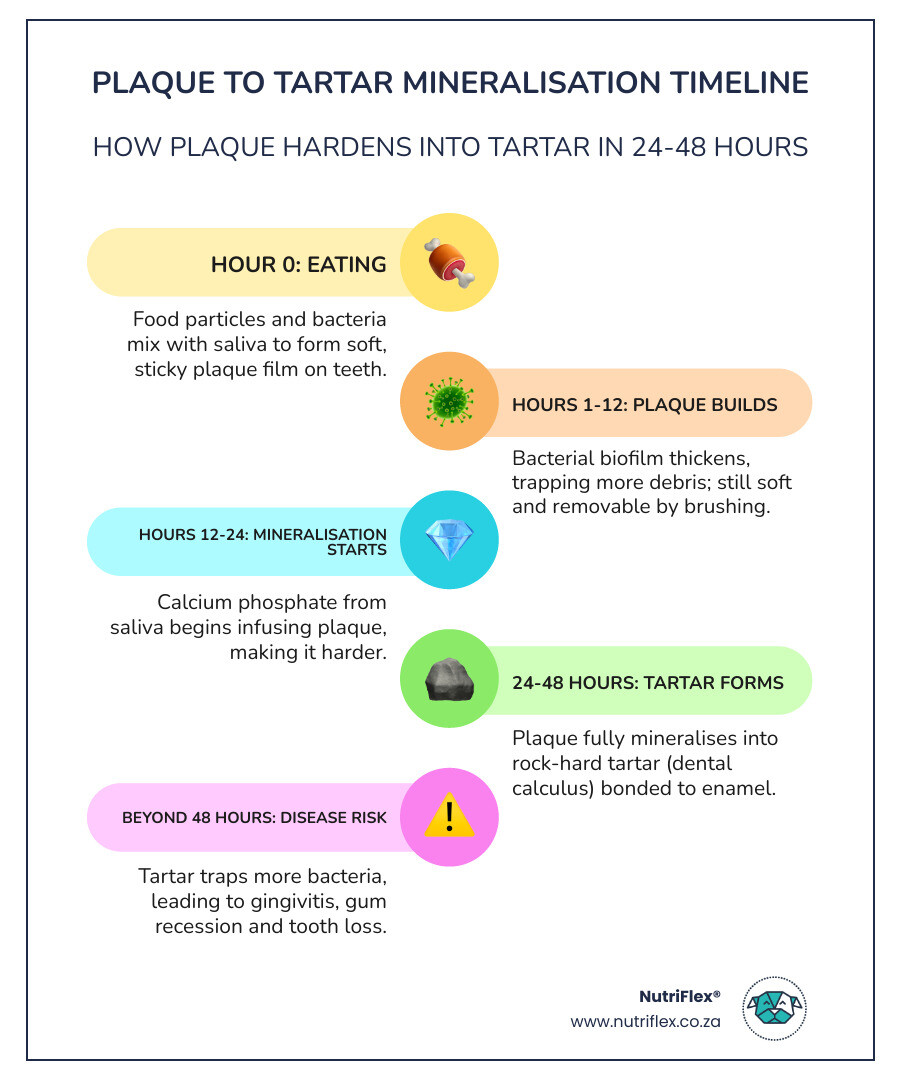
To effectively manage your dog’s oral health, we first need to distinguish between the two main culprits: plaque and tartar. Plaque is a soft, sticky, and initially colorless film of bacteria that forms on the teeth within hours of eating. It is composed of food particles, saliva, and various mouth bacteria. Because it is soft, plaque is relatively easy to remove with mechanical action like brushing or chewing.
However, if plaque is not disturbed, it undergoes a chemical transformation. Minerals found naturally in canine saliva, specifically calcium phosphate, begin to infuse the plaque. This process, known as mineralisation, turns the soft biofilm into a rock-hard substance called dental calculus, or more commonly, tartar.
Once tartar buildup on dogs teeth has occurred, it becomes a permanent fixture that strongly bonds to the enamel. Unlike plaque, you cannot simply brush tartar away. It creates a rough, porous surface that acts like a magnet for even more plaque and bacteria. This cycle accelerates the progression of dental disease.
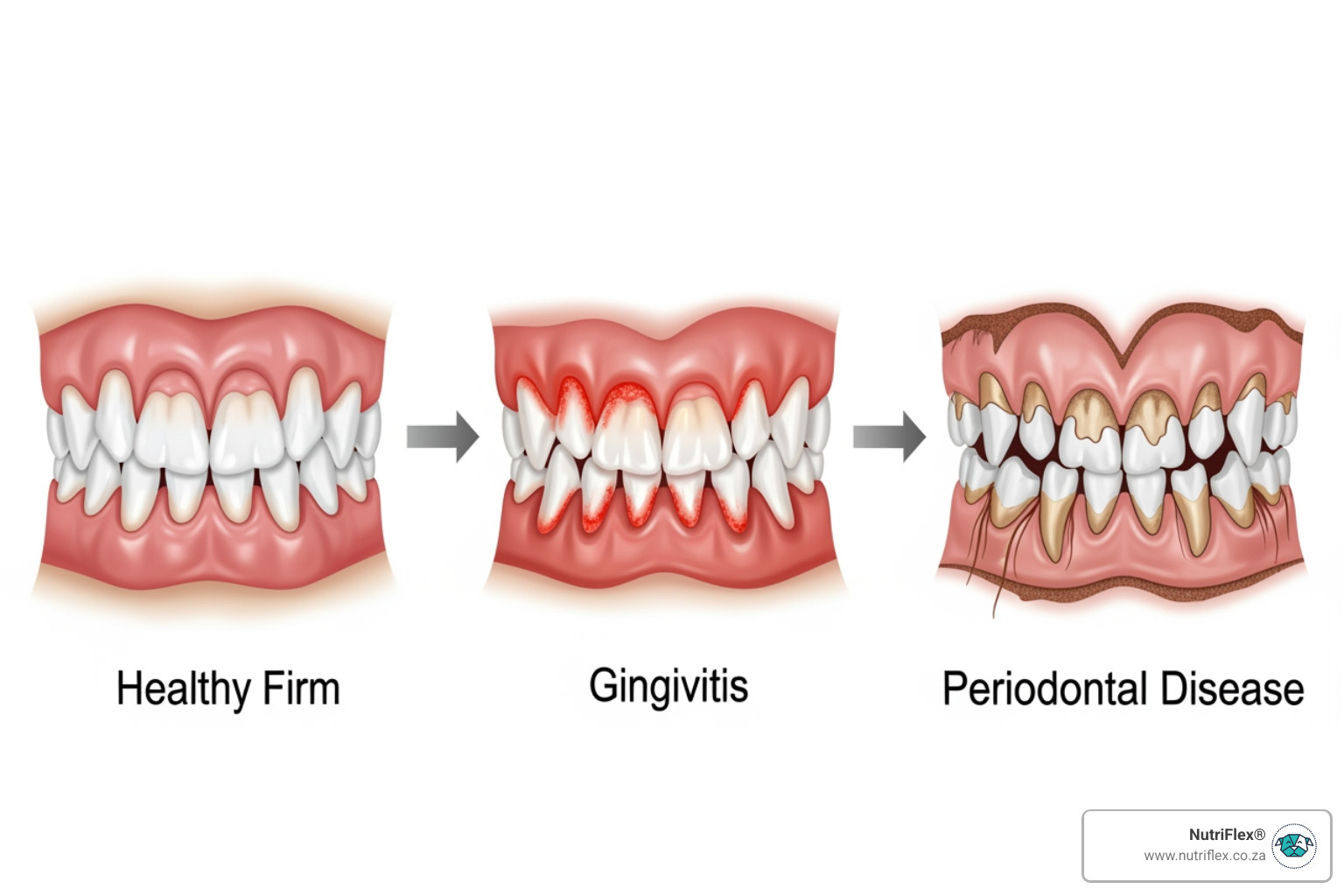
As the bacterial load increases, it leads to a condition called gingivitis (inflammation of the gums). If left untreated, this progresses to periodontal disease, where the bacteria attack the structures supporting the teeth. This can lead to receding gums, bone loss, and eventually, teeth falling out.
Identifying Tartar Buildup on Dogs Teeth
Recognising the early signs of dental issues can save your dog from significant pain and expensive veterinary bills. When inspecting your dog’s mouth, look for these key indicators:
- Yellow or Brown Crust: This is the most obvious sign of tartar. It usually starts as a thin yellow line near the gumline and can grow into thick, brown, or greyish deposits that cover large portions of the tooth.
- Persistent Bad Breath: While “dog breath” is a common joke, truly foul breath (halitosis) is a sign of a bacterial infection in the mouth.
- Red or Swollen Gums: Healthy gums should be a vibrant pink. If the edges where the tooth meets the gum look red, angry, or bleed easily, gingivitis is present.
- Dull Enamel: Teeth that have lost their pearly white shine and appear matte or stained often have an underlying layer of plaque or early tartar.
- Behavioral Changes: If your dog starts dropping food, chewing on only one side of their mouth, or avoiding their favourite hard toys, they may be experiencing dental pain.
Why Dental Disease is Common by Age Three
It is a startling statistic that 8 in 10 dogs will show signs of periodontal disease by the time they reach their third birthday. This high prevalence is often due to a lack of consistent preventative care combined with biological factors.
According to the National Library of Medicine ‘Relation between periodontal disease and systemic diseases in dogs’, 2019, there is a clear link between oral health and the overall physical condition of a dog. The reason age three is a tipping point is that three years of unmanaged plaque mineralisation is usually enough to cause visible structural damage to the gums and bone.
Certain dogs are at higher risk than others. Small breeds, such as Yorkshire Terriers, Chihuahuas, and Pugs, are notoriously prone to rapid tartar buildup on dogs teeth. This is largely due to “crowded teeth.” These dogs have the same number of teeth as a Great Dane but in a much smaller jaw. This crowding creates countless nooks and crannies where food and bacteria hide, making natural cleaning through saliva and chewing almost impossible. Genetics and diet also play a role, but for most dogs, the lack of a daily cleaning routine is the primary cause.
Comprehensive Dental Care: Professional and At-Home Approaches
Managing dental health requires a two-pronged strategy: professional intervention to clear existing damage and a daily at-home routine to prevent its return.
Professional Veterinary Dental Care
When tartar buildup on dogs teeth becomes heavy or moves below the gumline, home remedies are no longer enough. At this stage, your dog requires a Comprehensive Oral Health Assessment and Treatment (COHAT) performed by a veterinarian.
A professional cleaning involves several critical steps:
- General Anaesthesia: Unlike humans, dogs will not sit still for a dental scaler. Anaesthesia is essential to ensure the vet can clean safely under the gumline, where the most dangerous bacteria reside, without causing the dog stress or pain.
- Scaling: Using ultrasonic tools, the vet removes the hardened tartar from the surface of the teeth and from the pockets beneath the gums.
- Polishing: Scaling leaves microscopic scratches on the enamel. Polishing smooths these out, making it harder for new plaque to attach.
- X-rays: Much of dental disease is hidden. X-rays allow the vet to see if the roots are rotting or if there is bone loss that isn’t visible to the naked eye.
In South Africa, the cost of a professional dental cleaning can range significantly. A basic cleaning for a healthy young dog might start around R1500, while complex cases involving multiple extractions and advanced X-rays in older dogs can reach R6000 or more.
Effective At-Home Dental Care Strategies
Once the vet has provided a clean slate, the responsibility shifts back to the owner. Consistency is the most important factor in preventing tartar buildup on dogs teeth.
Daily Brushing Brushing remains the “gold standard” of pet dental care. You should use a soft-bristled toothbrush designed for dogs or a finger brush for smaller pets. It is vital to use only pet-specific toothpaste. Human toothpaste often contains fluoride or xylitol, both of which are toxic to dogs.
To train a resistant dog:
- Start by letting them lick the flavoured toothpaste (usually poultry or beef) off your finger.
- Slowly introduce the feeling of your finger rubbing their gums.
- Once they are comfortable, introduce the brush, focusing on the outside surfaces of the teeth where tartar most often forms.
- Keep sessions short and always end with praise or a high-value treat.
Targeted Dental Supplements For many South African pet owners, daily brushing is a struggle. This is where functional nutrition and supplements become invaluable. Supplements designed for oral health work to disturb the biofilm of plaque before it can mineralise into tartar.
The Science of Dental Supplements and Diet
The modern approach to canine dental health looks beyond just mechanical scrubbing. Functional nutrition involves using ingredients that work systemically or chemically to alter the environment of the mouth.
One of the most researched ingredients in this field is specific types of seaweed, such as Ascophyllum nodosum. When ingested, the compounds in the seaweed are absorbed into the bloodstream and eventually secreted back into the saliva. This alters the composition of the saliva, helping to soften existing tartar and preventing new plaque from sticking to the teeth.
As noted in the National Library of Medicine. ‘Dog Owners’ Ideas and Strategies Regarding Dental Health in Their Dogs’, 2022, many owners are looking for easier ways to manage oral hygiene. Seaweed-based powders are highly effective, but they must be used correctly. Because seaweed is naturally rich in iodine, it is important to choose a supplement that is carefully formulated to ensure thyroid safety, especially for dogs with pre-existing conditions.
Managing Tartar Buildup on Dogs Teeth with NutriFlex
At NutriFlex®, we understand that South African pet owners want products they can trust. Our dental support formulations are developed in our FSA accredited, human-grade facility in Cape Town. We prioritise functional, science-aligned ingredients that target the root cause of tartar buildup on dogs teeth.
Our dental powders are Act 36 registered, which means they have undergone rigorous regulatory scrutiny in South Africa to ensure they meet safety and efficacy standards. We use premium seaweed-based ingredients that work systemically to keep your dog’s breath fresh and their teeth clean.
The beauty of our supplement is its ease of use. You simply add the recommended dosage to your dog’s daily meal. For a standard dog, this usually involves a small amount measured in milligrams per kilogram of body weight, making it a “no-fuss” solution for even the busiest households. By incorporating this into their diet, you are providing 24-hour protection against the mineralisation of plaque.
Frequently Asked Questions about Canine Dental Health
Can I safely remove tartar from my dog’s teeth at home?
We strongly advise against attempting to scrape or “pop” tartar off your dog’s teeth at home using metal tools. While it might look satisfying to see a piece of brown crust fall off, this practice is dangerous for several reasons:
- Enamel Damage: Metal scrapers can easily scratch the protective enamel of the tooth. These scratches create even more surface area for bacteria to hide, leading to faster tartar return.
- Gum Injury: One slip can cause a deep puncture or tear in the sensitive gum tissue, leading to pain and infection.
- Incomplete Cleaning: You can only see the tartar on the crown of the tooth. You cannot safely reach the tartar hidden under the gumline at home, which is where the real disease happens.
- Bacterial Release: Scraping can release massive amounts of bacteria into the mouth, which can enter the bloodstream through tiny nicks in the gums.
How often should my dog have a professional dental cleaning?
For most dogs, an annual dental checkup with a veterinarian is recommended. However, the frequency of professional cleanings depends on the individual dog. Small breeds or dogs with a history of rapid tartar buildup on dogs teeth may require a professional cleaning every 6 to 12 months.
Early intervention is always better and more affordable than waiting until a tooth needs to be pulled. If you notice red gums or a sudden change in breath, schedule a vet visit immediately rather than waiting for your annual checkup.
Conclusion
The health of your dog’s mouth is a window into their overall well-being. Tartar buildup on dogs teeth is more than just a cosmetic issue or a cause of bad breath; it is a persistent bacterial threat. By allowing tartar to flourish, you risk the health of your dog’s heart, kidneys, and liver as bacteria travel through the bloodstream.
Maintaining a healthy smile requires a commitment to a routine. By combining regular veterinary checkups with daily preventative measures like brushing and premium South African supplements, you can ensure your dog lives a long, pain-free life.
At NutriFlex®, we are dedicated to helping South African pet parents navigate the complexities of pet health with nutrition-first solutions. Our Cape Town-based team is proud to produce high-quality, Act 36 registered supplements that support your dog’s dental hygiene from the inside out.