
When Your Dog Won’t Stop Scratching: A Natural Approach to Demodectic Mange
Homeopathic treatment for demodectic mange in dogs is a growing area of interest for pet owners who want to address the root cause of the condition, a weakened immune system, rather than just suppress symptoms with chemicals.
Here are the most commonly used homeopathic remedies for demodectic mange:
| Remedy | Potency | How It’s Used |
|---|---|---|
| Sulphur | Centesimal scale (single dose) | Oral, repeated after 2-3 months if needed |
| Graphites | 200C | 2 drops orally, once daily for 2 months |
| Thuja | 200C | One dose, repeated at 2 and 4 weeks |
| Psorinum | 200C | Oral, individualised to the dog |
These remedies work best alongside immune support: a nutrient-rich diet, gut health supplements, and reduced stress.
If your dog has patchy fur loss, red or irritated skin, or recurring skin infections, demodectic mange could be the culprit. It’s more common than most owners realise, especially in puppies, rescue dogs, or any dog under physical or emotional stress.
The frustrating part? Many dogs go through round after round of conventional treatments, dips, injections, medicated washes and still relapse. That’s because the mites aren’t really the problem. The problem is the immune system that can no longer keep them in check.
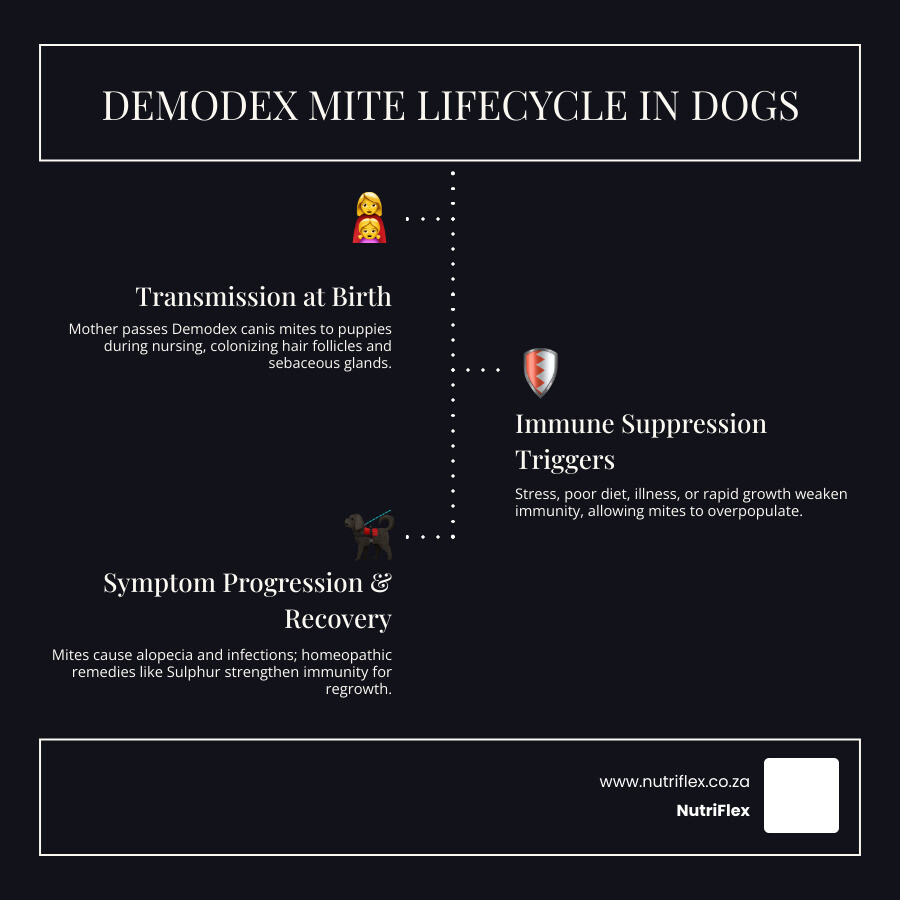
Demodex mites are actually normal residents of a dog’s skin. Every healthy dog carries them. They only spiral out of control when the immune system dips, due to poor nutrition, stress, illness, or even the demands of rapid growth in young dogs.
That’s why so many devoted pet parents are turning to homeopathic and holistic approaches: not to mask the symptoms, but to help the body heal itself.
This guide walks you through what demodectic mange really is, why it happens, and how natural and homeopathic remedies can support your dog’s recovery — from the inside out.
Understanding Demodectic Mange vs. Sarcoptic Mange
When we hear the word “mange,” we often picture a stray dog with completely bare, crusty skin. However, mange isn’t just one disease; it’s a term for skin issues caused by tiny, eight-legged parasites called mites. To treat your pup effectively, we first need to identify which “uninvited guest” has moved in.
Demodectic Mange (Demodicosis)
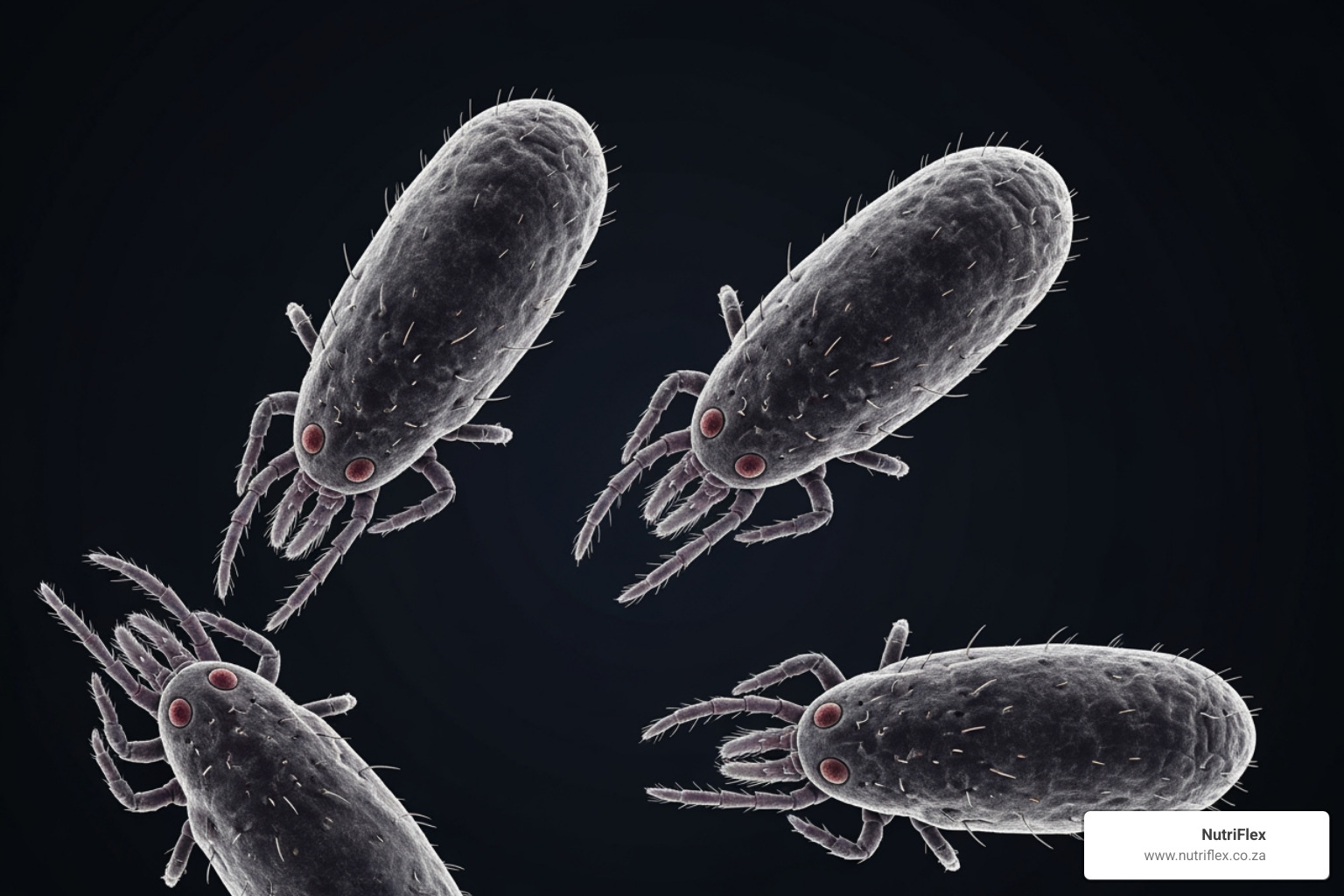
Caused by Demodex canis, these mites are cigar-shaped and live deep within the hair follicles and sebaceous glands. Interestingly, these mites are species-specific; they live only on dogs and are actually passed from a mother to her puppies during the first few days of nursing. In a healthy dog, the immune system keeps the mite population very low, and they cause no trouble. It only becomes a disease when the immune system falters, allowing the mites to proliferate.
Sarcoptic Mange (Scabies)
Unlike Demodex, Sarcoptes scabiei mites are highly contagious. They are circular, burrowing mites that cause intense, frantic itching. While Demodex is about an internal immune “glitch,” Sarcoptic mange is an external “attack” that can spread to other pets and even humans (though they can’t complete their life cycle on us).
According to the Merck Vet Manual overview of mange, distinguishing between these two is vital for the safety of your household. If your dog has red-and-inflamed-skin-dog, it’s time to look closer.
Symptoms and Veterinary Diagnosis
Demodectic mange usually presents in two forms:
- Localised: Usually seen in puppies, appearing as small patches of hair loss (alopecia), often around the face, eyes, or front legs.
- Generalised: This is more serious, covering large areas of the body. The skin may become crusty, dark (hyperpigmented), and prone to red-and-inflamed-skin-dog.
Because these mites live deep in the follicles, veterinarians diagnose them using “deep skin scrapings.” The vet gently scrapes the skin until a tiny bit of blood appears to ensure they’ve reached the follicle where the mites hide. These samples are then viewed under a microscope. If your dog is showing signs of mites-on-dogs-natural-home-remedies, a professional diagnosis is the first step to ensure you aren’t dealing with a different parasite or a fungal infection.
The Immune System: The Root of Demodicosis
We cannot stress this enough: Demodectic mange is an immune system disease, not a “mite” disease. If every dog has these mites, why do only some get sick? The answer lies in the “Vital Force” or the strength of the immune response.
Research, including a University of Nottingham study on age-related immunity, suggests that young dogs are more susceptible because their immune systems are still maturing. In older dogs, a sudden flare-up of Demodex is often a “red flag” for an underlying condition like hypothyroidism, cancer, or extreme stress that has suppressed their natural defenses.
For more on managing the discomfort associated with these flares, check out our help-for-itchy-dogs-the-definitive-guide.
Why Conventional Treatments Often Fail
Standard veterinary protocols often involve powerful chemicals like Ivermectin or Amitraz (Mitaban) dips. While these can kill mites, they come with significant baggage:
- Neurotoxicity: Many of these drugs are neurotoxic. Herding breeds with the MDR1 gene mutation are particularly at risk for life-threatening reactions.
- Symptom Suppression: These drugs kill the mites but do nothing to fix the weak immune system. This is why “cured” dogs often relapse a few months later.
- Side Effects: Amitraz dips can cause sedation, vomiting, and skin irritation so severe that some owners describe their dogs as “acting drugged” for days.
As highlighted in Ghubash research on parasitic miticidal therapy, the toxicity and kinetics of these drugs in dogs can be problematic, leading many to seek a gentler path.
Homeopathic Treatment for Demodectic Mange in Dogs
Homeopathy operates on the principle of “like cures like.” Instead of using a poison to kill a parasite, we use highly diluted natural substances to stimulate the dog’s own healing mechanism. This approach doesn’t just chase away the mites; it “tunes” the immune system so the mites can no longer thrive.
In a Successful management of refractory cases with Graphites, researchers found that dogs who failed to respond to conventional Ivermectin were completely cured using homeopathic Graphites 200C. The skin scrapings became negative, and the fur grew back beautifully—all without toxic side effects.
Selecting Specific Homeopathic Remedies for Demodectic Mange in Dogs
Choosing the right remedy depends on your dog’s specific symptoms. This is what makes homeopathic treatment for demodectic mange in dogs so effective—it is tailored to the individual.
- Sulphur: Often called the “King of Remedies” for skin. It is used when the skin is red, hot, itchy, and has a “dirty” look or a distinctive smell. Clinical reports show that a single dose of Sulphur can resolve chronic cases, including seborrheic dermatitis and bleeding ulcers, over the course of a year.
- Graphites: Ideal for “refractory” cases (those that won’t go away). It is specifically used when the skin is thick, crusty, and may ooze a sticky, honey-like discharge.
- Thuja: Widely used by holistic vets to neutralise the side effects of over-vaccination, which is a known trigger for immune suppression and subsequent mange outbreaks.
- Psorinum: Used for severe, “hopeless” looking skin cases where the itching is intolerable and the skin looks particularly unhygienic.
Potency and Administration of Homeopathic Treatment for Demodectic Mange in Dogs
Homeopathic remedies come in different “potencies” like 6C, 30C, or 200C. In homeopathy, the more a substance is diluted and “succussed” (shaken), the more potent it becomes.
- 6C or 30C: Generally used for milder, localised cases and may be given once or twice daily.
- 200C: Often used for more deep-seated, chronic, or generalised mange. For example, Graphites 200C is typically administered as 2 drops orally once daily.
A Pilot study on homeopathy for canine pruritus indicates that individualised homeopathy can significantly reduce itching, which is a major relief for a dog suffering from mange-related secondary infections.
Holistic Support: Diet, Supplements, and Natural Topicals
While the homeopathic remedy provides the “spark” for healing, nutrition provides the “fuel.” You cannot build a strong immune system on a foundation of highly processed, grain-heavy kibble.
| Feature | Conventional Support | Natural/Holistic Support |
|---|---|---|
| Primary Goal | Kill the mites with toxins | Strengthen the host (the dog) |
| Diet | Standard processed kibble | Raw or fresh, whole-food diet |
| Gut Health | Often ignored | Probiotics and prebiotics are vital |
| Topicals | Chemical dips (Amitraz) | Neem oil, herbal washes, honey |
To truly solve-persistent-dog-allergies-naturally-with-diet, we recommend moving away from fillers and toward species-appropriate nutrition.
Essential Nutrients for Skin Recovery
To repair the skin barrier and dampen inflammation, your dog needs specific building blocks:
- Omega-3 Fatty Acids: Essential for reducing skin inflammation. High-quality fish oils or green-lipped mussel powder are excellent sources.
- Vitamin E: A powerful antioxidant that supports skin healing and immune function.
- Zinc: Critical for skin integrity and coat regrowth.
- Probiotics: Since 80-90% of the immune system resides in the gut, a healthy microbiome is non-negotiable.
For a targeted approach, our product/allermax-allergy-itch-relief-for-pets provides a blend of natural ingredients designed to soothe the itch while the body heals.
Monitoring Progress and Recovery Timelines
Healing from the inside out is not an overnight process. Unlike a chemical dip that might show immediate (though often temporary) results, homeopathic treatment for demodectic mange in dogs follows a natural timeline.
- Weeks 1-4: You should see a reduction in redness and itching. The dog’s energy levels and “mood” often improve first—this is a sign the Vital Force is strengthening.
- Months 1-3: Fur begins to regrow, starting as a fine fuzz. Skin scrapings may still show mites, but the numbers should be decreasing.
- Months 3-6: In generalised cases, this is when full coat recovery usually occurs.
Success is measured by two consecutive “negative” skin scrapings, taken one month apart. You can find more resources on maintaining this healthy glow in our category/skin-and-coat section.
Frequently Asked Questions about Mange
Is demodectic mange contagious to humans?
No. Demodex canis is species-specific. You, your children, and even your cats cannot “catch” demodectic mange from your dog. Because the mites are already present on almost all dogs, you also don’t need to isolate your itchy pup from other healthy dogs in the house.
Can I use olive oil to treat mange?
While olive oil is safe, it is generally not an effective treatment for mange. It might soothe dry skin momentarily, but it doesn’t address the mite overpopulation or the underlying immune weakness. Natural topicals like Neem oil or a diluted lemon rinse (steeping a sliced lemon in boiling water overnight) are much more effective at discouraging mites.
How long does homeopathic treatment take to work?
It varies. Localized cases in puppies often resolve in 4-6 weeks as their immune system matures. Severe, generalised cases in adult dogs can take 3-6 months for complete resolution and full hair regrowth. Patience is key—you are rebuilding a system, not just masking a symptom.
Conclusion
At NutriFlex, we believe that every pet deserves to thrive without the burden of unnecessary chemicals. Our Cape Town-based facilities specialise in creating vet-approved, human-grade supplements that support the very foundation of your dog’s health: their immune system.
By combining homeopathic treatment for demodectic mange in dogs with 100% pure, natural nutrition, you aren’t just treating a skin condition; you’re embarking on a journey toward long-term wellness. If you’re ready to ditch the toxic dips and embrace a holistic path, we’re here to help.
For more deep dives into mites-on-dogs-natural-home-remedies, visit our blog and let’s get your pup back to their happy, itch-free self!
