
When Your Cat Struggles to Move: What You Need to Know
Cat hip dysplasia natural support is something more cat owners are searching for — and for good reason. Hip dysplasia is a painful joint condition that can quietly rob your cat of their agility, comfort, and quality of life.
Here are the most effective natural support options for cats with hip dysplasia:
- Joint supplements — glucosamine, chondroitin, MSM, and hyaluronic acid to rebuild and protect cartilage
- Omega-3 fatty acids — EPA and DHA from fish or green-lipped mussel to reduce joint inflammation
- Green-lipped mussel — provides unique ETA fatty acids and glycosaminoglycans shown to reduce orthopedic pain
- Undenatured Collagen Type II — supports immune-mediated joint repair
- Weight management — reducing calorie intake lowers pressure on damaged hip joints
- Environmental modifications — ramps, orthopedic bedding, and low-entry litter boxes to ease daily movement
- Physical therapies — acupuncture, laser therapy, hydrotherapy, and massage for pain relief and mobility
- Herbal support — turmeric, yucca, and other anti-inflammatory botanicals
The tricky part? Cats are experts at hiding pain. Unlike dogs, who often limp or whimper noticeably, cats tend to mask discomfort until the condition is already advanced. By the time you notice something is wrong, hip dysplasia may have been quietly progressing for months.
This guide walks you through everything — from spotting early signs to building a natural, multimodal support plan that works alongside your vet’s care.
Understanding Feline Hip Dysplasia vs. Canine Cases
While many of us associate hip dysplasia with large dog breeds like German Shepherds, our feline friends are not immune. In fact, hip dysplasia is a significant, though often underdiagnosed, orthopedic issue in the cat world.
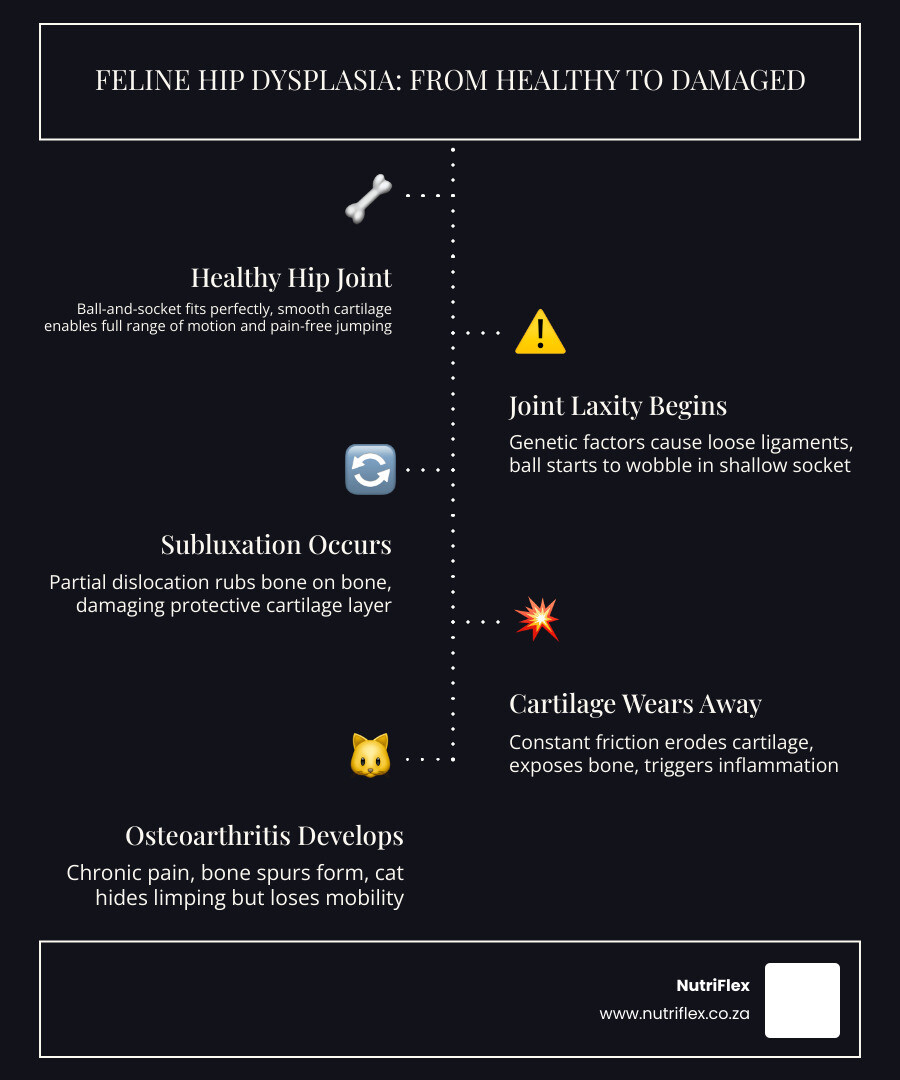
At its core, hip dysplasia is a developmental abnormality of the hip joint. In a healthy cat, the “ball” (the head of the femur) fits snugly into the “socket” (the acetabulum of the pelvis). This allows for that incredible feline range of motion we see when they’re chasing a laser pointer or leaping onto the fridge.
In a dysplastic cat, this joint is loose. This “laxity” causes the ball to rattle around in the socket, a process known as subluxation. Over time, this grinding wears down the protective cartilage, leading to painful bone-on-bone contact and eventually, degenerative joint disease (osteoarthritis).
The Breed Connection
According to the Cornell Feline Health Center research on hip dysplasia, the condition is largely hereditary. While any cat can develop it, certain purebreds are much more prone to this genetic roll of the dice. Large-framed breeds like the Maine Coon are the most frequently affected, but Persians and Himalayans also show higher-than-average rates of the condition.
If you have a purebred cat, understanding everything you need to know about joint care is essential for early intervention.
Why Cats Hide Hip Pain
Cats are the ultimate “stoics” of the animal kingdom. In the wild, showing weakness or pain makes you a target, so cats have evolved to mask their discomfort with incredible efficiency. This makes cat hip dysplasia natural support a proactive mission for us as owners.
You likely won’t see your cat crying out. Instead, look for these “whispered” signs of pain:
- Subtle Limping: It might only appear after a long nap or during cold weather.
- Reduced Activity: Your high-jumper might suddenly prefer the floor or the sofa over the top of the bookshelf.
- Grooming Changes: If it hurts to twist and reach their lower back or hips, you might notice mats or a scruffy coat in those areas.
- Litter Box Avoidance: If the sides of the litter box are too high, or if they have to squat in a way that puts pressure on their hips, they might start having “accidents” nearby.
- Behavioral Shifts: A normally sweet cat might become irritable or “grumpy” when touched near the hindquarters.
Diagnosis and Veterinary Evaluation
If you suspect your cat is struggling, a trip to the vet is the first step. Because cats are so good at hiding pain, a professional evaluation is vital.
The process usually involves:
- Physical Exam & Palpation: The vet will gently move the hip joint to check for range of motion and signs of “crepitus” (that crunchy feeling of bone grinding).
- Gait Analysis: They’ll watch how your cat moves. Does your cat “bunny hop” (moving both back legs together) to avoid putting full weight on a single hip?
- X-rays (Radiographs): This is the gold standard for diagnosis. It allows the vet to see the actual shape of the joint and the extent of any arthritic changes.
- PennHIP Method: While more common in dogs, this specialized radiographic technique can measure joint laxity in cats as young as four months, allowing for very early detection and support.
Cat Hip Dysplasia Natural Support and Nutraceuticals
Once a diagnosis is made, the goal shifts to management. Since hip dysplasia is a lifelong condition, we focus on a “multimodal” approach—using several different strategies at once to keep your cat comfortable. This is where cat hip dysplasia natural support truly shines.
Nutraceuticals are “food-based” supplements that provide medical benefits. For cats, these are often preferred over long-term pharmaceutical use because they typically have fewer side effects on the liver and kidneys. As noted by VCA Animal Hospitals on joint nutraceuticals, these ingredients work best when started early.
Essential Nutrients for Cat Hip Dysplasia Natural Support
To help your cat regain their “spring,” look for supplements that include these heavy hitters:
- Glucosamine: This is a building block for cartilage. It helps the body repair existing tissue and maintain joint fluid viscosity.
- Chondroitin: Often paired with glucosamine, chondroitin helps the cartilage retain water, acting as a “shock absorber” for the joint.
- MSM (Methylsulfonylmethane): A natural sulfur compound that has been proven in clinical trials to reduce inflammation and oxidative stress in joints.
- Hyaluronic Acid: Think of this as the “oil” in the joint’s engine. It keeps the synovial fluid thick and slippery, reducing friction.
When choosing a natural supplement for arthritis, quality matters. We recommend looking for joint supplements for cats that are free from fillers and synthetic additives. At NutriFlex, our supplements are made in our Cape Town facilities using certified human-grade ingredients, ensuring your cat gets exactly what they need and nothing they don’t.
Advanced Ingredients: Green-Lipped Mussel and Collagen
For cats with more advanced symptoms, we often look toward “super-nutrients” that offer more potent anti-inflammatory effects.
Green-Lipped Mussel (GLM): Sourced from the pristine waters of New Zealand, GLM is a nutritional powerhouse. It contains Eicosatetraenoic Acid (ETA), a rare type of Omega-3 that is significantly more effective at blocking inflammation pathways than standard fish oil. Studies have shown a marked reduction in orthopedic pain in cats consuming GLM.
Undenatured Collagen Type II (UC-II): This is a game-changer for immune-mediated joint damage. It works through a process called “oral tolerance,” essentially “training” the immune system to stop attacking the joint’s own cartilage.
Microlactin: This is a specialized milk protein that helps block the migration of inflammatory cells into the joint. Research suggests Microlactin takes about two weeks to reach maximal effect and may even allow vets to reduce the dosage of traditional NSAID medications.
| Ingredient | Primary Benefit | Speed of Effect |
|---|---|---|
| Glucosamine | Cartilage building block | 4–6 weeks |
| Green-Lipped Mussel | Potent inflammation reduction | 2–4 weeks |
| MSM | Pain and swelling relief | 1–2 weeks |
| UC-II Collagen | Immune system joint protection | 4–8 weeks |
| Microlactin | Blocks inflammatory cells | 2 weeks |
Holistic Therapies and Lifestyle Modifications
Supplements are the foundation, but how your cat lives every day plays a massive role in their comfort levels.
The Power of Weight Management
If we could give only one piece of advice for cat hip dysplasia natural support, it would be this: Keep your cat slim.
Every extra gram of weight puts direct, mechanical pressure on those unstable hip joints. Statistics show that cats consuming 25% fewer calories lived an average of 1.8 years longer and had a much later onset of osteoarthritis symptoms. A “rib-check” is a great way to monitor this—you should be able to feel your cat’s ribs easily under a thin layer of fur without a thick layer of fat in the way.
Physical Rehabilitation and Laser Therapy
Who says physical therapy is just for humans (and dogs)? Many of the techniques used in canine rehab are now being adapted for cats.
- Hydrotherapy: While most cats hate a bath, many will tolerate a specialized underwater treadmill where the water’s buoyancy supports their weight, allowing them to build muscle without joint impact.
- Cold Laser Therapy: This non-invasive treatment uses specific wavelengths of light to stimulate cell repair and reduce inflammation. Sessions usually take about 15 minutes and are very well-tolerated by cats.
- Acupuncture: Certified veterinary acupuncturists can target specific points to release natural pain-killing endorphins and improve blood flow to the hips.
For more information on these modalities, the Canine Rehabilitation Institute resources provide excellent insights into how physical medicine helps our pets. You can also explore natural ways to manage hip dysplasia for further inspiration.
Home Adjustments for Cat Hip Dysplasia Natural Support
Making small changes to your home environment can make a world of difference for a cat with “creaky” hips:
- Add Ramps or Steps: Place these next to the bed or sofa so your cat doesn’t have to make big, painful leaps.
- Orthopedic Bedding: Memory foam beds help distribute weight evenly and take pressure off the hip joints during those 16-hour cat naps.
- Low-Entry Litter Boxes: Look for boxes with a “cut-out” entry so your cat doesn’t have to climb a high wall just to go to the bathroom.
- Non-Slip Flooring: Rugs and runners over hardwood or tile floors provide the traction your cat needs to feel secure while walking.
- Elevated Food Bowls: Raising food and water bowls slightly can prevent your cat from having to hunch over, which can put strain on the back and hips.
When to Consider Surgical Intervention
While our focus is on cat hip dysplasia natural support, there are times when the joint damage is too severe for conservative management alone. If your cat is in constant pain despite supplements and lifestyle changes, surgery may be the kindest option.
The two most common surgeries for cats are:
- Femoral Head Ostectomy (FHO): This is a unique surgery where the “ball” part of the joint is removed entirely. The body then creates a “false joint” made of muscle and fibrous tissue. Because cats are light, they usually adapt incredibly well to this and can live pain-free, active lives afterward.
- Total Hip Replacement (THR): Much like in humans, the entire joint is replaced with a prosthetic. This is more expensive and requires a specialist, but it offers the best “near-normal” function.
Before jumping to surgery, we always recommend a 3-to-6-month trial of high-quality hip and joint care products. Many owners are amazed at the turnaround they see with proper nutraceutical support.
Frequently Asked Questions about Feline Hip Health
Can a cat live a full life with hip dysplasia?
Absolutely! With a multimodal approach—combining weight management, environmental tweaks, and the right cat hip dysplasia natural support—most cats live very long, happy, and comfortable lives. The goal isn’t necessarily to “cure” the dysplasia (which is structural) but to prevent the pain of the resulting arthritis.
How long do natural supplements take to work?
Patience is key. While some ingredients like MSM or Microlactin can show results in 1 to 2 weeks, cartilage-supporting nutrients like glucosamine and chondroitin usually take 4 to 6 weeks to build up in the system. We recommend a consistent “loading dose” for the first month to see the best results.
Is hip dysplasia in cats always genetic?
While there is a massive genetic component, environmental factors play a role too. Rapid growth as a kitten (often caused by high-calorie diets) and obesity can worsen the severity of the condition. This is why we advocate for a lifelong “slim and trim” approach to feline health.
Conclusion
Helping your cat manage hip dysplasia is a marathon, not a sprint. By combining the latest in veterinary science with high-quality cat hip dysplasia natural support, you can ensure your feline friend stays mobile and playful well into their senior years.
At NutriFlex, we are passionate about providing the very best for your pets. Our vet-approved supplements are crafted in Cape Town with 100% pure, human-grade natural ingredients. We don’t believe in fillers or synthetics—just pure, potent support for the animals we love.
Whether it’s the anti-inflammatory power of Green-Lipped Mussel or the cartilage-protecting benefits of our collagen blends, we’re here to help your cat land on their feet again.
Shop premium cat hip and joint support today and start your cat’s journey toward better mobility.
