
Why Tartar on Dogs Teeth Is a Bigger Problem Than You Think
Tartar on dogs teeth is hardened plaque, a crusty, yellow-brown buildup that forms along the gumline and can lead to serious dental and whole-body health problems.
Quick answers:
- What is it? Tartar (also called calculus) forms when plaque, a soft film of bacteria, saliva, and food particles, isn’t removed and hardens within 24–72 hours.
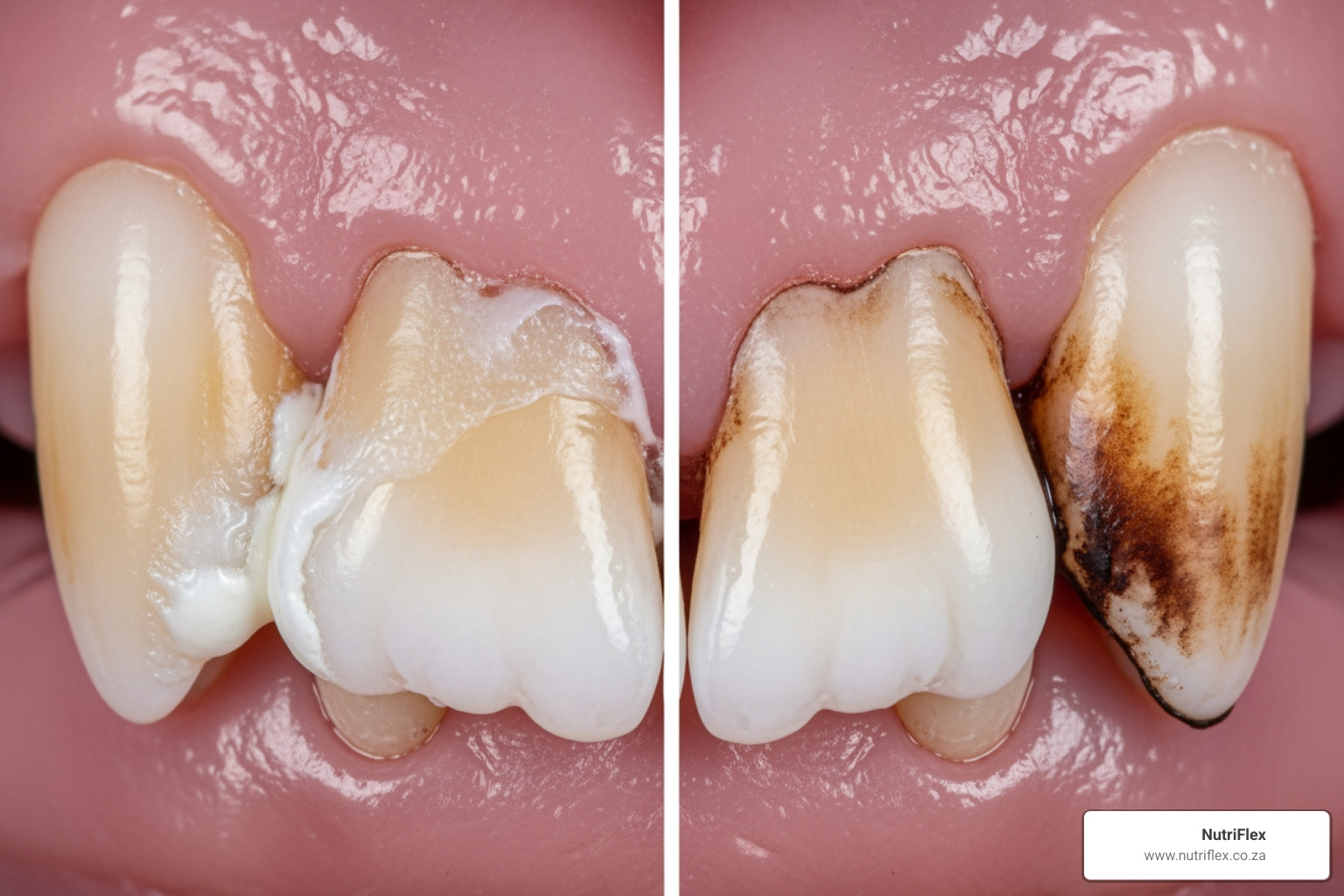
- What does it look like? Yellow to brown crusty deposits along the gumline, often with red or swollen gums and bad breath.
- Is it dangerous? Yes. It can cause gum disease, tooth loss, and infections that spread to the heart, kidneys, and liver.
- Can you remove it at home? No. Once hardened, only a vet can safely remove tartar. But you can prevent it from building up.
- How do you prevent it? Daily brushing, VOHC-approved dental products, and regular vet cleanings.
Here’s what makes this so urgent: 80% of dogs show signs of periodontal disease by age 3. That’s not old dogs, that’s dogs barely out of puppyhood.
Yet 93% of pet parents don’t brush their dog’s teeth daily. It’s an enormous gap between what dogs need and what most of them get.
Most owners only notice a problem when their dog has really bad breath, stops eating comfortably, or a vet points it out during a routine visit. By then, damage is often already underway, sometimes silently spreading far beyond the mouth.
This guide covers everything: what tartar is, why it matters, how to prevent it at home, and when your dog needs professional help.
Understanding Plaque and Tartar on Dogs Teeth
To fight the battle against tartar on dogs teeth, we first need to understand the enemy. It all starts with a seemingly innocent, sticky film called plaque.
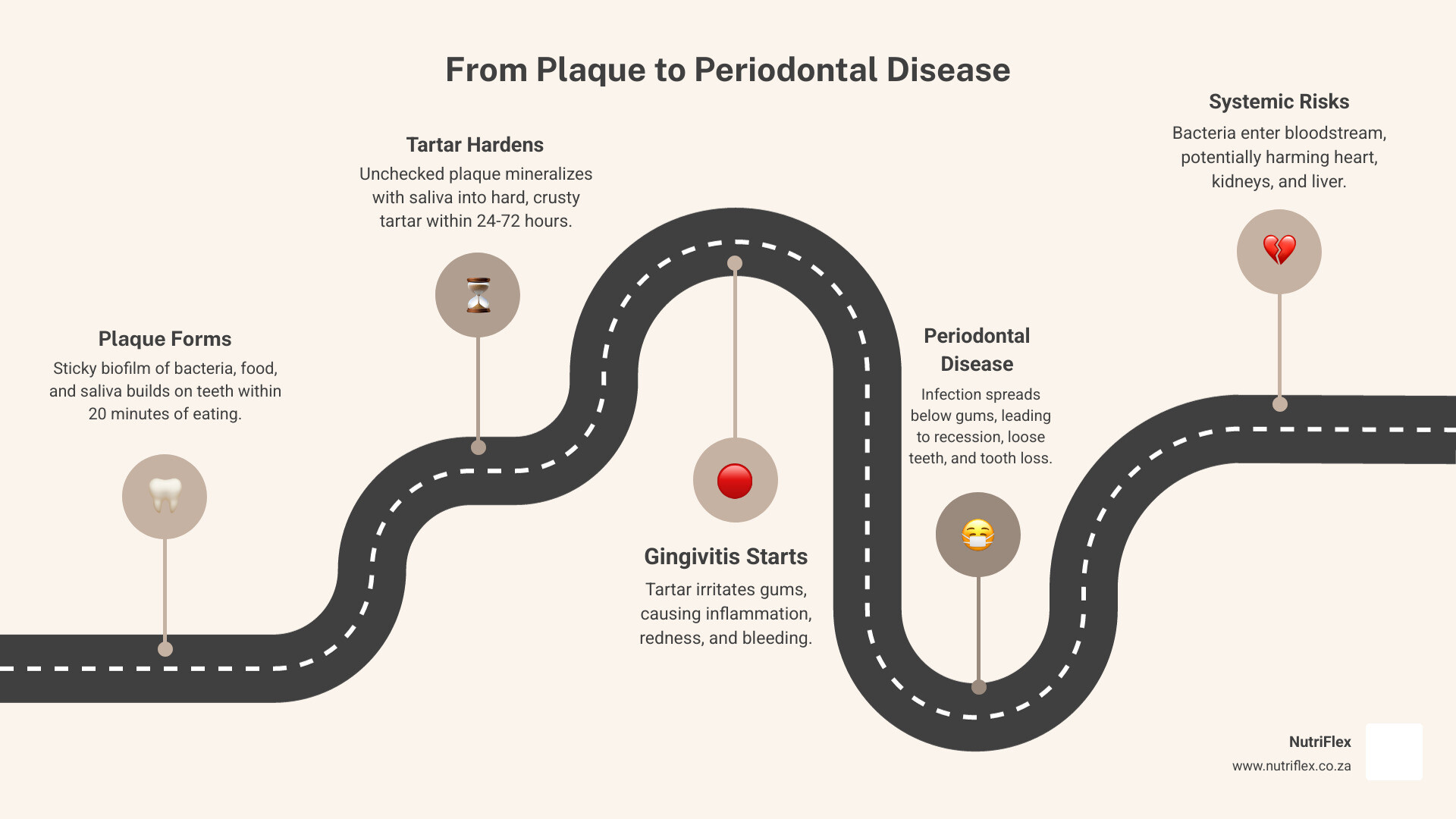
Plaque is a colorless or pale yellow biofilm that begins forming on your dog’s teeth within just 20 minutes of eating. It’s composed of bacteria, food particles, and saliva. If you’ve ever felt that “fuzzy” feeling on your own teeth before brushing, you know exactly what plaque is. Because it’s soft, it’s easy to remove with a toothbrush or even certain chew toys.
However, the clock is ticking. If plaque isn’t brushed away, it reacts with the minerals in your dog’s saliva, specifically calcium and phosphorus. This chemical reaction causes the plaque to mineralise and harden. Once it hardens, it becomes dental calculus, better known as tartar.
The window for this transformation is shockingly small. Plaque can start to harden into tartar in as little as 24 hours, and the process is usually complete within 72 hours. Unlike plaque, tartar is porous and rough, which makes it the perfect “apartment complex” for even more bacteria to move in and thrive.
Plaque vs. Tartar: A Quick Comparison
| Feature | Plaque | Tartar (Calculus) |
|---|---|---|
| Appearance | Clear or pale yellow, sticky film | Yellow, brown, or tan; hard and crusty |
| Texture | Soft and gummy | Hard and porous (like rock) |
| Removal | Easy to brush away at home | Requires professional veterinary scaling |
| Timeline | Forms within minutes of eating | Hardens within 24–72 hours |
| Location | Surfaces of teeth and gumline | Above and below the gumline |
Research has shown that the presence of these substances isn’t just a cosmetic issue. According to the National Library of Medicine, there is a direct correlation between periodontal disease and systemic diseases in dogs. This means the health of your dog’s mouth is a window into their overall well-being.
The Health Risks of Dental Neglect
We often hear pet parents say, “It’s just dog breath!” or “He’s just getting older.” But bad breath is actually one of the first red flags of dental distress. If you’re wondering What Causes Pet Bad Breath, the answer is almost always the metabolic byproducts of bacteria living in plaque and tartar.
When tartar on dogs teeth is allowed to accumulate, it doesn’t just sit on the surface. It builds up under the gumline (subgingival), where it triggers an inflammatory response. This is the start of gingivitis, red, swollen gums that bleed easily.
If left untreated, gingivitis progresses to periodontal disease. This is where things get serious:
- Gum Recession: The gums begin to pull away from the teeth, creating pockets that trap more bacteria.
- Tooth Loss: The structures supporting the teeth (the bone and ligaments) are destroyed, leading to loose teeth and eventual loss.
- Oral Pain: Dogs are masters at hiding pain. They might continue to eat even with significant dental rot, but that doesn’t mean they aren’t suffering. You might notice them dropping kibble or chewing on only one side of their mouth.
The most frightening consequence, however, is systemic. The mouth is highly vascular. When the gums are inflamed and infected, bacteria can enter the bloodstream (a condition called bacteremia). Once in the blood, these bacteria travel to major organs. This is Why Dog Bad Breath Might Be Bigger Issue; it can lead to:
- Heart Disease: Bacteria can attach to heart valves, causing endocarditis.
- Kidney and Liver Damage: These organs act as filters, and chronic infection in the mouth puts a constant strain on them, often leading to organ failure or abscesses.
Effective Home Care Strategies
The good news is that most dental issues are preventable. As we like to say at NutriFlex, a gram of prevention is worth a kilogram of cure! Since 93% of owners aren’t brushing daily, simply starting a routine puts your dog in the top tier of healthy pets.
Effective home care requires a multi-pronged approach. You can’t rely on one single method; instead, think of it as a “dental toolkit.” For those looking for Pet Dental Care Quick Solutions, the focus should be on mechanical cleaning and chemical prevention.
One of the best resources for pet owners is the Veterinary Oral Health Council (VOHC). They provide a seal of acceptance for products that have been scientifically proven to reduce plaque and tartar. When shopping for dental chews, treats, or water additives, always look for the VOHC seal.
Brushing Away Tartar on Dogs Teeth
Brushing is the “gold standard” of oral care. It is the only way to effectively remove plaque before it turns into tartar. If you’re new to this, don’t worry, most dogs can be trained to enjoy (or at least tolerate) the process.
Here is how we recommend you Clean Dog Teeth Easily and Effectively:
- Use the Right Tools: Never use human toothpaste. It contains fluoride and foaming agents like SLS that are toxic to dogs if swallowed. Instead, use a pet-specific enzymatic toothpaste. These often come in flavors like poultry or beef, making them a treat for your pup.
- Start Slow: For the first few days, just let your dog lick the toothpaste off your finger.
- The Finger Brush: Gradually move to rubbing their teeth and gums with your finger or a soft finger brush.
- The Full Brush: Once they are comfortable, introduce a dog-specific toothbrush. Focus on the outer surfaces of the teeth (the side touching the cheeks), as this is where tartar on dogs teeth builds up most aggressively.
- Be Consistent: Aim for daily brushing. If that’s impossible, try for at least three times a week. Anything less than that allows plaque enough time to mineralize into tartar.
Natural Supplements for Tartar on Dogs Teeth
We know that life gets busy, and sometimes the toothbrush stays in the drawer longer than it should. This is where natural supplements become your best friend.
One of the most powerful natural tools in our arsenal is a brown seaweed called Ascophyllum Nodosum. This isn’t just any kelp; it contains specific enzymes that, when ingested, are absorbed into the bloodstream and released back into the saliva.
Unlocking the Benefits of Ascophyllum Nodosum for Dogs reveals that this seaweed works from the inside out. It creates a protective barrier on the teeth that prevents plaque from sticking. Even better, it helps soften existing tartar, making it easier to remove through chewing or brushing.
Sodium hexametaphosphate (SHMP) is commonly included in some dental chews because it can bind calcium in saliva and slow tartar mineralisation. However, in powdered formats, it is largely ineffective. SHMP works through direct contact with the tooth surface during chewing. When simply mixed into food and swallowed, it does not meaningfully interact with plaque biofilm on the enamel.
For this reason, we do not use SHMP in our dental powder.
Instead, we focus on Ascophyllum nodosum. Clinical studies show this specific seaweed can reduce plaque accumulation by up to 40% over approximately 90 days when used daily. It works systemically via saliva rather than requiring mechanical abrasion, making it better suited to a true nutritional dental powder format.
For a deeper dive, check out Dental Health in Dogs: The Impact of Ascophyllum Nodosum.
Professional Veterinary Dental Intervention
Even with the best home care, most dogs will eventually need a professional cleaning. Think of it like your own visits to the dental hygienist; you brush and floss, but you still need that professional deep clean once or twice a year.
In the veterinary world, this is called a COHAT (Comprehensive Oral Health Assessment and Treatment). Unlike human dental cleanings, dogs must be under general anaesthesia. We understand this can be scary for pet parents, but it is absolutely necessary for several reasons:
- Subgingival Cleaning: You cannot safely scrape under a dog’s gumline while the dog is awake. This is where the most dangerous bacteria hide.
- Full Assessment: A vet needs to check every tooth, front and back, and perform “probing” to check for pockets in the gums.
- Dental X-rays: About 60% of a dog’s tooth is hidden under the gumline. X-rays are the only way to see abscesses, root rot, or jawbone loss.
- Safety and Comfort: Anaesthesia ensures the dog doesn’t feel pain or anxiety during the scaling and polishing process.
If you’re worried about the price, consider the true cost of neglecting your dog’s teeth. A routine cleaning is significantly cheaper than emergency surgery to remove multiple rotted teeth or treating chronic kidney disease caused by oral infections.
Frequently Asked Questions about Dog Dental Health
Can I use human toothpaste on my dog?
Absolutely not. Human toothpaste is designed to be spit out, but dogs swallow everything. Most human toothpastes contain fluoride, which is toxic to dogs. Many also contain Xylitol (a sugar substitute), which can be fatal even in small amounts. Additionally, the foaming agents in human toothpaste can cause severe stomach upset. Stick to vet-approved, enzymatic pet pastes.
How often should my dog have a professional cleaning?
Most veterinarians recommend a professional dental exam every 6 to 12 months. However, this varies based on the individual dog. Factors like age, diet, and genetics play a role. Using a Comprehensive Guide to Canine Dental Health can help you track your pet’s specific needs. Generally, if you see visible yellowing or smell “dog breath,” it’s time for a checkup.
Are certain breeds more prone to tartar buildup?
Yes. Small breeds (like Yorkies, Chihuahuas, and Dachshunds) and brachycephalic breeds (flat-faced dogs like Pugs and Bulldogs) are much more susceptible to tartar on dogs’ teeth. This is usually because they have the same number of teeth as a large dog, but in a much smaller mouth. This crowding creates nooks and crannies where plaque can hide and flourish. These breeds often require more frequent professional cleanings, sometimes every 6 months.
Conclusion
Taking care of your dog’s teeth is one of the most impactful things you can do for their longevity and quality of life. From the moment plaque forms to the day it hardens into tartar on dogs teeth, you have the power to intervene.
By combining daily brushing with professional veterinary care and high-quality, natural supplements, you can keep your dog’s smile bright and their heart healthy. At NutriFlex, we are committed to providing premium, vet-approved solutions made right here in Cape Town. Our supplements use certified human-grade, 100% pure natural ingredients, no synthetics, no fillers, just pure goodness for your furry friend.
Ready to upgrade your dog’s dental routine? Shop NutriFlex Dental Health Solutions today and give your dog the gift of a healthy mouth and a longer life. Whether you’re in Muizenberg or the heart of the Western Cape, we’re here to support your pet’s health journey every step of the way.
