
Why Sous Vide Bone Broth Is Changing How We Cook for Our Pets
Sous vide bone broth is bone broth cooked in a sealed bag or directly in a temperature-controlled water bath, held at a precise heat for an extended period to extract collagen, gelatin and minerals from bones. This technique, known as sous-vide, ensures consistent results.
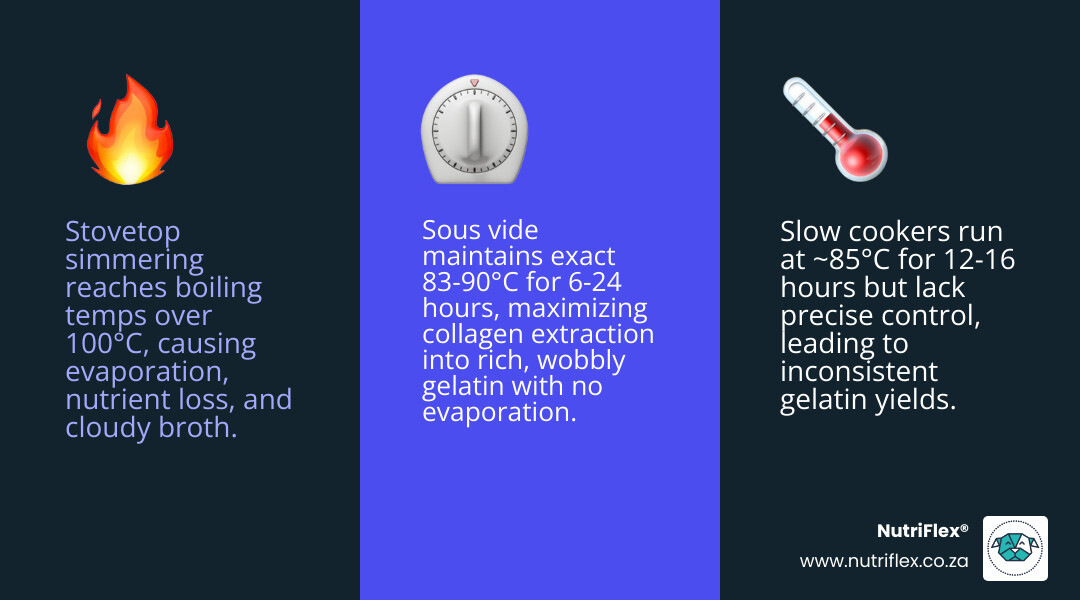
Here is a quick comparison of the three main methods:
| Method | Temperature | Cook Time | Gelatin Yield | Hands-Off |
|---|---|---|---|---|
| Stovetop | Rolling simmer | 3 to 6 hours | Moderate | No |
| Slow Cooker | Low setting (~85°C) | 12 to 16 hours | Good | Yes |
| Sous Vide | 83°C to 90°C | 6 to 24 hours | High | Yes |
Most home cooks choose between stovetop simmering, a slow cooker or the sous vide method. Each approach extracts nutrients differently and carries different trade-offs in terms of effort, safety and nutritional output.
Stovetop broth requires constant monitoring. Slow cookers are convenient but offer limited temperature precision. Sous vide holds a fixed temperature throughout the entire cook, which means more consistent collagen breakdown and no risk of over-boiling.
The result is a broth that is richer in gelatin and easier to reproduce batch after batch.
This guide breaks down all three methods so you can choose the one that fits your kitchen and your pet’s nutritional needs.
I’m Sharon Milani, co-founder of NutriFlex® and a long-time advocate for functional animal nutrition, and my work formulating collagen-based supplements for dogs has given me a close understanding of why sous vide bone broth is one of the most efficient ways to extract bioavailable nutrients from bones. That foundation shapes everything in this guide.
The Science Behind Sous Vide Bone Broth
When we talk about bone broth, we are really talking about the science of extraction. The primary goal is to take tough, insoluble collagen found in bones and connective tissues and transform it into easily digestible, wiggle-on-a-spoon gelatin.
In a traditional stovetop setting, water levels fluctuate due to evaporation and temperatures often spike, which can lead to a cloudy broth or a “burnt” flavour. Sous vide bone broth solves this through thermal convection. By sealing the ingredients in a bag or a closed water oven, we eliminate evaporation entirely. This ensures that every millilitre of water we start with becomes nutrient-dense broth.
Research into sous vide technology, including insights from the PDF manual online at the manufacturer’s website for units like the SousVide Supreme, shows that these machines rely on consistent water movement to maintain an even temperature. This stability is vital for nutrient preservation. High heat can denature delicate proteins and enzymes, but the gentle, constant warmth of sous vide protects the amino acid profile, specifically glycine and glutamine, which are essential for your dog’s gut health and tissue repair.
Why Temperature Precision Matters for Sous Vide Bone Broth
The magic window for making a high-quality stock or broth lies between 85°C and 90°C. At these temperatures, we achieve maximum collagen breakdown without reaching a rolling boil that might emulsify fats and make the broth greasy.
Recipes often vary because of the type of bone used. For example, chicken wings or carcasses might only require 6 to 8 hours at 90°C to fully yield their nutrients. Beef bones, being much denser, often require 12 to 24 hour cycles at the same temperature to achieve full disintegration. Because a sous vide circulator like an Anova Precision Cooker maintains the exact degree you set, you never have to worry about the pot drying out or the house catching fire while you sleep or work.
Maximising Gelatin in Your Sous Vide Bone Broth
If your cooled broth doesn’t look like a bowl of jelly, you might be missing the right bones. To get that thick, gelatin-rich set, we need to focus on joint bones and knuckle bones. These are packed with the connective tissue and cartilage required for gelatin production.
Marrow bones are excellent for flavour and healthy fats (often called “meat butter” by enthusiasts), but they don’t provide as much collagen as a knee or hoof. By combining marrow bones for taste and knuckle bones for structure, we create a broth that supports cartilage regeneration in aging pets. This is particularly important for large breeds in South Africa that may be prone to hip and joint issues.
Comparing Traditional Simmering vs Modern Methods
Choosing a method often comes down to how much time you have to spend in the kitchen. While a stovetop pot is the “old school” way, it is often the least efficient for busy pet parents.
| Feature | Stovetop | Slow Cooker | Sous Vide |
|---|---|---|---|
| Evaporation | High (requires topping up) | Low | Zero |
| Kitchen Safety | Low (open flame/heat) | High | Very High |
| Energy Efficiency | Low | Moderate | High |
| Flavour | Can become bitter if boiled | Mellow | Intense and concentrated |
Advantages of the Sous Vide Method
The primary advantage of the sous vide bone broth method is that it is truly “set and forget”. There is no evaporation, so the ratio of water to bone remains constant, leading to a much higher flavour concentration.
Furthermore, because the bag is sealed, the aroma of simmering bones is contained. While we might love the smell, some people find the scent of 24-hour beef stock a bit overwhelming in a small house. Sous vide keeps the kitchen smelling fresh while producing a broth with a consistent, silky texture.
Step-by-Step Preparation and Safety
Making sous vide bone broth at home is straightforward if you follow a few key safety and preparation steps.
- Roast the Bones: Start by roasting your beef or chicken bones in the oven at 200°C for about 30 to 45 minutes. This triggers the Maillard reaction, giving your broth a deep golden colour and a richer flavour.
- Deglaze the Pan: Don’t leave the brown bits behind. Use a little hot water to scrape the roasting tray and add that liquid to your sous vide bag.
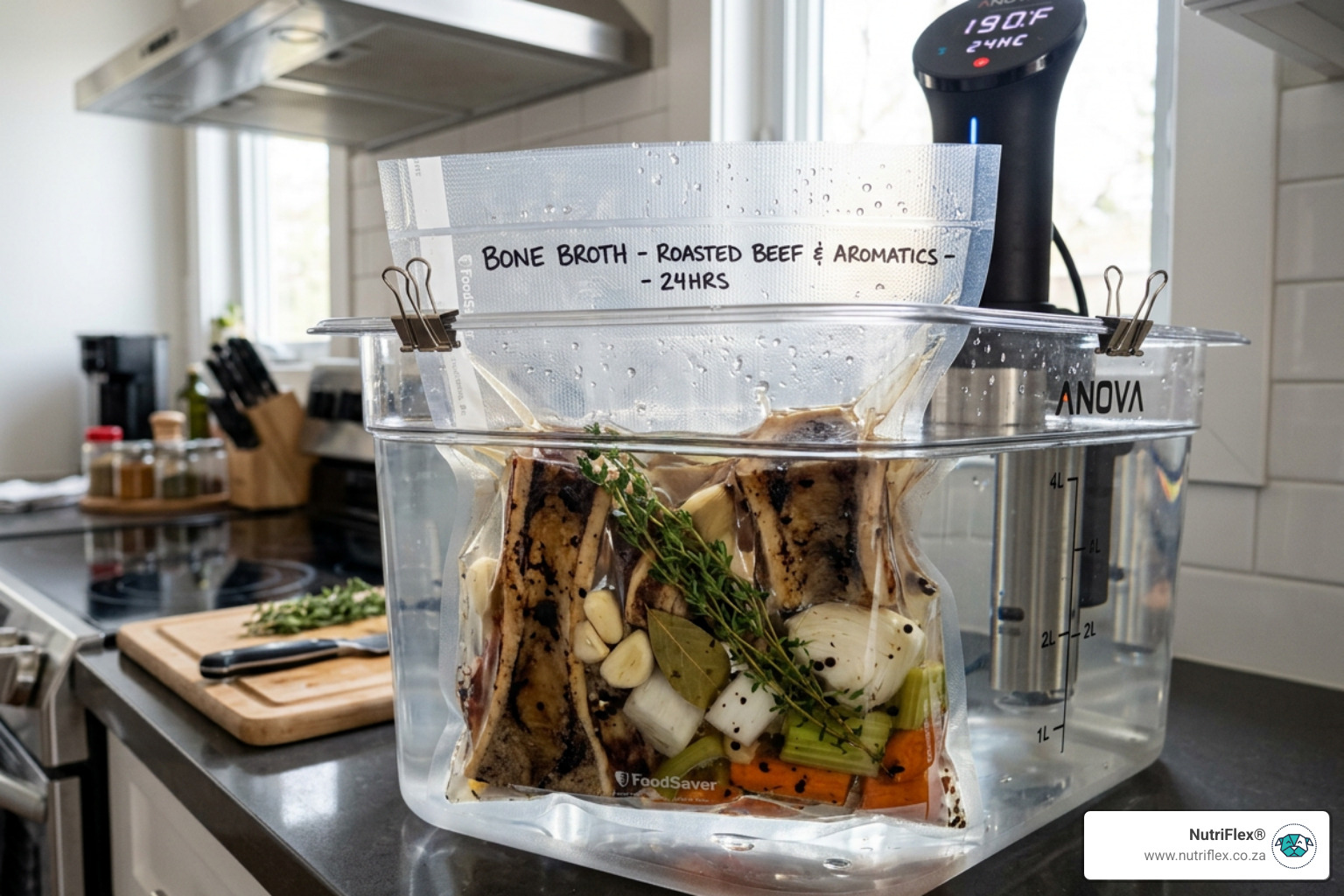
- The Bagging Process: Place the bones and any aromatics into a heavy-duty bag. For long cooks, we recommend double bagging to prevent seam failure.
For more information on why this is a staple for pet health, you can read about Bone Broth for Dogs South Africa.
Bagging and Submersion Techniques
You do not necessarily need an expensive vacuum sealer. Many people use the “water displacement method” with high-quality zipper-lock bags. Simply place your ingredients in the bag, slowly lower it into the water bath to let the water pressure push the air out and then seal it.
Preventing bag failure is the biggest challenge. Use 7.5 litre bags for large batches, or divide the recipe into two smaller bags. Ensure you remove all air bubbles, as air causes the bag to float. If the bag floats, the contents won’t cook evenly. You can use a heavy ceramic plate or dedicated sous vide weights to keep everything submerged.
Finishing and Storage
Once the timer goes off, the work isn’t quite done. You must cool the broth quickly for safety.
- Strain: Use a fine mesh strainer to remove all bone fragments and vegetable bits.
- Ice Bath: Place the container of hot broth into a sink filled with ice and water.
- Skim: Once chilled, the fat will rise to the top and solidify. You can easily scrape this off.
- Store: Fresh broth lasts in the refrigerator for up to 4 days. For long-term use, freeze it in silicone moulds or jars for up to 3 months.
Nutritional Value for South African Pets
In the South African context, where many of our dogs are highly active or live in varied climates, maintaining a Bone Broth for Pets Diet provides several advantages.
Bone broth is a powerhouse for joint support, but it also aids in gut lining repair. The gelatin acts as a “seal” for the gut, which can improve nutrient absorption and help dogs with sensitive stomachs. It is also an excellent tool for hydration, especially during our hot summer months when a splash of broth in a water bowl can encourage a picky drinker.
If you are looking for a convenient way to add these benefits without the 24-hour wait, our Gravy Meal Topper 180g Chicken Bone Broth for Dogs offers a concentrated, easy-to-use alternative that supports immune resilience.
Functional Ingredients for Enhanced Broth
While bones and water are the basics, you can customise your sous vide bone broth for specific health goals:
- Turmeric: Adds anti-inflammatory properties (best used with a pinch of black pepper).
- Apple Cider Vinegar: Helps break down the bone structure to release more minerals.
- Fresh Parsley and Celery: Provide vitamins and minerals while freshening breath.
- Carrots: Add a touch of natural sweetness that dogs love.
Frequently Asked Questions
Can I cook broth directly in the machine without bags?
Technically, some water ovens like the SousVide Supreme have a stainless steel bath that can hold liquid directly. However, we generally advise against this for immersion circulators (the “stick” style). These devices have a moving pump or impeller that can get clogged with bone fragments or fat, potentially ruining the machine. If you do cook directly in a water oven, ensure you follow strict cleaning protocols with mild soap and never submerge the electrical components.
Should I add apple cider vinegar to the bag?
Yes, but keep it to a small amount (about 1 to 2 tablespoons per batch). The acetic acid in the vinegar lowers the pH of the water, which helps in mineral extraction and speeds up the collagen release from the bones. It is not strictly necessary for gelatin set, but it does result in a more nutrient-dense final product.
How do I know if my broth has enough gelatin?
The “wobble test” is the most reliable method. After the broth has spent a night in the fridge, it should have a thick, jelly-like consistency. If it is still completely liquid, you likely used too much water or not enough knuckle and joint bones. Aim for a bone-to-water ratio where the water just barely covers the bones in the bag.
Conclusion
At NutriFlex®, we believe in preventative pet health through functional animal nutrition. Whether you are making a slow-simmered sous vide bone broth at home or choosing our scientifically formulated supplements, the goal is the same: to help your pets live longer, happier lives.
Our products are manufactured in a certified human-grade facility in Cape Town, ensuring that every scoop meets the highest safety standards. If you want to boost your dog’s diet with the power of collagen and bone broth without the kitchen mess, you can Shop Nutrition Supplements and Meal Toppers directly from our Muizenberg-based facility.
By choosing the right cooking method and the best ingredients, you are investing in your pet’s mobility, digestive balance and overall vitality. Happy cooking.