
CBD for Canine Health: What South African Dog Owners Need to Know
CBD for canine use has grown rapidly over the past decade, and for good reason. Research now supports its potential to help dogs with pain, seizures, anxiety and skin conditions.
Quick answer: What can CBD do for dogs?
| Condition | Evidence Level | Key Finding |
|---|---|---|
| Osteoarthritis pain | Moderate | Over 80% of dogs showed reduced pain in a Cornell University study |
| Epilepsy / seizures | Moderate | Fewer seizure days in a 39-dog double-blind trial at Colorado State University |
| Anxiety and stress | Early | 83% of dogs showed reduced anxiety behaviours in one study |
| Atopic dermatitis | Early | 65% of CBD-treated dogs had at least 50% reduction in itching |
Despite the growing body of evidence, CBD for dogs remains largely unregulated. Product quality varies widely, and not all claims made by manufacturers are supported by science. That matters a great deal when you are making decisions about your dog’s health.
I’m Sharon Milani, Director of SmartPack PTY Ltd and co-founder of NutriFlex, South Africa’s first certified human-grade pet supplement range, and my work in canine nutrition has given me a clear view of where supplements like CBD for canine use fit within a responsible, evidence-aligned approach to pet health. In this guide, I’ll walk you through what the research actually says, what to watch out for and how to make an informed decision for your dog.
Understanding CBD for Canine Health
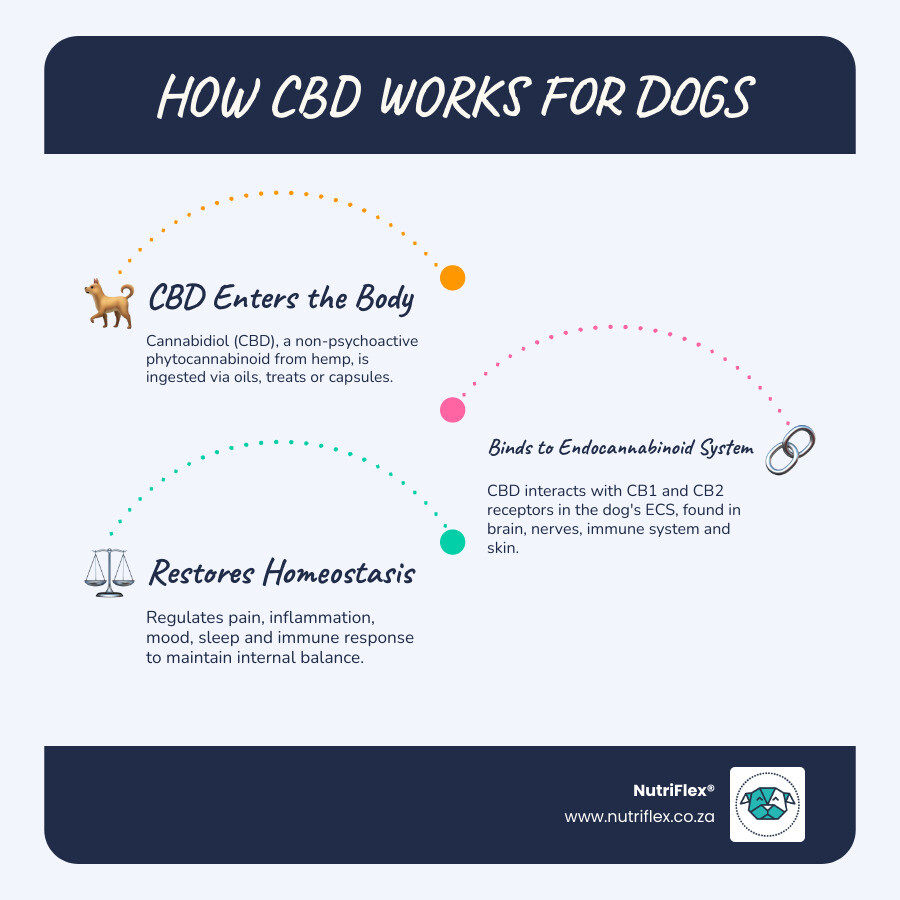
When we talk about CBD, we are referring to cannabidiol. This is one of over 100 compounds known as phytocannabinoids found in the cannabis plant. Unlike its more famous cousin THC, CBD is non-psychoactive. This means it does not produce a high, making it a subject of intense interest for therapeutic use in both humans and animals.
To understand how cbd for canine products work, we have to look at the endocannabinoid system (ECS). Every dog has one. It is a vast network of receptors located throughout the body, including the brain, central nervous system, immune system and even the skin. The ECS plays a vital role in maintaining homeostasis, or internal balance. It helps regulate everything from mood and sleep to pain perception and inflammation.
When a dog is given CBD, the compound interacts with these receptors. While the science is still evolving, Evidence for the use of CBD suggests that it can help the body maintain its natural balance, especially when dealing with chronic conditions like joint pain or neurological imbalances.
In the South African market, we have seen a massive surge in interest. As pet parents move away from purely pharmaceutical interventions and toward preventative health, functional nutrition has taken centre stage. At NutriFlex, we believe that understanding the biology behind these supplements is the first step toward better care.
How CBD for Canine Products Differ from THC
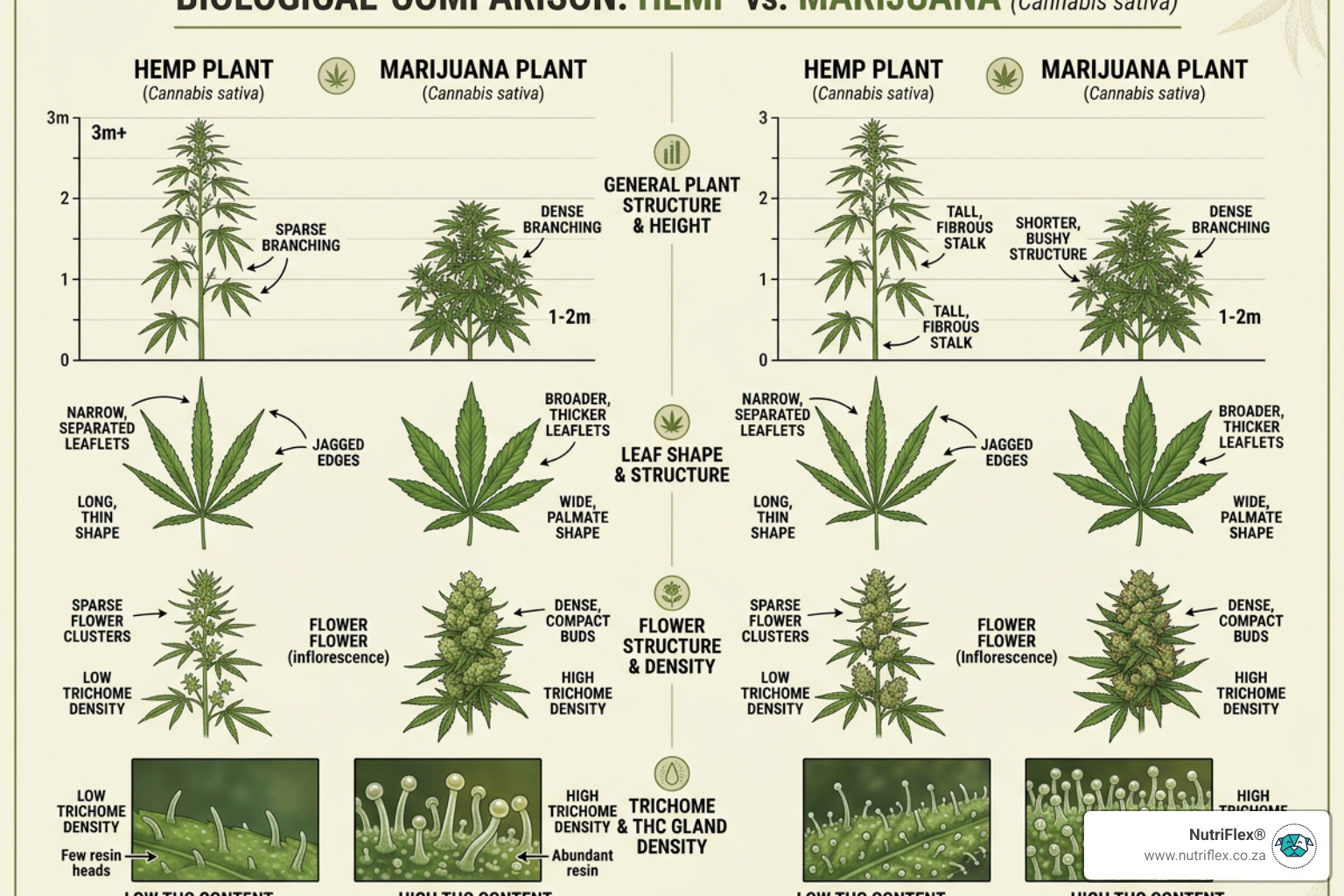
One of the most common concerns we hear from dog owners in Cape Town and across South Africa is: “Will this make my dog high?” The answer is a definitive no, provided you are using a high-quality, hemp-derived product.
The cannabis plant family includes both hemp and marijuana. The primary difference is the concentration of Tetrahydrocannabinol (THC). Marijuana is high in THC, the psychoactive compound. Hemp, by definition, must contain less than 0.3% THC. In the context of cbd for canine health, this distinction is critical because THC is actually toxic to dogs.
Dogs have a much higher density of cannabinoid receptors in their hindbrain compared to humans. This makes them significantly more sensitive to the effects of THC. According to Scientific research on THC as a toxic substance, even small amounts of THC can lead to a condition called static ataxia, where the dog loses coordination and appears “drunk.”
Symptoms of THC toxicity in dogs include:
- Vomiting and drooling
- Loss of coordination (stumbling or swaying)
- Dribbling urine
- Sensitivity to light or sound
- Tremors or even seizures in severe cases
When choosing a supplement, you must ensure it is derived from industrial hemp and has been tested to ensure THC levels are either non-detectable or well below the 0.3% threshold.
Therapeutic Benefits and Scientific Research
We are living in an exciting era for veterinary science. While much of the early support for CBD was based on anecdotes from pet owners, we now have rigorous clinical trials providing hard data. Major institutions like Cornell University and Colorado State University have led the charge in exploring how cbd for canine administration affects specific health issues.
Research has primarily focused on four key areas: osteoarthritis, epilepsy, anxiety and skin conditions (atopy). The results have been promising enough that many veterinarians now view CBD as a valuable adjunct therapy, meaning it can be used alongside traditional treatments to improve overall outcomes.
For example, Scientific research on canine osteoarthritis and a separate Study on epilepsy in dogs have highlighted significant improvements in quality of life and symptom management.
Managing Mobility and Joint Pain
Osteoarthritis is a massive problem for our furry friends. It is estimated that up to 20% of dogs in the UK and US suffer from this degenerative joint disease, and the figures in South Africa are likely similar. It is not just an old dog’s disease either; large breeds and active dogs are often affected early in life.
In a landmark Cornell University study, more than 80% of dogs with osteoarthritis experienced a significant decrease in pain and an increase in activity levels when given CBD. This is likely due to the anti-inflammatory properties of the compound. By interacting with receptors in the joints and immune system, CBD helps reduce the production of pro-inflammatory cytokines like IL-6 and TNF-alpha.
For many dogs, this means they can go from struggling to stand up from their bed in Muizenberg to enjoying a gentle walk on the beach again. Scientific research on CBD for osteoarthritis pain suggests that a dose of 2 mg/kg twice daily can provide substantial relief without the harsh side effects sometimes associated with long-term NSAID (non-steroidal anti-inflammatory drug) use.
Addressing Seizures and Neurological Health
Idiopathic epilepsy is the most common neurological disorder in dogs, and it is notoriously difficult to manage. About one-third of dogs with epilepsy do not respond well to traditional anti-seizure medications.
A trial conducted by Colorado State University brought some much-needed hope to this area. In a double-blind study of 39 dogs, those taking CBD oil had significantly fewer seizure days compared to those on a placebo. Specifically, the research showed a median reduction in seizure frequency of about 33%.
The AKC Canine Health Foundation study continues to evaluate these effects, but the current consensus is that CBD can be a powerful tool for neurological health. It appears to help by desensitising receptors that contribute to neuronal hyperexcitability, effectively “quieting” the electrical storms in the brain that cause seizures.
Safety Concerns and Side Effects
Is CBD safe? For the vast majority of dogs, the answer is yes. However, as with any supplement that affects the body’s systems, there are potential side effects and safety considerations.
The most common side effects reported by owners include:
- Dry mouth: CBD can decrease the production of saliva, leading to increased thirst.
- Drowsiness: Especially at higher doses, CBD can have a mild sedative effect.
- Lowered blood pressure: A temporary drop in blood pressure can occur, which might cause brief light-headedness.
The more significant concern involves the liver. Scientific research on CBD safety and liver enzymes has consistently shown that CBD can cause an elevation in a liver enzyme called alkaline phosphatase (ALP). While this doesn’t necessarily mean the liver is being damaged, it does mean the liver is working harder to process the compound.
Monitoring Your Dog During CBD for Canine Treatment
If you decide to start your dog on a cbd for canine regimen, we always recommend a “safety first” approach. This starts with a veterinary consultation. Even if your vet is cautious about recommending specific brands, they can help you monitor your dog’s health through baseline bloodwork.
Testing liver enzymes before you start and then again a few weeks into treatment is a smart move. You should also keep a close eye on your dog’s behaviour. Are they excessively sleepy? Has their appetite changed? Every dog is an individual, and their response to CBD will be unique. Individualised approaches are far better than a “one size fits all” mentality.
Potential Interactions with Veterinary Medications
CBD is metabolised by the liver, specifically through the cytochrome P450 pathway. This is the same pathway used by many common veterinary medications. When multiple substances are competing for the same metabolic “exit,” it can lead to drug interactions.
Research on CBD and drug metabolism suggests that CBD might slow down the metabolism of certain drugs, effectively making them stay in the dog’s system longer and increasing the risk of toxicity. This is particularly important if your dog is already taking:
- NSAIDs for pain
- Phenobarbital for seizures
- Certain heart medications
- Steroids
If your dog is on “polypharmacy” (multiple medications), it is vital to work with a professional to ensure that adding CBD won’t interfere with their existing treatment plan.
Selecting Quality Products in the South African Market
This is where things get tricky. Because the industry is still finding its feet, the market is flooded with products of questionable quality. A study that evaluated 29 CBD products for pets found some shocking results. Four products contained heavy metal contamination, two had no cannabinoids at all, and only 10 were within 10% of the CBD concentration listed on the label.
In South Africa, you want to look for a brand that prioritises transparency. At NutriFlex, we manufacture in a certified human-grade facility because we believe our pets deserve the same safety standards we expect for ourselves.
When shopping for cbd for canine products, look for these quality markers:
- Third-Party Testing: The company should provide a Certificate of Analysis (COA) from an independent lab. This confirms the CBD content and proves the product is free from heavy metals, pesticides and solvents.
- Organic Sourcing: Hemp is a bio-accumulator, meaning it sucks up everything from the soil it grows in. If the soil is contaminated with lead or pesticides, those toxins will end up in the oil. Organic sourcing is non-negotiable.
- Extraction Method: CO2 extraction is the gold standard. It uses pressurised carbon dioxide to pull the CBD from the plant, leaving no toxic solvent residues behind.
Understanding Extraction and Purity Standards
You will often see three terms on labels: Full-spectrum, Broad-spectrum and Isolate. Understanding the difference is key to getting the results you want.
- Full-Spectrum: This contains all the cannabinoids found in the plant, including trace amounts of THC (below 0.3%). Many experts believe this creates an “entourage effect,” where the compounds work together to be more effective than CBD alone.
- Broad-Spectrum: This contains a range of cannabinoids but has had the THC completely removed. This is a great “middle ground” for safety-conscious owners.
- CBD Isolate: This is 99% pure CBD with everything else removed. While it is the “cleanest” form, it may lack the therapeutic punch of the spectrum products.
Dosage and Administration Guidelines
Finding the right dose is more of an art than a science. While Scientific research on CBD delivery methods provides a baseline, every dog responds differently.
A common starting point used in many studies is 2 mg per kilogram of body weight, given twice daily. However, we always recommend the “start low and go slow” method. Begin with a quarter of the recommended dose and monitor your dog for a few days before increasing it.
Administration Methods Comparison
| Method | Bioavailability | Pros | Cons |
|---|---|---|---|
| Oil (Tincture) | High | Fast absorption, precise dosing | Some dogs dislike the taste |
| Treats / Chews | Moderate | Easy to give, dogs love them | Less precise, lower absorption |
| Capsules | Moderate | No taste, easy to hide in food | Slower onset of action |
| Topical Creams | Low (Localised) | Great for skin issues | Not effective for systemic pain |
For the best results, try oral transmucosal administration. This simply means dropping the oil directly onto the dog’s gums or under the tongue. This allows the CBD to enter the bloodstream directly, bypassing the digestive system where much of it can be lost.
Frequently Asked Questions
Is CBD legal for dogs in South Africa?
The legal landscape in South Africa has changed significantly. Currently, CBD is legal as long as it meets specific criteria set by the South African Health Products Regulatory Authority (SAHPRA). For a product to be sold as a health supplement (Schedule 0), it must contain a maximum daily dose of 20 mg of CBD and have a THC content of less than 0.001%. Industrial hemp is regulated under Act 101, and as long as manufacturers stick to these limits, you can legally buy and use CBD for your pets.
Can my dog get high from CBD?
No. As we’ve discussed, CBD is non-intoxicating. If the product is hemp-derived and has been properly tested to ensure THC levels are negligible, your dog will not experience any psychoactive effects. They may seem more relaxed or slightly sleepy, but they won’t be “high.”
How long does it take for CBD to work?
It depends on what you are treating. For situational anxiety (like a thunderstorm or fireworks), you might see effects within 30 to 60 minutes. For chronic conditions like osteoarthritis or skin allergies, it can take two to four weeks of consistent daily use to see the full therapeutic benefits. Consistency is key; the cannabinoids need time to build up in the dog’s system.
Conclusion
At NutriFlex, our mission is to support the longevity and happiness of South African pets through science-aligned, nutrition-first supplementation. Whether it’s our Act 36 registered joint support or a high-quality cbd for canine product, the goal is the same: preventative health and functional care.
CBD offers a remarkable opportunity to manage pain, reduce stress and improve the lives of our dogs naturally. But it is not a magic wand. It works best when part of a holistic approach that includes a healthy diet, regular exercise and professional veterinary care.
By choosing products that are third-party tested, organically sourced and backed by research, you are giving your dog the best possible chance at a vibrant, pain-free life. Your dog deserves peace, and you deserve the peace of mind that comes from knowing you are providing the very best.