
Why Your Dog’s Shedding May Be a Nutrition Problem
Fish oil for dog shedding is one of the most effective and evidence-supported nutritional strategies available to dog owners dealing with excessive hair loss. If you are looking for a quick answer, here it is:
Does fish oil help with dog shedding?
| Question | Answer |
|---|---|
| Does fish oil reduce shedding? | Yes, omega-3 fatty acids in fish oil support skin health and help reduce excessive shedding |
| Key active nutrients | EPA (Eicosapentaenoic acid) and DHA (Docosahexaenoic acid) |
| How it works | Reduces skin inflammation, supports the skin barrier and moisturises from within |
| Recommended daily amount | Approximately 75 mg combined EPA and DHA per kg of body weight |
| How long to see results | Most owners report visible improvement after 4 to 8 weeks of consistent use |
| Best source | Marine-based fish oil (not plant-based flaxseed oil) for optimal bioavailability |
If you share your home with a dog, you know the scene well. Tufts of fur on the couch, hair in your food and a floor that seems to shed faster than your dog. Some shedding is completely normal. It is how dogs replace old or damaged coat with new, healthy growth. But when shedding becomes excessive, it is often a sign that something is missing from the inside, and nutrition is usually the first place to look.
South African dog owners face added challenges. Our climate, with its warm summers, dry Highveld winters and coastal humidity, places real stress on a dog’s skin and coat throughout the year. These environmental pressures can make shedding worse, particularly in dogs already lacking essential fatty acids in their diet.
I’m Sharon Milani, co-founder of NutriFlex® and Director of SmartPack PTY Ltd, and my work developing South Africa’s first certified human-grade pet supplement range has given me a deep understanding of how targeted nutrition, including omega-3 supplementation, directly influences skin integrity and coat condition in dogs. In this guide, I’ll walk you through exactly how fish oil for dog shedding works, what the science says and how to use it effectively alongside other practical strategies.
Understanding Dog Shedding and Its Causes
To manage shedding effectively, we first need to understand that it is a biological necessity. A dog’s coat is their primary defence against the environment. It provides thermoregulation, keeping them cool in the South African sun and warm during chilly Cape winters. It also aids in sensory perception and protects the skin from UV rays and physical injury.
The hair growth cycle consists of three distinct phases:
- Anagen phase: The active growth stage where new hair is produced.
- Catagen phase: A brief transition stage where growth stops and the hair sheath attaches to the hair root.
- Telogen phase: The resting stage where the hair is fully formed but eventually falls out to make room for new growth.
Shedding occurs when the hair reaches the end of the telogen phase. While all dogs shed, the volume varies by breed. For instance, double coated breeds like German Shepherds or Siberian Huskies undergo a massive “blow out” twice a year as seasons transition.
However, when shedding becomes constant or extreme, it often points to a breakdown in skin hydration or nutritional status. Dog hair is almost entirely made of protein. If a dog’s diet is poor or if they cannot absorb nutrients efficiently, the body prioritises internal organs over hair follicles. This leads to brittle hair that falls out prematurely.
Environmental stressors in South Africa, such as the dry winter air in Johannesburg or the salty air in coastal regions like Muizenberg, can strip the skin of its natural oils. This leads to Excessive Shedding in Dogs: Causes and Diet issues where the skin becomes flaky and the hair follicles lose their grip.

When to consult a vet about shedding
While fish oil for dog shedding is a powerful tool, it cannot fix underlying medical conditions. You should consult your veterinarian if you notice any of the following:
- Bald patches: Symmetrical hair loss or completely bare spots are not normal shedding.
- Skin inflammation: Red, hot or weepy skin often indicates an infection or severe allergy.
- Hormonal imbalances: Conditions like Cushing’s disease or thyroid dysfunction (hypothyroidism) frequently cause coat thinning and poor hair quality.
- Parasites: Persistent scratching from fleas or mites can cause mechanical hair loss.
- Odour: A strong, musty smell often accompanies yeast infections of the skin.
If your dog is shedding excessively but otherwise seems healthy, the issue is likely nutritional or environmental, which is where high quality supplementation comes into play.
How Fish Oil for Dog Shedding Works
The secret behind the success of fish oil for dog shedding lies in its concentration of omega-3 fatty acids. These are essential fats that dogs cannot produce on their own. They must be obtained through their diet or supplements.
Most commercial dog foods are high in omega-6 fatty acids, which are found in grains and vegetable oils. While omega-6 is necessary, an imbalance (too much omega-6 and too little omega-3) leads to systemic inflammation. This inflammation affects the skin, causing it to become dry, itchy and prone to shedding.
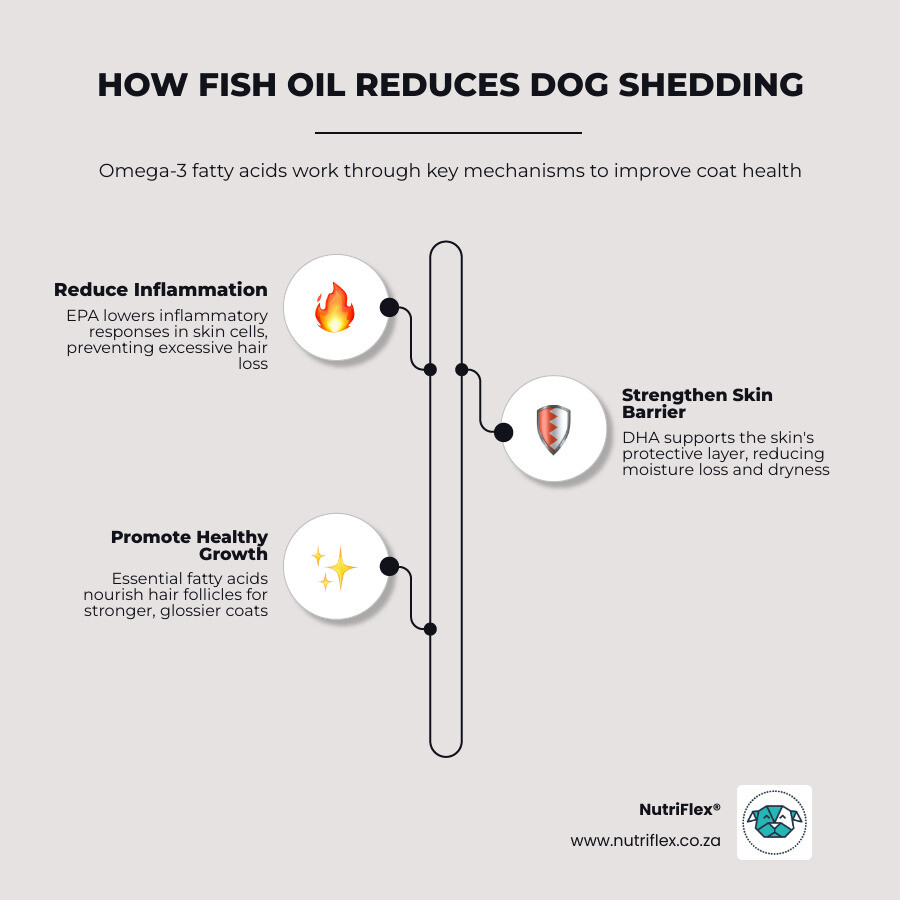
Fish oil works by providing the “building blocks” for healthy cell membranes. When a dog receives adequate omega-3s, their skin barrier is strengthened. This reduces transepidermal water loss, a process where moisture evaporates through the skin, leaving it dehydrated. By keeping the skin moisturised from the inside out, the hair follicles remains strong and the coat stays anchored for longer.
According to veterinary experts at VCA, fatty acid supplements can reduce shedding by promoting the growth of the undercoat and reducing the tendency for skin inflammation. You can find More info about omega-3 for dogs and how these fats support the biological functions of the skin on our dedicated resource page.
The role of DHA and EPA in fish oil for dog shedding
Not all omega-3s are created equal. When looking at a supplement, the two most important components are:
- EPA (Eicosapentaenoic acid): This is the primary anti-inflammatory agent. It helps soothe skin irritations and reduces the “itch-scratch” cycle that leads to fur being pulled out.
- DHA (Docosahexaenoic acid): Crucial for cellular health, DHA supports brain development in puppies and cognitive function in seniors, but it also plays a vital role in maintaining the structural integrity of the skin.
Scientific research has shown that only after consistent consumption of these marine based omega-3s do dogs show significant improvements in coat gloss and a reduction in dander. The EPA and DHA work together to nourish the hair follicle, ensuring that the hair produced is strong, flexible and less likely to break or fall out prematurely.
Comparing fish oil for dog shedding to plant-based alternatives
Many dog owners wonder if they can simply use flaxseed oil or chia seeds instead of fish oil. While these plant sources contain an omega-3 called ALA (Alpha-linolenic acid), dogs are very inefficient at converting ALA into the active forms of EPA and DHA.
| Feature | Fish Oil | Flaxseed Oil | Algal Oil |
|---|---|---|---|
| Primary Omega-3 | EPA and DHA | ALA | DHA (some EPA) |
| Bioavailability | Very High | Low (requires conversion) | High |
| Anti-inflammatory | Excellent | Moderate | Good |
| Source | Marine (Fish/Krill) | Plant (Seed) | Marine (Algae) |
For most dogs, marine based oils are the superior choice for managing shedding. If you are curious about specific fish types, you can read our comparison of Sardines vs salmon for dogs to see which might suit your pet’s needs best.
Choosing and Dosing the Right Supplement
When selecting a fish oil for dog shedding, quality is everything. The South African market has many options, but not all are manufactured to the same standard. At NutriFlex®, we produce our supplements in a certified human grade facility to ensure purity and potency.
One critical factor is the form of the oil. Natural triglyceride oil is the most easily absorbed by a dog’s body. Some cheaper supplements use ethyl ester oil, which is a semi-natural form created during the distillation process. While ethyl ester is often more concentrated, it is not as bioavailable as the triglyceride form.
You should also look for products that have undergone heavy metal testing. Because fish can accumulate mercury and lead from the ocean, it is vital to choose a supplement that is molecularly distilled to remove these toxins. In South Africa, ensure your supplement is Act 36 registered, which confirms it has met the regulatory requirements for safety and efficacy.
Our Premium omega-3 fish oil for dogs is specifically formulated to provide high concentrations of EPA and DHA while maintaining the highest safety standards.
Recommended dosage and administration
The dosage of fish oil for dog shedding should be based on your dog’s weight. A general guideline used by many veterinarians is to provide between 20 and 55 mg of combined EPA and DHA per pound of body weight. In metric terms, a standard therapeutic dose is often around 75 mg of combined EPA and DHA per kilogram of body weight.
For a 30 kg dog, this would equate to approximately 2250 mg of EPA and DHA daily. It is important to read the label of your supplement carefully, as the “total fish oil” (e.g., 1000 mg) is not the same as the amount of EPA and DHA contained within that oil.
When starting a new supplement:
- Introduce gradually: Start with a quarter of the recommended dose and increase over 7 to 10 days to allow your dog’s digestive system to adjust.
- Mix with food: Most dogs love the taste, and giving it with a meal helps absorption.
- Store correctly: Fish oil is highly prone to oxidation. Keep liquid oils in the refrigerator and discard them if they begin to smell rancid or “off.”
For more insights on how these nutrients support long term health, see our article on Fish oil benefits for vitality.
Potential side effects and risks
While fish oil is very safe, there are a few things to keep in mind:
- Gastrointestinal upset: High doses given too quickly can cause loose stools or diarrhoea.
- Vitamin E depletion: Long term use of fish oil can deplete a dog’s natural stores of Vitamin E as the body uses it to process the fatty acids. Many high quality supplements, like those from NutriFlex®, include Vitamin E to prevent this.
- Rancidity: Oxidised oil can actually cause inflammation rather than reducing it. Always check the expiry date.
- Anticoagulant effects: Fish oil has a mild blood thinning effect. If your dog is scheduled for surgery, consult your vet about pausing the supplement a week prior.
For puppy owners, it is also worth reviewing the AKC guide to puppy nutrition to ensure you are balancing all essential nutrients during their growth phase.
Comprehensive Strategies to Manage Shedding
While fish oil for dog shedding works wonders from the inside, you can achieve better results by combining it with external care.
1. Daily Brushing Brushing is the most effective way to remove loose hair before it ends up on your carpet. For short haired breeds, a rubber curry comb is excellent for massaging the skin and stimulating natural oil production. For double coated breeds, an undercoat rake or a slicker brush is necessary to reach the trapped fur near the skin.
2. Proper Hydration Dehydrated skin sheds more. Ensure your dog always has access to fresh, clean water. In South Africa’s heat, consider adding a little water or bone broth to their kibble to increase their fluid intake.
3. High Quality Protein As mentioned, hair is made of protein. Feeding a diet where the first ingredient is a high quality animal protein (like chicken, beef or lamb) provides the amino acids needed for a strong coat.
4. Flea and Tick Prevention Parasites cause itching, and itching leads to hair loss. Use a vet approved preventative year round, as South Africa’s climate allows fleas to thrive even in winter.
5. Bathing with Care Bathing your dog every 4 to 6 weeks can help remove loose hair and dander. Use a gentle, oatmeal based shampoo that won’t strip the skin of its natural oils. If your dog has particularly sensitive skin, look into Natural solutions for itchy skin to soothe irritation.
Frequently Asked Questions about Fish Oil and Shedding
Can I give my dog human fish oil supplements?
While the fish oil itself is often similar, human supplements may contain flavourings (like lemon or xylitol) that are toxic to dogs. Additionally, the concentration of EPA and DHA in human capsules is often not optimised for a dog’s metabolic needs. It is always safer to use a pet specific product that is correctly dosed for their weight.
How long does it take to see results from fish oil?
Patience is key. It takes time for the fatty acids to be incorporated into the skin cells and for new, stronger hair to grow. Most owners notice a change in coat shine within 3 to 4 weeks, but a significant reduction in shedding usually takes 6 to 8 weeks of consistent daily use.
Does fish oil help with shedding in all breeds?
Yes, every dog can benefit from improved skin health. While it won’t stop a Husky from blowing its coat seasonally, it can ensure the process is faster and that the new coat is healthier. For breeds that don’t shed much, like Poodles or Yorkies, fish oil helps prevent dry, brittle hair and “matting.”
Conclusion
Managing excessive shedding doesn’t have to be a losing battle against the vacuum cleaner. By addressing the root cause through targeted nutrition, specifically fish oil for dog shedding, you can significantly improve your dog’s skin health and reduce the amount of fur they lose.
At NutriFlex®, we are committed to preventative pet health. Our South African made, human grade supplements are designed to provide the functional nutrition your dog needs to thrive in our unique environment. From supporting joint mobility to ensuring a lustrous, low shed coat, our science aligned formulations put your pet’s health first.
If you’re ready to transform your dog’s coat from a “shedding nightmare” to a lustrous dream, Shop the best omega-3 for dogs in South Africa today and experience the NutriFlex® difference.
