
Is Chocolate OK for Dogs? Here Is What Every Dog Owner Must Know
Chocolate ok for dogs is a common question, and the short answer is: no, chocolate is never safe for dogs in any amount or form.
Here is a quick summary:
| Chocolate Type | Risk Level | Notes |
|---|---|---|
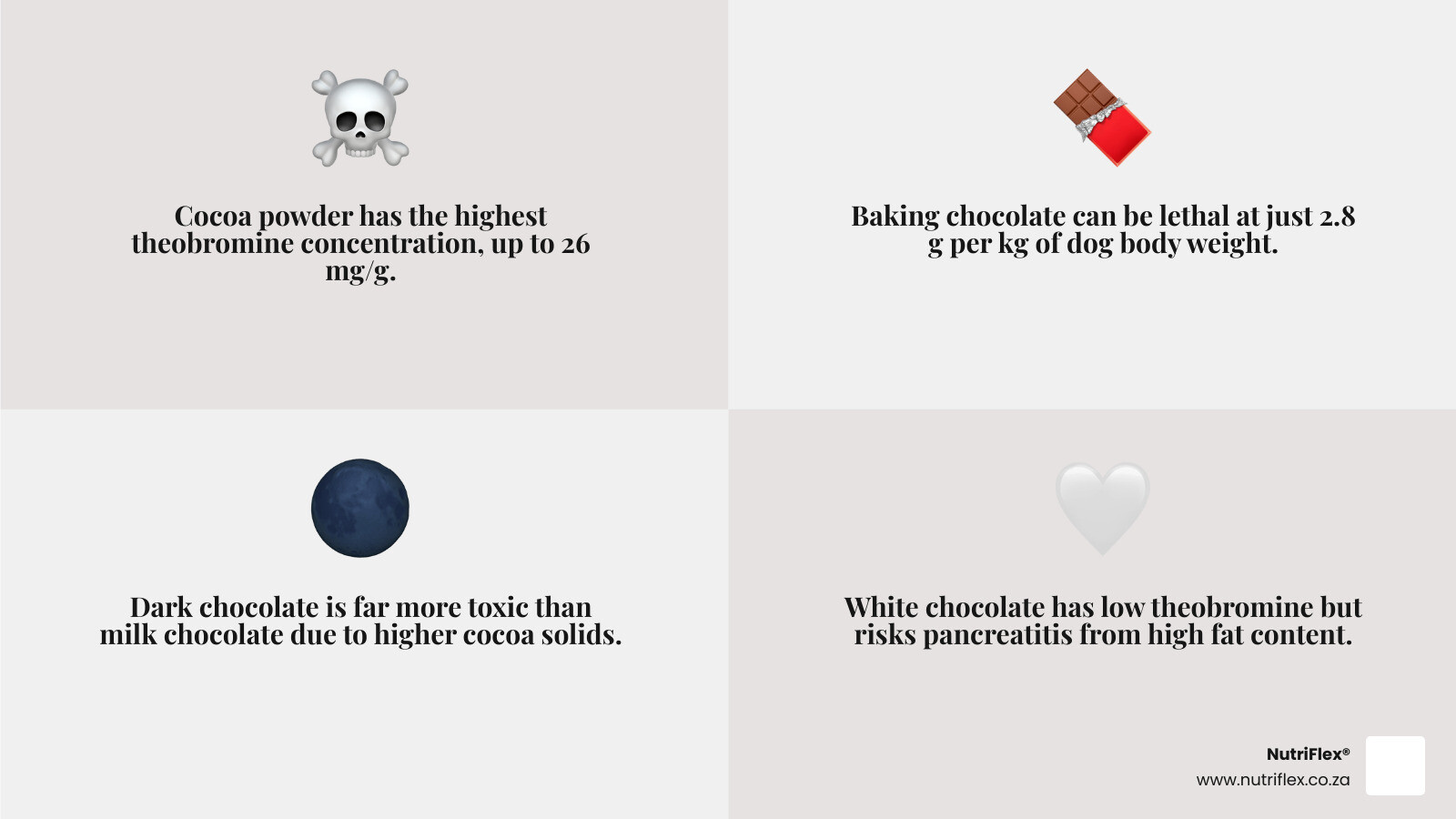
| Cocoa powder | Extremely high | Most concentrated source of theobromine |
| Baking chocolate | Extremely high | As little as 2.8 g per kg body weight can be lethal |
| Dark chocolate | High | Far more toxic than milk chocolate |
| Milk chocolate | Moderate | Still toxic; lower concentration but risky |
| White chocolate | Low but not zero | High fat content risks pancreatitis |
Key facts at a glance:
- Chocolate contains two toxic compounds: theobromine and caffeine
- Dogs metabolise these compounds far more slowly than humans, causing a dangerous build-up
- Darker chocolate = higher toxicity
- Even non-toxic doses can cause vomiting, diarrhoea or pancreatitis due to fat and sugar content
- Clinical signs can appear anywhere from 2 to 24 hours after ingestion
If your dog has just eaten chocolate, do not wait for symptoms. Contact your vet immediately.
I’m Sharon Milani, co-founder of NutriFlex and a passionate advocate for evidence-based pet health in South Africa, and my experience raising and supporting dogs through serious health challenges has given me first-hand insight into why keeping dogs away from toxins like chocolate is only one part of a broader commitment to their long-term wellbeing. In this guide, I’ll walk you through everything you need to know about chocolate toxicity so you can act quickly, confidently and wisely if your dog is ever at risk.
Why is Chocolate Poisonous to Dogs?
The reason chocolate is so dangerous for our canine companions comes down to chemistry and metabolism. Chocolate is derived from the roasted seeds of Theobroma cacao, which naturally contain certain alkaloids known as methylxanthines. Specifically, these are theobromine and caffeine.
While humans can enjoy a bar of dark chocolate without a second thought, dogs lack the specific metabolic pathways to break down these chemicals efficiently. In a human body, theobromine is processed and excreted relatively quickly. In a dog, the half-life of theobromine is incredibly long, meaning it stays in their system for an extended period, leading to a toxic build-up.
These compounds act as powerful stimulants. They affect the central nervous system, increase the heart rate and act as a diuretic. When a dog ingests chocolate, the theobromine and caffeine cause a massive release of adrenaline and interfere with the way cells handle calcium. This leads to overstimulation of the heart and muscles.
In the South African veterinary context, we see many cases where dogs present with muscle tremors, a racing heart and extreme restlessness after raiding a pantry. The stimulant effect is not just a “sugar rush” but a physiological crisis that can lead to heart failure or life-threatening seizures if the dose is high enough.
Is Any Amount of Chocolate OK for Dogs?
We often hear pet owners ask if a tiny crumb of chocolate ok for dogs might be acceptable. While a single chocolate chip might not be fatal for a 40 kg Boerboel, we maintain that no amount of chocolate is truly safe. The risk level is determined by the concentration of cocoa solids in the product.
The darker and more bitter the chocolate, the more dangerous it is. This is because the toxic methylxanthines are found in the cocoa solids, not the milk or sugar.
- Cocoa Powder and Baking Chocolate: These are the most dangerous. They contain the highest concentrations of theobromine.
- Dark and Semi-Sweet Chocolate: These are highly concentrated and can cause severe toxicity in relatively small amounts.
- Milk Chocolate: While it has lower levels of cocoa solids, it still contains enough theobromine to be dangerous, especially for smaller breeds or if eaten in large quantities.
- White Chocolate: This contains negligible amounts of theobromine because it is made from cocoa butter rather than solids. However, it is still not chocolate ok for dogs because it is loaded with fats and sugars that can trigger a painful and dangerous condition called pancreatitis.
To understand the specific risk for your pet, we always recommend using a Dog Chocolate Toxicity Calculator. This tool allows you to input your dog’s weight and the type of chocolate consumed to see if they have reached a toxic threshold. According to the Merck Veterinary Manual on chocolate toxicosis, the concentrations of these toxins vary significantly, making precise calculation essential for a proper veterinary response.

How much chocolate ok for dogs depends on size
Toxicity is always relative to body weight. A dose that might make a Yorkie extremely ill might only cause mild stomach upset in a Great Dane. Veterinarians use metric dosage standards to determine the level of risk:
- 20 mg of methylxanthines per kg of body weight: This is the threshold where we typically start seeing mild clinical signs like vomiting, diarrhoea and increased thirst.
- 40 to 50 mg per kg of body weight: At this level, cardiac symptoms usually begin. You may notice a racing heart (tachycardia) or irregular heart rhythms.
- 60 mg per kg of body weight or higher: This is a critical zone where neurological signs such as tremors and seizures are likely to occur.
For perspective, a 13 kg dog (roughly the size of a Cocker Spaniel) only needs to eat about 3.7 grams of cocoa powder or 56 grams of dark chocolate to reach a toxic level. In contrast, it would take about 140 grams of milk chocolate to reach that same level of toxicity. Because small breeds have such a low body mass, even a small piece of a high-quality dark chocolate bar can be a medical emergency.
Is white chocolate ok for dogs?
As mentioned, white chocolate contains very little theobromine. However, it is far from being a healthy treat. White chocolate is primarily made of cocoa butter, sugar and milk solids. The extremely high fat content is a major concern for dogs.
Dogs are highly sensitive to dietary fat. Ingesting a large amount of fat in one sitting can cause the pancreas to become inflamed. Pancreatitis is an incredibly painful condition that often requires hospitalisation, intravenous fluids and intensive pain management.
If you want to give your dog a “chocolate-like” experience without the risk, look for a treat featuring carob. Carob is a naturally sweet, caffeine-free and theobromine-free alternative that is perfectly safe for dogs and often used in gourmet dog bakeries across South Africa.
Symptoms and Timeline of Chocolate Poisoning
One of the most challenging aspects of chocolate ingestion is that the symptoms do not always appear immediately. It can take anywhere from 2 to 12 hours for the first signs to manifest. Because theobromine stays in the system so long, symptoms can persist for up to 72 hours.
| Clinical Sign | Severity | What it looks like |
|---|---|---|
| Vomiting and Diarrhoea | Mild to Moderate | Often the first sign; may contain chocolate or wrappers |
| Restlessness and Hyperactivity | Moderate | The dog cannot settle; pacing and panting |
| Increased Urination | Moderate | Theobromine acts as a diuretic, causing frequent peeing |
| Racing Heart Rate | Severe | The heart feels like it is drumming against the chest wall |
| Muscle Tremors | Severe | Involuntary shaking or twitching |
| Seizures | Critical | Full body convulsions; requires immediate vet intervention |
| Collapse | Critical | The dog is unable to stand; pale gums; emergency |
The timeline is critical. If you catch your dog within the first 2 hours of ingestion, a veterinarian can often induce vomiting to remove the chocolate before it is fully absorbed. Once the chocolate moves into the small intestine, treatment becomes much more complicated. For more details on what to watch for, the AKC provides an excellent breakdown of signs of chocolate poisoning.
What to Do if Your Dog Eats Chocolate
If you suspect your dog has raided the chocolate stash, do not wait for them to start vomiting. Time is of the essence.
- Identify the Chocolate: Try to find the wrapper. We need to know if it was dark, milk, white or baking chocolate.
- Estimate the Amount: How much was in the packet before? How much is left?
- Call Your Vet: Phone your local Cape Town or Western Cape vet immediately. If it is after hours, head straight to an emergency veterinary clinic.
- Call a Helpline: If you are unsure of the risk, you can contact the Pet Poison Helpline or the Animal Poison Control Center for professional advice.
When you arrive at the vet, they will likely perform several steps to decontaminate your dog:
- Induced Vomiting: Using specific medication (like apomorphine), the vet will make the dog bring up the stomach contents. Never try to induce vomiting at home with hydrogen peroxide unless specifically instructed by a vet, as this can cause severe stomach ulcers.
- Activated Charcoal: This is a liquid given to the dog that binds to any remaining toxins in the digestive tract, preventing them from being absorbed into the bloodstream.
- Intravenous Fluids: Fluids help flush the toxins through the kidneys and keep the dog hydrated.
- Heart Monitoring: In severe cases, the vet will use an ECG to monitor for heart arrhythmias and may give medications to slow the heart rate or stop seizures.
Prevention and Safe Alternatives
The best way to handle chocolate toxicity is to prevent it from happening in the first place. In South Africa, we see a massive spike in chocolate poisoning cases during the festive season and Easter.
- Store Chocolate Securely: Dogs have an incredible sense of smell and can sniff out a chocolate bar inside a handbag or a cupboard. Store all sweets in high, lidded containers.
- Holiday Awareness: During Easter egg hunts, ensure the dog is kept in a separate area or on a lead until every last egg is accounted for. At Christmas, be mindful of chocolate-containing gifts under the tree.
- The “Leave It” Command: This is one of the most important safety commands you can teach. It can save your dog’s life if you drop a piece of chocolate on the kitchen floor.
- Crate Training: If you cannot supervise your dog, a crate provides a safe “den” where they cannot get into trouble. You can find more information in this crate training guide.
- Safe Distractions: Instead of sharing your snacks, give your dog a stuffed chew toy filled with dog-safe peanut butter (check for no xylitol) or mashed pumpkin.
Frequently Asked Questions about Chocolate Toxicity
How long does it take for symptoms to show?
Symptoms usually start within 2 to 12 hours, but in some cases, it can take up to 24 hours. The peak of the clinical signs usually occurs when the toxins reach their highest concentration in the bloodstream. If your dog has eaten chocolate, they should be monitored closely for at least 24 to 48 hours.
Can a small piece of chocolate kill a dog?
It depends entirely on the type of chocolate and the size of the dog. A 28 gram (1 ounce) square of unsweetened baking chocolate contains enough theobromine to potentially kill a small 4.5 kg dog. However, a 28 gram piece of milk chocolate is unlikely to be fatal for a large dog, though it will still cause stomach upset.
Is carob safe for dogs?
Yes, carob is 100% safe for dogs. It does not contain theobromine or caffeine. It is naturally sweet and contains healthy fibres and vitamins. It is the perfect way to let your dog join in on the “treat” culture without any of the risks associated with real chocolate.
Conclusion
While the question of is chocolate ok for dogs always results in a firm “no”, being informed helps you remain calm in an emergency. Protecting your pet involves a combination of vigilant prevention and quick action.
At NutriFlex, we are dedicated to the holistic health of South African pets. Our premium, vet-approved supplements are made with 100% pure, human-grade natural ingredients in our Cape Town facilities. While we focus on daily wellness and joint support, we know that a healthy body is better equipped to recover from accidental toxin exposure. By providing your pet with high-quality nutrition and functional foods, you are building a foundation of resilience.
If you suspect your dog has eaten something they shouldn’t have, please don’t wait. Use our tools and contact your vet immediately.
Calculate your dog’s risk with our Chocolate Toxicity Calculator
