
Why Pumpkin Seeds for Puppies Deserve a Spot in Your Pup’s Bowl
Pumpkin seeds for puppies are a natural, nutrient-rich snack that can safely support your growing pup’s digestion, coat, and overall health — when prepared and portioned correctly.
Quick answer:
- ✅ Pumpkin seeds are non-toxic for puppies
- ✅ Best served ground, plain, and unsalted
- ✅ Safe dose: 1 ground seed per 10 lbs of body weight per day
- ✅ Shells should be removed to prevent choking
- ⚠️ Always introduce slowly and check with your vet first
As a devoted pet parent, you want every bite your puppy takes to count. Pumpkin seeds have been used in holistic pet care for years — and for good reason. They pack a surprising amount of nutrition into a tiny seed: healthy fats, protein, fiber, zinc, magnesium, and an amino acid called cucurbitin that may even help with intestinal parasites.
But puppies aren’t just small adult dogs. Their digestive systems are still developing, which means how you prepare and how much you serve matters a lot.
This guide breaks down everything you need to know — from nutrition and safe preparation to portion sizes and potential risks — so you can make a confident, informed choice for your pup.
Are Pumpkin Seeds Safe for Puppies?
The short answer is a resounding yes! Pumpkin seeds for puppies are entirely non-toxic. Unlike some human snacks that are hidden dangers (looking at you, macadamia nuts and raisins), pumpkin seeds are essentially “superfood” nuggets. However, safety is all in the delivery.

While the seeds themselves are safe, the way they come out of the pumpkin is not puppy-ready. Raw seeds straight from the gourd are slippery and covered in pulp, which can be a mess for a puppy’s developing digestive tract. More importantly, the hard outer shells (hulls) pose a significant choking hazard, especially for smaller breeds. These shells are also incredibly fibrous and difficult to break down, which can lead to indigestion or even a physical blockage in a tiny gut.
To ensure safety, we always recommend removing the shells. You can find pre-shelled seeds (often called pepitas) at the store, but ensure they are plain and unseasoned. If you are preparing them at home, boiling the seeds or rolling them with a rolling pin can help separate the tough outer shell from the nutritious green kernel inside. For more detailed guidance on navigating your pup’s early health milestones, explore our guide to puppy health and development.
Introducing Pumpkin Seeds for Puppies Safely
When it comes to a puppy’s diet, “slow and steady” isn’t just a cliché; it’s a rule. A puppy’s microbiome is like a new garden—it’s sensitive to sudden changes. Start by introducing just a tiny fraction of a ground seed.
Monitoring is key. After the first taste, keep a close eye on your puppy for the next 24 hours. You are looking for two things: allergic reactions and stool consistency. If the stool becomes loose or “runny,” it’s a sign their system isn’t quite ready for that much fiber or fat yet. Consistency is a great indicator of whether your pup is absorbing those must-have nutrients for their first year.
When to Avoid Pumpkin Seeds for Puppies
There are times when even a superfood should stay off the menu. If your puppy has a known “sensitive stomach” or is currently recovering from a bout of diarrhea, hold off on the seeds. Because pumpkin seeds are high in fat (nearly 49% by weight when dried), they can be a trigger for puppies predisposed to pancreatitis—a painful inflammation of the pancreas.
Additionally, never feed your puppy store-bought pumpkin seeds intended for human snacking. These are almost always loaded with sodium, garlic powder, or onion powder. Salt is hard on puppy kidneys, and garlic/onions are toxic to dogs. Always stick to plain, organic, or home-prepared seeds.
Nutritional Benefits of Pumpkin Seeds for Puppies
Why go through the effort of shelling and grinding these little seeds? Because the nutritional payoff is massive. Pumpkin seeds for puppies act as a natural multivitamin. They are one of the few plant-based sources that offer a highly bio-available profile of minerals and fatty acids that puppies often lack in standard commercial kibble.
These seeds are rich in:
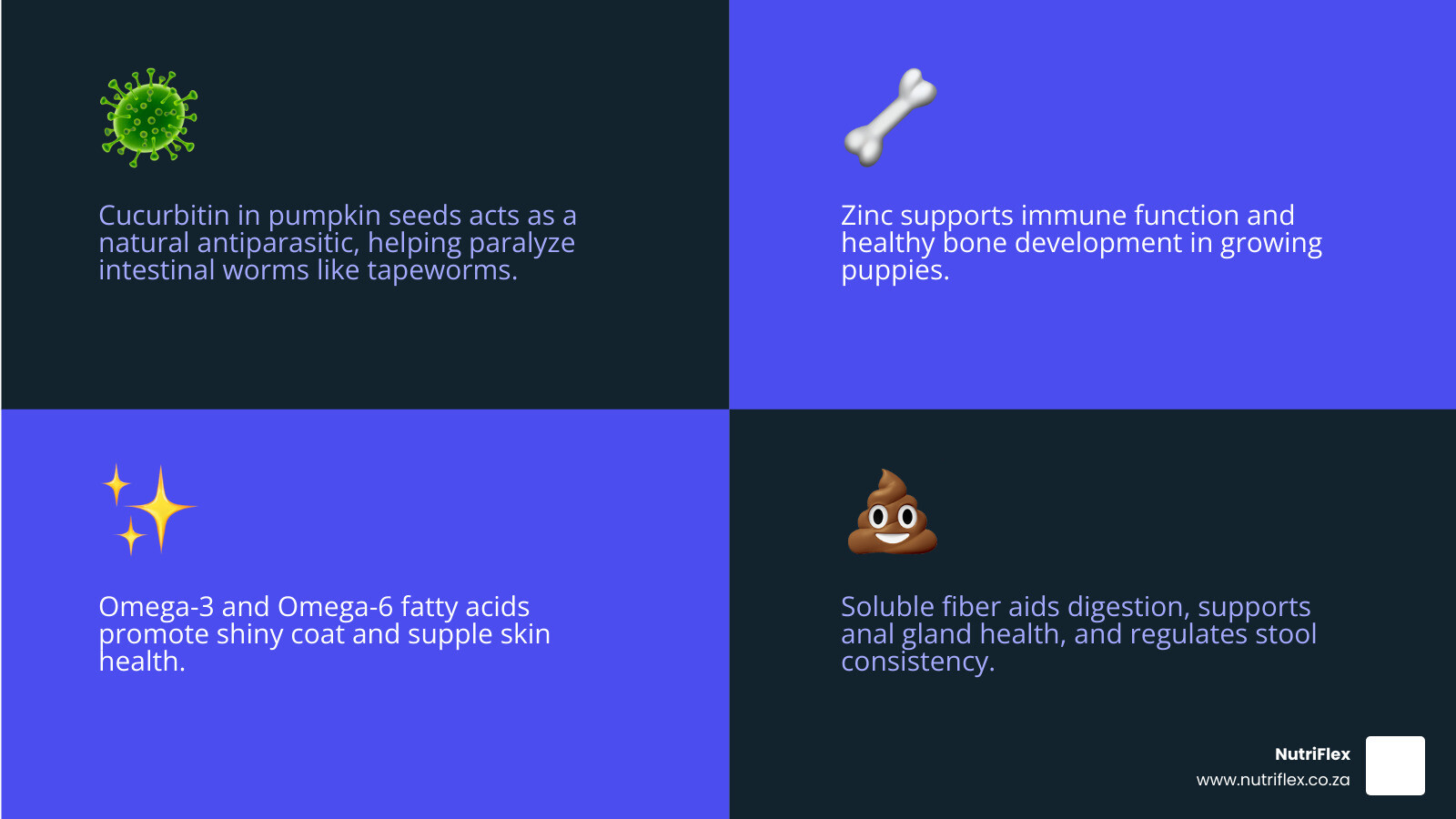
- Zinc: Essential for immune function and skin health.
- Magnesium: Supports bone density and energy production.
- Iron: Vital for carrying oxygen in the blood, keeping your puppy energetic.
- Antioxidants: Vitamin E and carotenoids help protect cells from damage and reduce inflammation. You can find more scientific research on pumpkin seed antioxidants that highlights these protective properties.
Essential Fats and Proteins
Puppies are in a state of constant “building.” They are building muscle, building brain tissue, and building a coat. Pumpkin seeds are approximately 30% protein, providing the amino acid building blocks necessary for growth.
Perhaps even more importantly, they are a powerhouse of Omega-3 and Omega-6 fatty acids. These “healthy fats” are what give your puppy that enviable “show-dog” shine. Beyond aesthetics, these fats support brain chemistry and joint function, ensuring your pup is as smart as they are shiny.
Fiber and Digestive Wellness
If you’ve ever dealt with a “backed up” pup, you know how important fiber is. Pumpkin seeds contain soluble fiber, which acts as a prebiotic. This means it feeds the “good” bacteria in your puppy’s gut.
Fiber also plays a crucial role in anal gland health. By adding bulk to the stool, pumpkin seed fiber helps the anal glands express naturally during bowel movements, preventing the dreaded “scooting” across your carpet. If you notice your pup struggling, it might be one of the signs your puppy needs digestive support.
Natural Parasite Support and Deworming
One of the most fascinating traditional uses for pumpkin seeds for puppies is as a natural dewormer. This isn’t just an old wives’ tale; there is some interesting biology behind it. The secret weapon is an amino acid called cucurbitin.
Cucurbitin has been shown to paralyze intestinal parasites like tapeworms and roundworms. When the worms are paralyzed, they lose their grip on the intestinal wall and are naturally flushed out of the system during a bowel movement. This makes pumpkin seeds a popular natural dewormer for dogs.
The Role of Cucurbitin
While cucurbitin is toxic to parasites and their eggs, it is perfectly safe for your puppy. In holistic health circles, this is often used as a preventive measure or a gentle “cleanse.” It is particularly effective against tapeworms, which are common in puppies who may have had fleas. However, it’s important to remember that while seeds are a great supportive tool, they shouldn’t be the only line of defense in a severe infestation.
Timing and Effectiveness
Some holistic practitioners suggest that deworming with pumpkin seeds is most effective when timed with lunar cycles. The theory is that parasites are more active and mobile during the full moon, making them more susceptible to the paralyzing effects of the cucurbitin.
For the best results, use freshly ground seeds. The oils and compounds in the seeds can go rancid or lose potency once exposed to air, so grinding them right before mealtime is the gold standard. Always consult your vet if you suspect a heavy worm burden, as puppies can become dehydrated or anemic very quickly from parasites.
Feeding Guidelines: Pumpkin Seeds for Puppies
How many seeds are too many? Since puppies are small and their caloric needs are specific, we follow the 10% rule: treats (including pumpkin seeds) should never make up more than 10% of your puppy’s total daily caloric intake.
The Golden Dosing Rule:
- 1 ground pumpkin seed per 10 pounds (approx. 4.5kg) of body weight daily.
If you have a tiny 5-pound puppy, they should only receive half a seed. Because they are nutrient-dense and high in fat, overdoing it can lead to unwanted weight gain or an upset tummy.
Preparation Methods
To get the most out of pumpkin seeds for puppies, preparation is everything. Here is how we recommend doing it:
- Raw & Shelled: If you buy them raw, ensure they are organic and fresh.
- Dry Roasting: You can lightly roast seeds at 150-160°C for about 15-20 minutes. Do not use oil, salt, or butter. Roasting makes them easier to grind and can improve the flavor.
- Grinding: This is the most important step for puppies. Use a coffee grinder, spice blender, or mortar and pestle to turn the seeds into a fine powder. This eliminates choking risks and makes the nutrients much easier for a puppy’s short digestive tract to absorb.
Puppy-Friendly Recipes
Looking for creative ways to serve these “power seeds”? Try these:
- The Superfood Sprinkle: Simply dust the ground seed powder over their regular breakfast.
- KONG Stuffing: Mix ground pumpkin seeds with a little plain, unsweetened pumpkin puree or xylitol-free peanut butter and stuff it into a KONG toy.
- Puppy Smoothie: Blend a teaspoon of plain yogurt, half a banana, and the daily dose of ground pumpkin seeds for a refreshing treat.
- Frozen “Pupsicles”: Mix ground seeds into water or low-sodium chicken broth and freeze in ice cube trays for a crunchy summer snack.
Potential Risks and Side Effects
While we love the benefits, we have to be realistic about the risks. The high fat content is the biggest hurdle. If a puppy eats a whole bag of seeds, they are likely to experience “greasy” diarrhea or vomiting.
Another risk is spoilage. Because pumpkin seeds are 49% fat, those fats can oxidize and go rancid quickly. Always store your seeds in an airtight container in the fridge or freezer. If they smell “off” or sour, toss them out!
Monitoring for Allergic Reactions
Just like humans, some puppies can have individual food sensitivities. While rare, keep an eye out for:
- Facial swelling or “puffy” eyes.
- Hives or red, itchy skin.
- Excessive drooling.
- Stumbling or lethargy.
If you see these signs, stop feeding the seeds immediately. For more help, check out this guide on identifying hives in dogs.
When to Consult a Vet
We always recommend a quick chat with your vet before adding any new supplement to your puppy’s routine, especially if:
- Your puppy is on a prescription diet for stones or urinary issues.
- Your puppy has persistent diarrhea that doesn’t clear up in 24 hours.
- You suspect a heavy parasite infestation (seeds are a supplement, not a medical “cure-all”).
Frequently Asked Questions about Pumpkin Seeds
Can puppies eat pumpkin seeds with the shells?
No, we don’t recommend it. Puppy digestive systems are still learning the ropes, and those tough, fibrous shells are a major choking hazard and can cause intestinal irritation. Always shell them first!
How many pumpkin seeds can I give my 10-pound puppy?
For a 10-pound (4.5kg) puppy, the safe daily limit is one ground seed. If they handle that well, you can stick to that as a daily nutritional boost.
Can pumpkin seeds replace my puppy’s regular dewormer?
While pumpkin seeds are a fantastic natural support and can help paralyze certain worms, they should not replace the deworming schedule recommended by your vet. Think of them as a “booster” for your pup’s natural defenses rather than a total replacement for medical care.
Conclusion
At NutriFlex, we believe in the power of nature to support our pets’ health from the very beginning. Pumpkin seeds for puppies are a prime example of how a simple, human-grade ingredient can make a world of difference in a growing dog’s life. By providing essential minerals, healthy fats, and natural parasite support, you’re giving your puppy a head start on a long, vibrant life.
Our mission is to provide vet-approved, 100% natural supplements made right here in our Cape Town facilities. We never use fillers or synthetics—just pure, potent ingredients that work. If you’re looking to further support your pup’s tummy, you can shop NutriFlex Gut and Digestive Health Supplements to keep that tail wagging and that tummy happy. Happy snacking!
