
When Your Dog Won’t Stop Scratching: Natural Relief That Actually Works
Dog skin allergy treatment natural options are more effective — and more accessible — than most pet owners realize. Here’s a quick overview of the best natural approaches:
Top natural treatments for dog skin allergies:
- Bovine colostrum – modulates the immune response via proline-rich polypeptides (PRP)
- Medicinal mushrooms – beta-glucans calm overactive immune reactions
- Quercetin – a natural antihistamine that blocks histamine release
- Probiotics – support gut health, where nearly 90% of the immune system lives
- Omega-3 fatty acids (fish oil) – rebuild the skin barrier in 4-8 weeks
- Oatmeal baths – immediate topical relief for inflamed, itchy skin
- Apple cider vinegar (diluted) – antifungal and antibacterial rinse for mild irritation
- Dietary changes – limited-ingredient or novel protein diets to eliminate food triggers
- Environmental management – paw wiping, air filters, flea prevention
You know the sounds. The scratching at 2am. The wet, rhythmic licking of paws. The frantic chewing at fur until the skin is raw.
If your dog is constantly itchy, you’re not alone — and you’re right to look for answers beyond just steroids or antihistamines.
Skin allergies are one of the most common — and most frustrating — conditions in dogs. They can stem from what your dog eats, what they walk through, or even a single flea bite. And conventional treatments like corticosteroids, while sometimes necessary, come with real long-term risks including immune suppression, diabetes, and adrenal issues.
The good news? There’s a growing body of evidence supporting natural, holistic approaches that address the root cause of allergic responses — not just mask the symptoms.
This guide walks you through what’s actually working, what the science says, and how to build a safe, effective natural allergy plan for your dog.
Understanding the Root Causes of Canine Itching
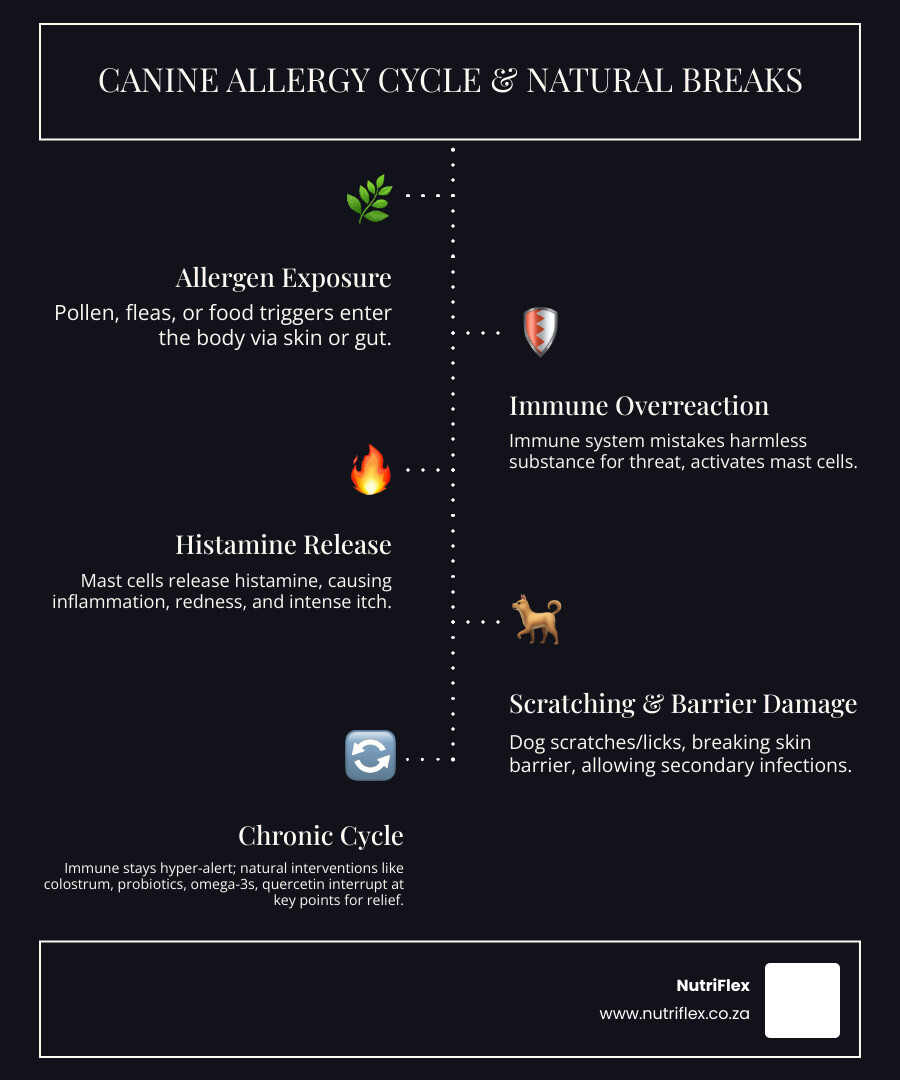
To find the right dog skin allergy treatment natural solution, we first have to play detective. Itching isn’t a disease; it’s a symptom. When your dog’s immune system overreacts to a harmless substance, it triggers an inflammatory cascade that results in that maddening “itch.”

According to the AKC, chronic itching and scratching can have many causes. The most frequent culprits we see include:
- Flea Allergy Dermatitis (FAD): This is perhaps the most common cause. Many dogs are highly allergic to flea saliva. A single bite can trigger a week of intense itching.
- Environmental Allergens (Atopy): Pollen, mold spores, dust mites, and grasses are major triggers. These are often seasonal but can become year-round issues.
- Food Sensitivities: While less common than environmental factors, reactions to specific proteins (like beef or chicken) or fillers can manifest as red and inflamed skin.
- Contact Dermatitis: This occurs when a dog walks on a floor cleaned with harsh chemicals or rolls in a specific type of mulch.
Identifying Typical Allergy Symptoms
Allergies don’t just look like a quick scratch behind the ear. They are often systemic and persistent. Watch for:
- Licking Paws: This is a classic sign of environmental allergies. The paws trap pollen and dust, leading to irritation.
- Redness and Rashes: Often found on the belly, “armpits,” and groin.
- Watery Eyes and Sneezing: Similar to human hay fever.
- Hair Loss: Often caused by the physical trauma of scratching and biting.
- Hot Spots: These are localized areas of intense inflammation that erupt suddenly. If your dog creates a raw, oozing sore from licking, they likely have a hot spot.
Dog Skin Allergy Treatment Natural Supplements and Superfoods
When we talk about a “holistic” approach, we mean looking at the dog as a whole. Instead of just stopping the itch, we want to balance the immune system so it stops overreacting in the first place.
Bovine Colostrum: The Immune Modulator
Bovine colostrum is often called “liquid gold.” It’s the first milk produced by cows, and it is packed with antibodies and growth factors. The “magic” ingredient for allergies is Proline-Rich Polypeptide (PRP). Research shows that PRP can either stimulate an underactive immune system or, more importantly for allergy sufferers, calm an overactive one. It helps inhibit the immune cells that ramp up the allergic response.
- Dosage: A common starting point is 1/8 tsp of powdered colostrum per 11kg (25 lbs) of body weight, given twice daily on an empty stomach.
Medicinal Mushrooms: The Power of Beta-Glucans
Mushrooms like Reishi, Turkey Tail, and Cordyceps contain beta-glucans. These complex sugars act as “immunomodulators.” They don’t just suppress the immune system; they help it communicate better. This is vital for allergy triggers and treatment because it helps the body distinguish between a real threat (like a virus) and a fake one (like ragweed).
Quercetin: Nature’s Benadryl
Quercetin is a flavonoid found in many fruits and vegetables. It has potent antioxidant and anti-inflammatory properties. Most importantly, it inhibits the release of histamine from mast cells.
- Dosage: A general rule is 8mg per pound of body weight. For example, a 10kg dog might receive roughly 160mg.
Effective Dog Skin Allergy Treatment Natural Ingredients for Gut Health
Did you know that nearly 90% of your dog’s immune system resides in their gut? This is why gut health is inseparable from skin health.
Studies demonstrate that probiotics can significantly reduce allergy symptoms in dogs. By maintaining a healthy microbiome, you reduce “leaky gut” syndrome, which can allow allergens to enter the bloodstream and trigger systemic inflammation. We recommend looking for soil-based organisms (SBOs) or multi-strain probiotics that can survive the harsh acidic environment of the dog’s stomach. Supporting the digestive tract is a foundational itchy skin remedy.
The Role of Omega-3s and Niacin
Omega-3 fatty acids, specifically EPA and DHA found in fish oil, are essential for skin health. They don’t just reduce inflammation; they actually help repair the skin’s physical barrier.
Niacin (Vitamin B3) is another unsung hero. It helps the skin retain moisture and strengthens the lipid barrier, making it harder for environmental allergens to penetrate the skin.
| Source | Benefits | Considerations |
|---|---|---|
| Anchovy/Sardine Oil | High EPA/DHA; low heavy metals | Best for daily supplementation |
| Farmed Salmon Oil | Widely available | Can be lower quality; sustainability concerns |
| Krill Oil | Highly bioavailable | Often more expensive |
| Plant-Based (Flax) | Omega-3 (ALA) | Dogs struggle to convert ALA to EPA/DHA |
Note: It typically takes 4-8 weeks of consistent fish oil supplementation to see a visible difference in the skin and coat.
Safe Home Remedies for Immediate Itch Relief
While supplements work from the inside out, sometimes your dog needs relief right now. These home remedies are safe, effective, and uses ingredients you likely already have.
Oatmeal Baths
Colloidal oatmeal (finely ground oatmeal) has been used for centuries to soothe itchy skin. It contains avenanthramides, which are potent anti-inflammatory agents.
- How to: Grind plain, unflavored oats into a fine powder. Mix into lukewarm water until it looks milky. Let your dog soak for 5-10 minutes. Rinse well and towel dry gently.
Apple Cider Vinegar (ACV)
ACV is excellent for balancing skin pH and acting as a mild antifungal. This is particularly helpful for dogs prone to yeast infections in their paws.
- How to: Mix a 50/50 solution of ACV and water. Spray on itchy spots or use as a paw soak.
- CRITICAL: Never use ACV on open wounds, raw skin, or hot spots. It will sting!
Coconut Oil
Coconut oil contains lauric acid, which has antibacterial and antifungal properties. It’s a great topical moisturizer for dry, flaky skin.
- How to: Massage a small amount directly into the skin. It’s 100% safe if they lick it off!
Herbal Solutions and Topical Care
There are several herbs that act as natural healers for the skin:
- Licorice Root: Known as a “natural corticosteroid” without the side effects, licorice root helps reduce swelling and itching.
- Calendula: Often found in natural skincare, calendula is incredibly soothing for “angry” red skin.
- Aloe Vera: Use only 100% pure gel (without the yellow latex) to cool hot, irritated patches.
Dietary Shifts and Environmental Management
You cannot out-supplement a bad diet or a toxic environment. If your dog is allergic to beef and you’re feeding a beef-based kibble, no amount of quercetin will fix the problem.
The Elimination Diet
If you suspect food allergies, the gold standard is an elimination diet. This involves switching your dog to a “novel protein” — something they have never eaten before, like venison, kangaroo, or duck — for 8-12 weeks. This gives the immune system time to “reset.” You can learn more about solving allergies with diet to see if this is the right path for your pup.
Preventive Dog Skin Allergy Treatment Natural Strategies
Managing the environment is just as important as managing the dog.
- Paw Wiping: After every walk, wipe your dog’s paws with a damp cloth to remove pollen and grass.
- Air Purification: Use HEPA filters to reduce dust mites and mold in the home.
- Humidity Control: Use a dehumidifier in summer to prevent mold and a humidifier in winter to prevent dry, itchy skin. These are simple ways to help a dog with summer allergy problems.
- Wash Bedding: Wash your dog’s bed weekly in hot water using a fragrance-free, hypoallergenic detergent.
Frequently Asked Questions about Natural Allergy Care
When should I consult a vet instead of using natural remedies?
Natural remedies are wonderful for mild to moderate allergies and long-term management. However, you should see a vet immediately if:
- The skin is broken, oozing, or smells “yeasty” (indicating a secondary infection).
- Your dog is in obvious pain or cannot sleep due to itching.
- You see signs of systemic illness like lethargy or loss of appetite.
- The itching is so severe that the dog is self-mutilating.
How long does it take for natural allergy treatments to show results?
Patience is key. While an oatmeal bath provides immediate relief, internal supplements like fish oil, probiotics, and colostrum usually take 4 to 8 weeks to modulate the immune system and show a visible improvement in the skin and coat.
Are essential oils safe for treating dog skin allergies?
Be very cautious. While some oils like Lavender (diluted) can be soothing, many essential oils are toxic to dogs if ingested or applied incorrectly. Always consult a vet or a certified veterinary aromatherapist before using essential oils. Never apply undiluted oils directly to a dog’s skin.
Conclusion
Managing dog allergies naturally isn’t about a single “miracle cure”; it’s about a multi-layered approach that supports the body’s own healing mechanisms. By combining high-quality supplements like bovine colostrum and medicinal mushrooms with gut-healing probiotics and smart environmental changes, you can provide your dog with lasting relief.
At NutriFlex, we believe in the power of nature. Based in Cape Town, we produce premium, vet-approved supplements using only 100% pure, human-grade ingredients. We don’t believe in fillers or synthetics — just the raw power of nature to help your dog thrive.
If you’re ready to stop the scratching and start the healing, explore our range of natural allergy and itch relief products today. Your dog (and your sleep schedule) will thank you!