
Are Human Probiotics Safe for Dogs? What Every South African Pet Owner Should Know
Human probiotics for dogs is a question vets hear often, and the short answer is: it depends on what’s in them.
Here is what you need to know quickly:
| Question | Quick Answer |
|---|---|
| Can dogs take human probiotics? | Yes, but only if they contain no harmful ingredients |
| Are they as effective as dog-specific probiotics? | No, dogs have a different gut microbiome |
| What is the biggest danger? | Xylitol, an artificial sweetener toxic to dogs |
| Are natural sources like plain yogurt safer? | Generally yes, with precautions |
| What is the best option? | Dog-specific probiotic formulations |
Human probiotics are not automatically harmful, but they are not automatically safe either. Many contain ingredients that are fine for people but dangerous for dogs. Even the ones that are technically safe tend to use bacterial strains that do not match the canine gut, which means your dog gets little to no benefit.
This guide walks you through exactly what the risks are, which strains and foods may be appropriate, and when a dog-specific probiotic is the smarter choice.
I’m Sharon Milani, co-founder of NutriFlex® and Director of SmartPack PTY Ltd, South Africa’s first certified human-grade pet supplement range. My work developing species-appropriate formulations for dogs has given me a close understanding of why human probiotics for dogs is such an important topic to get right. In the sections below, I’ll break down the science in plain language so you can make a confident, informed decision for your dog.
Human probiotics for dogs terms explained:
Understanding the Safety of Human Probiotics for Dogs

When we talk about the safety of human probiotics for dogs, we have to look at the biological reality of the canine digestive system. While both humans and dogs rely on a diverse community of bacteria to digest food and support immunity, the specific “residents” of these microbiomes are quite different.
A safety assessment of human-grade supplements reveals that while many are non-toxic, they often act as “transient bacteria” in a dog. This means the bacteria pass through the digestive tract without ever setting up shop or providing long-term benefits. In some cases, introducing a massive dose of bacteria designed for a 70kg human into a 10kg Terrier can lead to temporary digestive upset, including gas, bloating or loose stools.
According to research on Is it Safe to Use Human Probiotics for Dogs?, the primary concern isn’t always the bacteria itself, but the “other” ingredients found in human capsules and gummies. To understand why species-specific microflora matters, we need to look at how these tiny organisms optimise digestive health by interacting with the dog’s unique gut lining.
Dangerous Ingredients in Human Probiotics for Dogs
The most significant risk when giving human probiotics for dogs is xylitol. This artificial sweetener is common in human chewable vitamins and “melt-away” probiotic tablets. In dogs, xylitol causes a rapid insulin release, leading to life-threatening low blood sugar and potential liver failure. Even a small amount can be fatal.
Other hidden dangers include:
- Lactose: Many human probiotics use dairy-based carriers. Since many dogs are lactose intolerant, these can cause severe diarrhoea.
- Artificial Colours and Flavours: Ingredients like chocolate or certain grape-derived flavourings are toxic.
- High Sugar Content: Probiotic gummies are often packed with sugar, which can lead to obesity and metabolic issues.
If you are raising a young dog, it is vital to recognise the signs your puppy needs support before reaching for a human supplement that might contain these toxins.
What to Do if Your Dog Ingests Human Probiotics for Dogs
Accidental ingestion happens. If your dog gets into a bottle of human probiotics, the first step is to check the label immediately for xylitol or birch sugar. If these are present, this is a medical emergency. You should contact a South African emergency veterinary clinic or a poison control centre right away.
If the ingredients are safe but the dose was high, monitor your dog for:
- Vomiting or excessive drooling.
- Severe lethargy.
- Prolonged diarrhoea.
For mild cases of “garbage gut” or temporary upset from safe human supplements, it might be is it time to try dog probiotics specifically formulated to restore balance without the risk of human-grade additives.
Human vs Dog Probiotics: Key Differences
The differences between human and canine probiotics are more than just marketing. They are rooted in physiological variations like stomach pH and gut transit time.
| Feature | Human Probiotics | Dog Probiotics |
|---|---|---|
| Primary Strains | Lactobacillus & Bifidobacterium (human-derived) | Enterococcus faecium & Bacillus coagulans |
| Stomach pH | Higher (less acidic) | Lower (highly acidic) |
| CFU Counts | Often 10 billion to 50 billion+ | Typically 1 billion to 5 billion |
| Target Microbiome | Human large intestine | Canine small and large intestine |
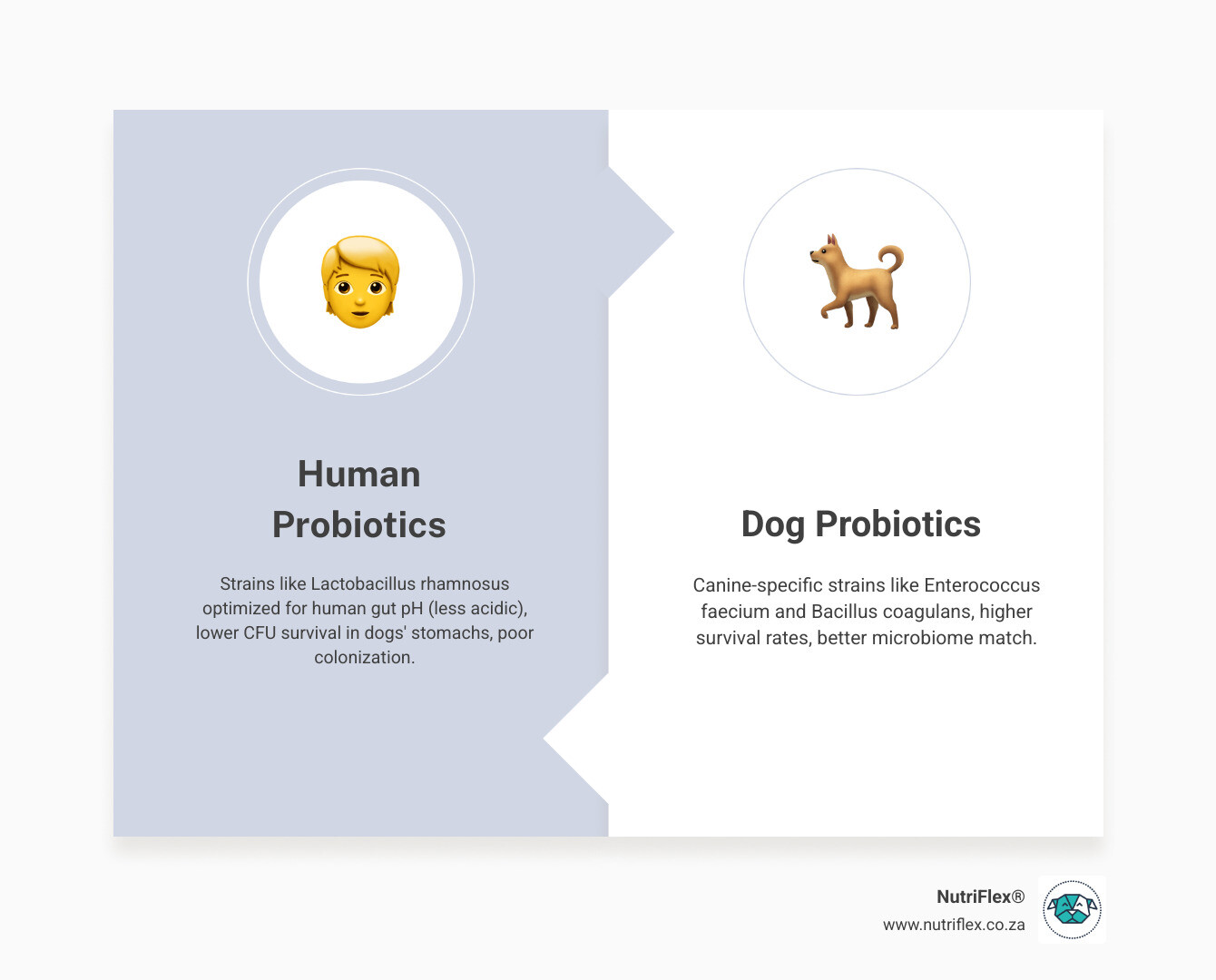
Dogs have a much more acidic stomach environment than we do. This acidity is designed to kill pathogens from raw meat or that “mystery snack” they found in the garden. Unfortunately, it also kills many human probiotic strains before they reach the intestines. Scientific research on canine probiotics suggests that dog-specific supplements are engineered to survive this “acid bath.” Selecting the best dog probiotics ensures the bacteria actually reach their destination alive.
Why Dog-Specific Strains are More Effective
Specific strains like Enterococcus faecium and Bacillus coagulans are the heavy lifters of the canine gut. Unlike many human strains, these are highly effective at colonisation in the dog’s shorter digestive tract. They have higher survival rates against bile and stomach acid, allowing them to crowd out harmful bacteria like Salmonella or E. coli.
When you use prebiotics and probiotics for dogs together, you are providing the “good” bacteria with the fuel they need to thrive. This “synbiotic” approach is far more effective for dogs than using a human supplement that lacks the correct fibre sources for canine-specific microbes.
Safe Human Foods and Strains for Canine Gut Health
While many commercial human supplements are risky, certain human-grade whole foods can be a safe way to introduce human probiotics for dogs. If your dog has a healthy immune system, small amounts of these can be beneficial:
- Plain Yogurt: Must be unsweetened, unflavoured and xylitol-free. Double-check that it contains “live and active cultures.”
- Kefir: This fermented milk drink often contains more diverse strains than yogurt. Start with just a teaspoon to ensure your dog handles the dairy well.
- Fermented Vegetables: Small amounts of plain sauerkraut (cabbage and salt only) can provide Lactobacillus plantarum, but avoid any versions with onions, garlic or excessive spices.
One human strain that is consistently noted for its resilience in dogs is Lactobacillus acidophilus. It helps with nutrient absorption and can support the immune system. However, always remember that optimising digestive health requires consistency, which is often easier to achieve with a measured powder than with varying batches of fermented food.
When to Consult a Veterinarian
You should always speak to your vet before starting any new supplement, especially if your dog is immunocompromised or has a chronic condition. In South Africa, our vets are well-versed in the challenges of local parasites and tick-borne diseases, which can severely impact gut health.
Consult a professional if your dog experiences:
- Chronic diarrhoea or blood in the stool.
- Recovery from a heavy course of antibiotics.
- Severe allergies that manifest as skin hot spots or ear infections.
A vet can help you navigate the category for digestive health to find a solution that won’t interfere with existing medications.
Frequently Asked Questions about Probiotics
Can I give my dog Yakult or yogurt?
You can give your dog a small amount of plain, unsweetened yogurt. However, products like Yakult often contain high amounts of sugar and dairy that can lead to obesity or digestive distress in dogs. While the bacteria in Yakult are safe, the “delivery vehicle” (the sugary drink) is not ideal for canine health.
How long do probiotics take to work in dogs?
It depends on the issue. For acute diarrhoea, you might see improvements within 24 to 48 hours. For chronic issues like skin allergies or anxiety, it can take 4 to 6 weeks of daily supplementation to see a significant change in the microbiome and immune response.
Are human probiotics a waste of money for dogs?
In many cases, yes. Because human strains often fail to colonise the canine gut, you may literally be flushing money down the drain. To avoid this, read our guide on probiotics for dogs: how to waste money to ensure you are investing in a product that works.
Conclusion
While the idea of sharing your human probiotics for dogs comes from a place of love, the biological differences between us make it a risky and often ineffective choice. Between the dangers of xylitol and the lack of strain compatibility, your dog is far better served by a supplement designed specifically for their unique physiology.
At NutriFlex®, we believe that South African pets deserve the same quality standards as their owners. Our digestive and gut health supplements are produced in a certified human-grade facility in Cape Town, ensuring that while the strains are species-specific, the quality is world-class. By choosing an Act 36 registered product, you are choosing safety, efficacy and peace of mind.
Ready to support your dog’s gut health the right way? Shop NutriFlex® Probiotics today and give your best friend the gift of a balanced microbiome.