
Why Collagen Supplements Joint Health Matters for Your Dog
Collagen supplements joint health is one of the most searched topics by pet owners watching their dogs slow down, stiffen up or struggle on the stairs. Here is a quick summary before we go deeper:
Best collagen types for joint health at a glance:
| Collagen Type | Best For | Typical Dose |
|---|---|---|
| Hydrolysed Type I | General joint support, cartilage nourishment | 5 to 10g per day |
| Native (Undenatured) Type II | Osteoarthritis, knee and hip pain, immune modulation | 40mg per day |
| Type I and III (bovine or marine) | Connective tissue, tendons and ligaments | 5 to 10g per day |
Key facts to know:
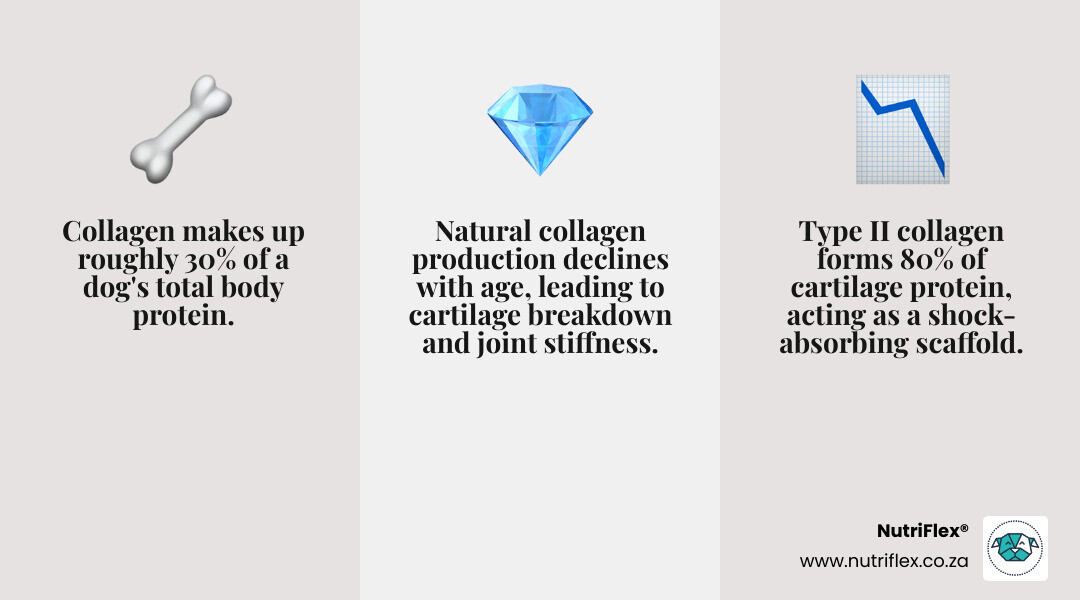
- Collagen makes up roughly 30% of total body protein
- Type II collagen accounts for approximately 80% of the collagen found in cartilage
- Clinical trials suggest benefits appear after at least 3 months of consistent use
- Hydrolysed collagen offers higher bioavailability due to its low molecular weight peptides
- Native Type II collagen works through a different mechanism, modulating the immune response to reduce joint inflammation
Collagen is the structural protein that holds joints, cartilage, tendons and bones together. As dogs age, their natural collagen production declines. The result is cartilage breakdown, stiffness and pain. Supplementing with the right form of collagen may help slow that process and support more comfortable movement.
But not all collagen supplements are equal. The type, source, dose and formulation all affect how well a supplement actually works for joint health. That is exactly what this guide breaks down.
I am Sharon Milani, Director of SmartPack PTY Ltd and co-founder of NutriFlex®, South Africa’s first certified human-grade pet supplement range, and my focus on collagen supplements joint health began when my miniature schnauzer Hector was given no hope at 12 years old with severe arthritis. A collagen-based joint formulation, developed with veterinary input, helped him walk again within days and ultimately thrive to nearly 18 years old. That experience shaped every formulation decision we have made at NutriFlex® since.
Understanding Collagen Supplements Joint Health and Mobility
To understand why collagen supplements joint health is vital, we first need to look at what happens inside the joint capsule. Cartilage is the smooth, rubbery tissue that cushions the ends of bones. Without it, bones would grind against each other, causing the intense pain associated with osteoarthritis.
Collagen provides the structural framework for this cartilage. Specifically, Type II collagen makes up about 80% of the total protein in cartilage tissue. It acts like a scaffold, holding proteoglycans and water in place to create a shock-absorbing cushion. When a dog moves, this cushion compresses and expands. If the collagen framework is weak, the cartilage becomes brittle and begins to flake away.
As dogs age, their ability to produce new collagen slows down significantly. In humans, this decline starts as early as 30 years old, and a similar biological process occurs in our canine companions. When the rate of collagen breakdown exceeds the rate of new production, we see a loss of cartilage integrity and a decrease in joint lubrication. This is where more balanced diets and targeted supplementation become necessary.
In the South African pet health context, many popular large breeds like German Shepherds, Rhodesian Ridgebacks and Labradors are genetically predisposed to joint issues. For these dogs, maintaining collagen levels is not just about comfort. It is about preserving their quality of life.
Choosing Collagen Supplements Joint Health for Senior Dogs
For senior dogs, the goal of supplementation shifts from prevention to management. Osteoarthritis is a major socioeconomic issue in veterinary medicine because as life expectancy increases, so does the prevalence of degenerative joint disease.
Common symptoms in senior dogs include:
- Difficulty rising after rest
- Reluctance to jump into the car or onto the sofa
- Visible stiffness in the hind legs
- Limping or favouring one side
Targeted collagen supplementation helps by supporting the production of synovial fluid, the thick liquid that lubricates the joints. By providing the specific amino acids needed for cartilage repair such as glycine, proline and hydroxyproline we can help maintain the thickness of the synovial fluid and reduce the friction that leads to inflammation.
Types of Collagen for Osteoarthritis and Joint Support
When shopping for collagen supplements joint health, you will encounter several different terms. Understanding these is the difference between buying an effective supplement and wasting money on one that is not absorbed.
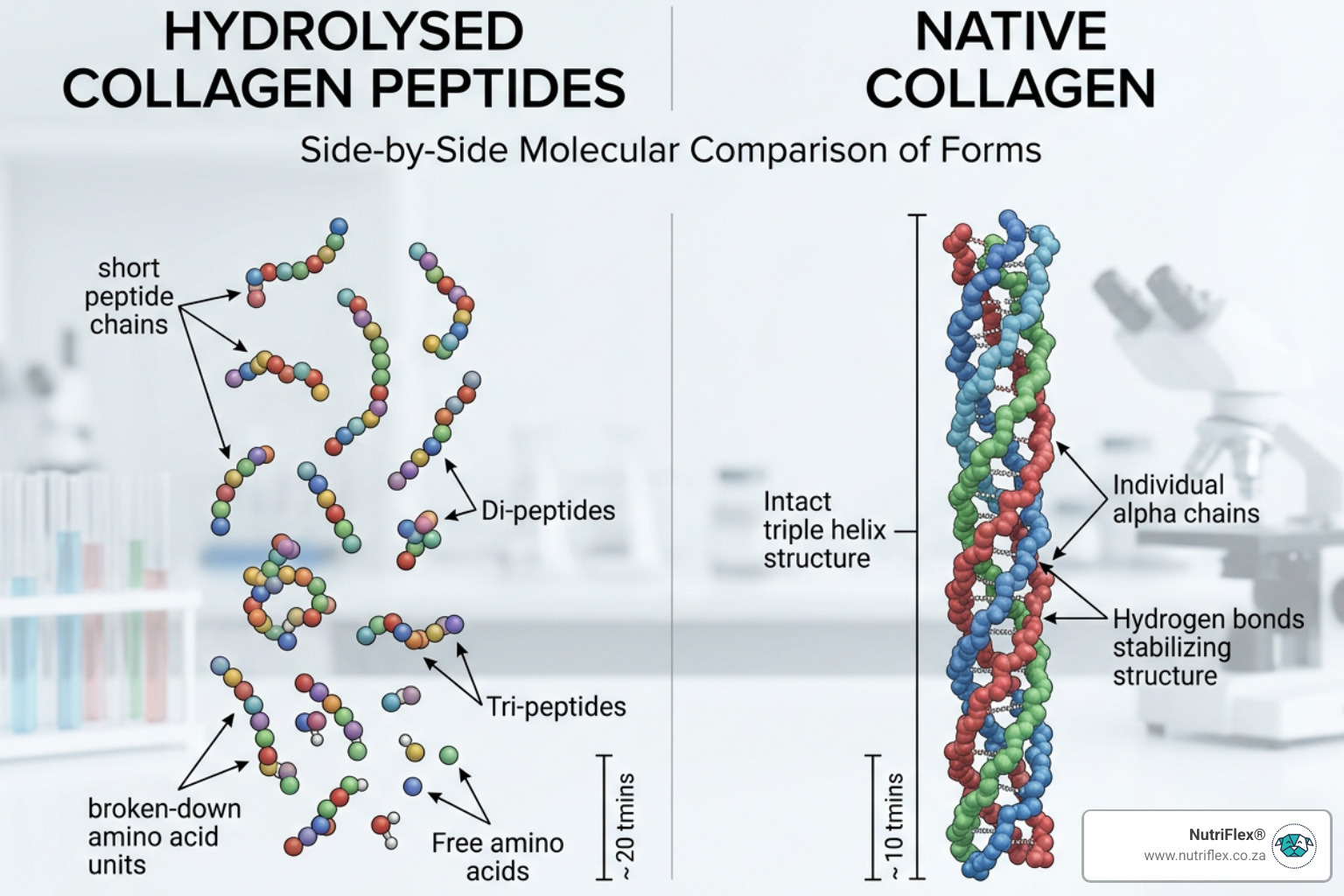
- Hydrolysed Collagen (Collagen Peptides): This is collagen that has been broken down into very small chains of amino acids using enzymes. Because the molecular weight is so low (typically under 6,000 Daltons), it is highly bioavailable. This means it can pass through the intestinal wall and reach the joint tissues where it is needed.
- Native (Undenatured) Type II Collagen: Unlike hydrolysed collagen, this form is kept in its large, triple-helix structure. It is usually derived from chicken sternum cartilage. It does not work by providing “building blocks” but rather by interacting with the immune system in the gut.
- Type I Collagen: Mostly found in bones, skin and tendons. While it is excellent for skin and coat health, it is less specific to cartilage than Type II, though it remains essential for the overall strength of tendons and ligaments.
- Marine vs Bovine vs Poultry: Marine collagen is mostly Type I and is often praised for its small particle size. Bovine collagen (from cattle) provides a mix of Type I and III. Poultry collagen (specifically chicken) is the primary source of Type II, which is the “gold standard” for joint cartilage.
Differences in Effectiveness for Joint Recovery
The effectiveness of a collagen supplement depends heavily on its mechanism of action.
Hydrolysed Collagen works through absorption. Once ingested, the bioactive peptides travel to the joints and accumulate in the cartilage. Research suggests that these peptides stimulate chondrocytes (cartilage cells) to produce more Type II collagen and proteoglycans. This is essentially “feeding” the joint from the inside out.
Native Type II Collagen works through a fascinating process called “oral tolerance.” When a dog swallows small amounts of undenatured Type II collagen, it interacts with the lymphoid tissue in the intestines. This “trains” the immune system to stop attacking the body’s own joint collagen. This reduces inflammation and can be particularly effective for dogs with autoimmune-related joint issues or severe osteoarthritis. Because it works through the immune system, the required dose is much smaller—often just 40mg per day compared to the 5g to 10g required for hydrolysed versions.
Scientific Evidence and Clinical Trials for Joint Recovery
We do not just rely on anecdotes; the science behind collagen supplements joint health is robust. Over the last two decades, multiple clinical trials have examined how collagen affects joint pain and mobility.
- Trial 1: A study involving 81 participants with osteoarthritis found that 10g of collagen hydrolysate daily was significantly better than a placebo in reducing pain after just 2 months.
- Trial 2: A larger trial with 389 participants showed that collagen hydrolysate provided meaningful benefits, particularly for those with severe symptoms at the start of the study, after 24 weeks of use.
- Trial 3: In a study of 250 people with knee osteoarthritis, those taking 10g of collagen hydrolysate daily for 6 months reported significantly greater pain reduction compared to the placebo group.
- Recent Meta-Analyses: A review of 41 studies concluded that collagen supplements effectively support joint health and cartilage repair across various dosages and types.
Osteoarthritis affects millions of individuals and pets worldwide, and these trials suggest that while collagen is not a “cure,” it provides a safe, long-term option for symptom management. Unlike some pharmaceutical anti-inflammatories, collagen has been shown to support the actual structure of the joint rather than just masking the pain. Research on collagen derivatives also highlights that the specific peptide profile of a supplement can influence how well it stimulates cartilage regeneration.
Dosage and Timeline for Collagen Supplements Joint Health Benefits
Patience is key when starting a collagen regimen. Unlike a pharmaceutical painkiller that works in 30 minutes, collagen is a nutritional intervention that requires time to build up in the tissues.
- Hydrolysed Collagen Dose: The standard dose used in most successful trials is 10g per day for a human. For dogs, we typically recommend between 2g and 10g depending on their body weight.
- Native Type II Dose: This is much lower, typically 40mg per day, regardless of the dog’s size, because it works via an immune trigger rather than direct tissue building.
- The Three-Month Rule: Most studies show that while some improvements might be seen in 4 weeks, the most significant benefits for pain, stiffness and mobility appear after 3 to 6 months of daily, consistent use.
Consistency is vital. If you miss days, you interrupt the steady supply of peptides reaching the chondrocytes, which can reset the “clock” on joint recovery.
Comparing Collagen to Glucosamine and Chondroitin
For years, glucosamine and chondroitin have been the go-to joint supplements. While they are still useful, collagen offers a different and often more comprehensive approach.
Glucosamine and chondroitin are components of the joint fluid and cartilage matrix. Think of them as the bricks. Collagen, however, is the steel rebar or the scaffold that holds those bricks together. Without the collagen framework, glucosamine cannot be held effectively within the cartilage.
| Feature | Collagen (Hydrolysed) | Glucosamine / Chondroitin |
|---|---|---|
| Primary Role | Structural scaffold (the frame) | Matrix components (the bricks) |
| Mechanism | Stimulates new collagen production | Provides building blocks for fluid |
| Absorption | Very high (if hydrolysed) | Moderate |
| Scientific Trend | Increasing evidence for regeneration | Mixed results in recent meta-analyses |
| Other Benefits | Skin, coat, gut and bone health | Primarily joint-focused |
At NutriFlex®, we believe in a synergistic approach. While collagen is the foundation, combining it with other functional ingredients like Green Lipped Mussel (rich in Omega-3s) or MSM (for inflammation) can provide a multi-angled attack on joint pain.
It is also important to remember that supplements are only one part of the puzzle. Lifestyle changes, such as keeping your dog at a healthy weight and ensuring they get low-impact exercise (like walking on grass instead of tar), are essential for long-term joint health.
Safety Profile and Potential Side Effects
One of the biggest advantages of collagen supplements joint health is the safety profile. Collagen is a natural food-based protein, and most dogs tolerate it exceptionally well.
Potential mild side effects include:
- A feeling of fullness or stomach heaviness
- Mild digestive upset (if the dose is introduced too quickly)
- Potential allergic reactions if the dog has a known allergy to the source (e.g., beef or fish)
We always recommend a veterinary consultation before starting any new supplement, especially if your dog is on existing medication or has underlying health conditions.
Quality control is another critical factor. Not all collagen is produced to the same standard. Independent testing by organisations like ConsumerLab has shown that while most products are clean, some can contain contaminants like heavy metals if the source material is poor. This is why NutriFlex® products are produced in a certified human-grade facility and are Act 36 registered in South Africa, ensuring they meet strict safety and quality regulations.
Frequently Asked Questions
How long does it take for collagen to work for joints?
Most pet parents notice a shinier coat and slightly better mobility within 3 to 4 weeks. However, for chronic joint issues and deep cartilage support, you should expect to wait 8 to 12 weeks of daily use to see the full therapeutic effect.
Can dogs take human collagen supplements?
Technically, pure hydrolysed collagen is the same for humans and dogs. However, many human supplements contain “extras” like xylitol (which is toxic to dogs), caffeine or flavourings that can cause severe illness. It is always safer to use a dedicated pet supplement like NutriFlex® that is formulated specifically for canine physiology and safety.
What is the best type of collagen for arthritis?
For osteoarthritis, a combination of Hydrolysed Type II and Native Type II collagen is often considered the best. Hydrolysed collagen provides the amino acids for repair, while Native Type II helps modulate the immune response to reduce inflammation.
Conclusion
At NutriFlex®, we are committed to providing premium pet supplements in South Africa that are backed by science and produced with integrity. Our focus on collagen supplements joint health is not just about selling a product; it is about helping your dogs live longer, more active lives.
By choosing an Act 36 registered supplement made in a human-grade facility, you are ensuring that your pet receives the highest quality functional nutrition available. Whether you have a young, active dog you want to protect or a senior companion who needs a “comeback,” the right collagen supplement can make a world of difference.
Ready to support your dog’s mobility? Shop NutriFlex joint support and discover the difference that science-aligned nutrition can make for your best friend.
